Senate Rejects Iran War Powers Measure in 51-48 Vote
The senate iran war powers vote ended on Thursday 19 November 2026 with a 51 to 48 defeat for a resolution that would have directed President Donald Trump to end the war in Iran or obtain approval from Congress to continue it. Senate Republicans rejected the measure largely along party lines, backing the president weeks after sweeping Democratic victories in the midterm elections on 3 November, results widely read as a public rejection of the war and its economic costs.
The vote was the first time the Senate had considered a major Iran war measure since those midterm elections, and the first war powers vote in either chamber since voters went to the polls. It was also a test of whether the election outcome had changed any minds in the Republican conference. The answer, for now, is that it has not. Only three Republicans broke ranks. The war continues, and Congress has not placed any new legal limit on it.
Table of Contents
Senate Iran War Powers Vote: How the 51-48 Result Happened
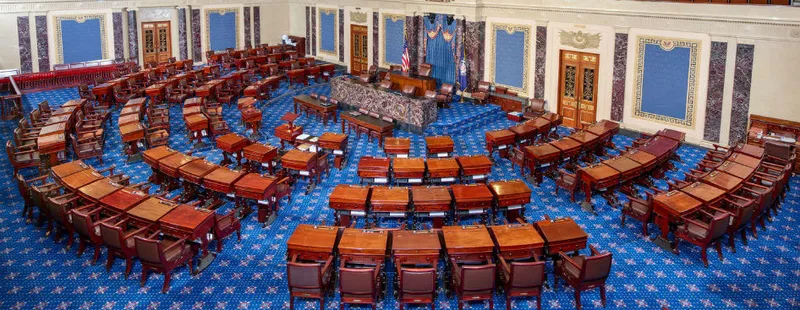
According to Reuters, the Senate voted 51 to 48 to defeat the war powers resolution, which had previously passed the House of Representatives. The resolution, H.Con.Res. 93, was introduced under the 1973 War Powers Resolution and sought to direct Trump to remove American forces from hostilities against Iran. The House had approved it in September by 220 votes to 204. The Senate’s rejection on Thursday stopped that particular congressional directive from taking effect, since a concurrent resolution needs the approval of both chambers.
The Senate’s official floor account recorded the result at 2:42 p.m. Eastern time. The vote was largely along party lines, with one notable exception on each side. The measure did not have the force of law even if it had passed, and it was largely symbolic, a point both supporters and critics acknowledged. But symbolism was the point. Supporters wanted Congress on the record about a war that began on 28 February, when the United States and Israel opened the conflict with Iran, and that has since widened across the Gulf, including Iranian strikes on a United States air base in Kuwait and targets in Bahrain. Our earlier reporting covered the Iran attack on the Kuwait base and the warning that threats to Americans have surged.
The Three Republicans Who Broke Ranks
Only three Republicans voted with Democrats in favour of the resolution in the senate iran war powers vote: Susan Collins of Maine, Lisa Murkowski of Alaska and Rand Paul of Kentucky. All three had voted the same way on earlier Iran war powers measures, and all three are known for breaking with their party on questions of war powers and executive authority. Collins, who lost her re-election bid in the midterm elections earlier this month, cast one of her final major votes in the Senate. Paul has long argued that Congress must reclaim its constitutional role in decisions about war, a position he has held across both parties’ presidencies.
On the other side, only one Democrat voted against the measure: John Fetterman of Pennsylvania, who has opposed every Iran war powers resolution in the same way. Senator Chris Murphy did not vote. Senator Josh Hawley, a Republican from Missouri and another critic of the war, said he opposed the process rather than the substance of the measure, a distinction that let him register doubts about the war without voting for the resolution itself.
The pattern tells a story about where the two parties stand. Democrats were nearly unanimous in favour of restraining the war, with a single dissenter. Republicans were nearly unanimous against restraining it, with three dissenters. The midterm results, which cost Republicans control of the House and narrowed their Senate position, have not yet produced a Republican break with the president on the war itself. That may change as the new Congress takes its seats in January, when House Democrats will hold the gavel and can force the senate iran war powers vote again.
What the Resolution Would Have Done
H.Con.Res. 93 invoked section 5(c) of the War Powers Resolution, the 1973 law passed after the Vietnam War that requires the president to withdraw American forces from hostilities unless Congress authorises them. The text directed the president to remove United States forces from hostilities against Iran unless Congress had declared war or provided specific statutory authorisation. It also demanded that Trump and Pentagon chief Pete Hegseth bring the conflict to a swift end unless they secured approval from Congress to continue the fighting.
It is important to be clear about what the resolution could not do. As a concurrent resolution, it would not have compelled the president to end the war, because it would not have become law. The White House could have ignored it. Its power would have been political: a formal statement by Congress that the war lacked its approval, and a marker for future votes on funding and authorisation. Supporters argued that even a symbolic statement matters, because it forces every senator to take a public position and because it builds the record for stronger measures later. Opponents argued that the resolution would have tied the president’s hands in the middle of an active conflict and sent the wrong signal to Iran and to American allies in the region.
Why the Vote Matters After the Midterms

The senate iran war powers vote matters because of the timing. The midterm elections on 3 November delivered sweeping Democratic gains, including the House majority and a stronger Democratic position in the Senate, and the war in Iran was widely cited as a major reason. Democratic Senator Tim Kaine of Virginia, who has called repeatedly for Congress to take back its control over declarations of war, said the election result reflected Americans’ unhappiness about the war and about higher prices for food, fuel and other goods linked to the conflict.
“Its unpopularity was made absolutely, manifestly clear in the election results of November 3,” Kaine said in a speech before the vote, appealing for yes votes. His argument was that voters had already rendered their verdict, and that the Senate should follow it. The three Republicans who joined him, Collins, Murkowski and Paul, all face different political circumstances, but they share a record of voting for congressional war powers regardless of which party holds the White House.
The result also sets up the next Congress. House Democrats nominated Hakeem Jeffries as their candidate for speaker earlier this week, putting him in line to become the first Black speaker of the House when the new Congress convenes on 3 January, as we reported in our coverage of the Jeffries speaker nomination. A Democratic House can pass war powers measures again, and it can also use its power over spending to put real pressure on the war effort.
What Happens Next
The war itself continues unchanged. The defeat of the resolution supplied no new statutory authorisation for military action, and it removed no existing authority either. The Trump administration has said it will keep prosecuting the conflict, and the president has warned publicly in recent days that Iran is looking at chemical and biological weapons and that the United States would wipe them out if a dirty bomb were used, a threat we covered in our report on Trump’s Iran bioweapons warning. At the same time, the administration has signed a military pact with Venezuela and hailed a new doctrine for the region, as reported in our coverage of the United States and Venezuela military pact.
What changes is the politics around the war. The vote gives Democrats a roll call they can campaign on, and it gives the three Republican dissenters a record of independence. It also gives the incoming Democratic House a clear starting point: the resolution has already passed the House once, and it can pass again in January. Whether it can then clear the Senate depends on whether the new Senate, and the political pressure of a war that voters have already rejected once, moves any more Republicans. For now, the president has his backing, the war has no new congressional limit, and the question of who decides when America goes to war remains unresolved. More detail on the vote is available in Reuters’ report on the Senate rejection and in USA Today’s coverage of the vote.
Frequently Asked Questions
What was the senate iran war powers vote result?
The Senate voted 51 to 48 on 19 November 2026 to defeat the war powers resolution. Three Republicans, Susan Collins, Lisa Murkowski and Rand Paul, voted in favour, while Democrat John Fetterman voted against it.
What would the Iran war powers resolution have done?
H.Con.Res. 93 would have directed President Trump to remove United States forces from hostilities against Iran unless Congress declared war or provided specific authorisation. It had passed the House in September by 220 votes to 204.
Would the resolution have forced Trump to end the war?
No. As a concurrent resolution it did not have the force of law, so it would not have compelled the president to end the war. Its power would have been political, putting Congress on the record against the conflict.
Why did the Senate vote on Iran war powers now?
It was the first major Iran war measure considered by the Senate since the midterm elections on 3 November, in which Democrats made sweeping gains widely linked to public opposition to the war and its economic costs.
What happens next on Iran war powers?
The war continues without any new congressional limit. The incoming Democratic House, which takes its seats in January, can pass war powers measures again, but the Senate votes are not there yet.
Conclusion
The senate iran war powers vote ended 51-48, with Senate Republicans rejecting a measure that would have directed President Trump to end the Iran war or seek approval from Congress to continue it. Only Collins, Murkowski and Paul broke ranks, and only Fetterman crossed the other way. The resolution was symbolic, but the vote was a real test of whether the midterm elections had changed the politics of the war. They have not, at least not yet. The war goes on, and the next test will come in January, when a new Congress takes its seats.
