Nvidia Reinstates Jensen Huang as CEO After 11 Days
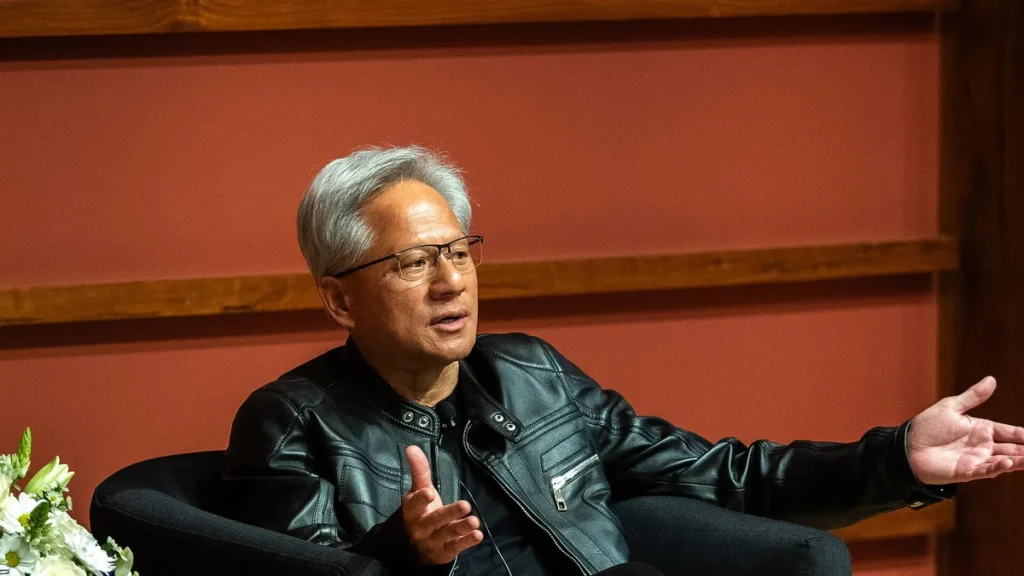
Jensen Huang reinstated as Nvidia CEO after 11 days is the news Wall Street waited for all weekend. The chipmaker said on Monday, November 23, that its board reinstated Huang as president and chief executive, effective immediately, only 11 days after he resigned in the middle of a scandal involving extramarital affairs and an alleged Chinese spy. The decision is an extraordinary reversal for one of the most valuable companies in the world, and it came after days of pressure from employees, shareholders, business partners and President Donald Trump. Nvidia shares surged more than 30 percent in early trading after the announcement, and the wider stock market rallied with them.
Table of Contents
Jensen Huang reinstated: what the board decided
Nvidia announced the move before the stock market opened on Monday. The board said it voted unanimously to restore Huang to all three of his former roles: president, chief executive and member of the board, according to CNN. Huang had resigned on November 12, after reports of at least two extramarital affairs, including one with a businesswoman whom US authorities suspect of spying for China, an allegation Beijing denies.
The board said it reached the decision after “a series of discussions and meetings with Mr. Huang, after which the Board was satisfied with respect to Mr. Huang’s candor and ability to lead NVIDIA,” according to a statement published on the company’s investor relations site and reported by CNN. The board added that it received input from “senior levels of the United States government” and is “confident” that Huang’s return poses no national security risk.
Colette Kress, who served as interim chief executive and delivered Nvidia’s third-quarter earnings report, will remain as chief financial officer, the company said.
Why the board changed its mind in 11 days
The reversal is striking because Nvidia’s own board chair said only last week that Huang would not return. Harvey Jones, who was named board chair after Huang’s removal, said on Nvidia’s earnings call last week that the board had unanimously accepted Huang’s voluntary resignation and did not intend to reinstate him, according to CNN and Barron’s. On Monday, the same board voted unanimously to bring him back.
Several forces pushed the board to change course. A petition calling for Huang’s reinstatement drew more than 180,000 signatures, including one from Elon Musk, according to Reuters. Employees, shareholders and business partners pressed the company to restore its co-founder, and President Trump said last week that he wanted to see Huang back in the top job.
Trump welcomed the decision on Monday in a post on Truth Social. “The NVIDIA Board of Directors has made the correct and proper decision to return Jensen Huang to the position of CEO,” Trump wrote, adding: “The Country needs Jensen’s leadership at NVIDIA in order to ensure the Success and Prosperity of not only the Company, but the American Economy.”
Trump also said the US Attorney General “does not possess evidence that he has engaged in any unlawful conduct,” according to CNN. The board met on Sunday night to take the vote, according to Semafor, which had earlier reported that several directors were pushing for Huang’s return.
The board’s decision underlines how closely Nvidia’s fortunes are tied to one man. With Jensen Huang reinstated, the board must now show that the decision was based on evidence and not only on pressure. As Reuters put it, the move “highlights his deep influence over Nvidia and raises questions about how dependent one of the world’s most valuable companies remains on its co-founder.” Huang built Nvidia from a video-game chip designer into the dominant supplier of the processors that power artificial intelligence, and he has personally managed its chip roadmap, its largest customer relationships and its ties with Washington.
Nvidia stock surges as Wall Street welcomes Huang back
Investors reacted at once. Nvidia shares surged more than 31 percent in premarket trading on Monday, according to Reuters, and were up about 30 percent in early trading. The Nasdaq rallied about 6 percent and the S and P 500 rose about 4 percent, making up for part of Friday’s plunge, according to Reuters.
The jump followed a brutal stretch for the stock. Nvidia shares had lost about a third of their value in the past two weeks, according to Investopedia, and were down more than 40 percent from their October peak. On Friday, November 20, the Nasdaq wiped out its 2026 gains as AI stocks led a broad Wall Street selloff, a rout covered in our report on the Nasdaq wiping out its 2026 gains. The reinstatement removed two of the biggest worries hanging over the company at once: the fear of export-control violations and the uncertainty of a messy leadership transition. With Jensen Huang reinstated, the market’s biggest fear about a leadership vacuum was gone.
Analysts quoted by Reuters called the market reaction a vote of confidence that Nvidia will keep supplying the chips the AI industry depends on. “The market’s reacting positively because it’s a vote of confidence that Nvidia will continue to supply the chips and it’s business as usual,” said Steve Sosnick, chief strategist at Interactive Brokers, according to Reuters. Others were less generous about the process. “The fact that they fired him within 24 hours and then several days later have reinstated him makes me wonder what kind of methodical process the board has in place to evaluate a disruption like this,” Sosnick added.
What happens next for Nvidia and the investigation
Huang’s return does not end the questions around him. Nvidia said its investigation into “reporting that Mr. Huang has been the target of a foreign intelligence effort” would continue, according to Investopedia. The US Director of National Intelligence, Jay Clayton, confirmed on Sunday that investigations into Alice Huang and her Singapore-based firm Megaspeed are ongoing, as covered in our report on the Alice Huang investigation. The New York Times has reported that Alice Huang was in contact with an officer of China’s top spy agency, and Megaspeed has been under investigation since 2024 over the alleged smuggling of advanced Nvidia AI chips to China.
The return also raises questions about corporate governance that will not go away quickly. A board that accepted a chief executive’s resignation, publicly ruled out his return, and then unanimously reinstated him within days invites scrutiny of how it handled the crisis. Shareholders will now watch whether Nvidia can steady its leadership, settle the export-control questions and rebuild trust with customers and regulators, all while the AI chip race moves at full speed. With Jensen Huang reinstated, shareholders will now judge the board on how it handles the investigations.
The 11 days that shook Nvidia
The speed of the whole episode is part of what makes it remarkable. On October 29, a New York Times report touched off the scandal around Huang and Megaspeed. On November 12, Huang resigned from all three of his roles, admitting marital infidelity while denying wrongdoing. By November 20, Nvidia shares had plunged and the Nasdaq had given up its gains for the year. On November 22, the US intelligence chief confirmed that the investigations around Alice Huang and Megaspeed were still open, and the board met that night to vote on Huang’s future. On November 23, Huang was chief executive again.
The timeline shows how fast a crisis can move when a company’s value rests so heavily on a single leader. It also shows how quickly pressure can build: from a petition signed by more than 180,000 people, to public backing from the president, to a board vote on a Sunday night. For Nvidia, the next test is whether the return of its founder can calm the market and the investigations at the same time. With Jensen Huang reinstated, the episode ended as suddenly as it began.
What the return means for the AI chip race
Nvidia sits at the center of the global race to build artificial intelligence. Its chips power the data centers of the largest technology companies, and governments treat access to those chips as a matter of national security. That is why the affair mattered beyond the boardroom: the question was never only about Huang’s personal conduct, but about whether the man running the world’s most important chip company could be compromised, and whether Nvidia’s chips were reaching China in violation of US export controls.
Huang’s return settles the leadership question for now, but the export-control question is still open. The board said it is confident there is no national security risk, and the president said the attorney general has no evidence of unlawful conduct. Regulators, Congress and Nvidia’s customers will keep watching. The company’s own investigation continues, and so does the separate probe into Megaspeed. For the AI industry, the message from Monday is simpler: the most important chief executive in chips is back in charge, and the market is betting that is good news. The week of technology failures that rattled the US, from the Microsoft outage to the Delta system failure, had already put the country’s dependence on a few giant technology firms in the spotlight, as covered in our report on US tech outages.
Frequently asked questions
Why did Jensen Huang resign from Nvidia?
Huang resigned on November 12, 2026, after reports of at least two extramarital affairs, including one with a businesswoman whom US authorities suspect of spying for China, an allegation Beijing denies. He admitted marital infidelity and denied wrongdoing.
Why did Nvidia bring Jensen Huang back?
The board said it was satisfied with Huang’s candor and leadership ability after a series of meetings, and that it received input from senior levels of the US government and is confident his return poses no national security risk. Pressure also came from employees, shareholders, business partners, a petition with more than 180,000 signatures and President Trump.
Does Jensen Huang still face investigation?
Nvidia said its investigation into reporting that Huang was the target of a foreign intelligence effort would continue. Separately, the US intelligence chief confirmed on November 22 that investigations into Alice Huang and Megaspeed remain ongoing.
What happened to Nvidia stock after the announcement?
Nvidia shares surged more than 30 percent in early trading on Monday, November 23, and the Nasdaq rallied about 6 percent. The stock had lost about a third of its value in the previous two weeks. With Jensen Huang reinstated, the stock recovered part of its recent losses.
Conclusion
Jensen Huang reinstated after only 11 days is a comeback few boards would attempt. The board reversed itself after pressure from employees, shareholders and the president, and the market rewarded the decision with a surge of more than 30 percent. The return answers the question of who runs Nvidia. It does not answer the questions about the investigations, the export controls or the board’s handling of the crisis. Those will decide whether this comeback lasts. With Jensen Huang reinstated, Nvidia’s board will be judged on whether the comeback lasts.
