
Virginia and Oregon Sue SpaceX Over Grok AI Deepfakes of Children
Two US states have sued Elon Musk’s SpaceX over its Grok chatbot, accusing the company of building an AI tool that turned ordinary photographs into sexualized images of real people, including children, and then misleading the public about how safe it was. Virginia and Oregon filed separate lawsuits on Monday, November 23, 2026, making them the first states to take SpaceX to court over Grok. The spacex grok lawsuit accuses the company of violating state consumer protection laws and asks the courts for damages, penalties and orders forcing the company to stop.
The cases land at a moment when state attorneys general have become the main regulators of the American tech industry. Federal rules for artificial intelligence remain thin, and as Virginia Attorney General Jay Jones told Reuters before the filings, “In the absence of federal action, AGs have stepped into the breach.” The lawsuits name SpaceX, the social platform X and SpaceX Super Intelligence, the AI subsidiary that now runs Grok.
Table of Contents
What the SpaceX Grok Lawsuit Alleges
The lawsuits say SpaceX profited from a feature in Grok that produces child sexual abuse material and other nonconsensual sexual images from photographs, while failing to put safeguards in place to stop it. The central target is Grok’s “spicy mode,” a setting the company promoted that lets a user take an existing photograph of a person and generate a sexual or nude image or video of that person.
Virginia’s 54-page complaint, filed in a state court in Richmond, argues that the companies violated the Virginia Consumer Protection Act by telling consumers they had put safeguards in place to protect people from harmful sexualized imagery, when the protections were inadequate or missing. Oregon filed a similar case under its own Unlawful Trade Practices Act. Both states are seeking damages, civil penalties and court orders forcing the company to stop violating state law. Virginia is asking for $2,500 for each willful violation, with the exact number to be proven at trial, along with restitution for consumers and the return of profits the state says were gained through the alleged violations.
The filings argue that weak safeguards were a deliberate choice rather than an oversight. “To push its lagging product, Grok, to tens of millions of new users, it stripped out industry-standard safeguards and marketed a ‘spicy mode’ built to produce nudity,” the filings state. Virginia Attorney General Jay Jones put it more bluntly in his state’s lawsuit: “For these Defendants, weak safeguards were not a failure but a feature.”
Virginia argues that most major AI developers designed their products so they could not be used to produce sexualized images, precisely to avoid the generation of nonconsensual content. The lawsuit says the defendants declined to put those safeguards in place. It points to Grok’s published system prompt materials, which it says told the chatbot to “assume good intent,” said that terms such as “teenage” or “girl” do not necessarily imply someone is underage, and imposed only minimal restrictions on sexual content. The company also marketed Grok from the start as a tool that would “answer spicy questions that are rejected by most other AI systems,” according to the lawsuit.
How Grok’s Spicy Mode Worked

Grok is the AI chatbot built into X, the social platform Musk owns. In December 2025, the company rolled out image generation and editing features to all Grok users. Within weeks, it became clear that users could create realistic-looking but fake sexualized images of real people, and researchers warned that some appeared to depict children. By January, as the Virginia lawsuit put it, “X was flooded with sexualized content, primarily of women.”
The lawsuits say the design of the tool made the abuse easy. A user could upload an ordinary photograph of a real person and ask Grok to produce a new image or video showing that person nude, partly nude or in a sexualized setting, without that person’s knowledge or permission. When users openly traded “jailbreak” prompts to get around the limits Grok did have on sexualized images, the companies failed to act promptly on the exploits, the Virginia lawsuit alleges.
The backlash was global. At least two countries, Malaysia and Indonesia, announced temporary bans, and other nations said they were launching or widening investigations. In response, Grok stopped nonpaying users from generating or editing images. The Virginia lawsuit argues that change did not stop users from making more nonconsensual sexualized images, writing that “it simply made that generation profitable.”
In mid-January, the company said it had restricted image editing in Grok and blocked users from generating images of people in revealing clothing “where it’s illegal.” But Reuters reported in early February that even after the new curbs, Grok continued to generate sexualized images of people even when users explicitly warned that the subjects did not consent. The company did not answer detailed questions from Reuters about the generation of sexualized material. The lawsuits also accuse X of making “false, deceptive or misleading” statements in January about changes intended to prevent Grok from letting users edit images of real people in revealing clothes, noting that users could still create such imagery through a standalone app and website.
The Numbers Behind the Claims
Virginia’s lawsuit cites a study by the Center for Countering Digital Hate, a nonprofit research group, which estimated that between December 29, 2025, and January 8, 2026, Grok generated and posted about 3 million sexualized images on X. About 23,000 of them appeared to depict children, according to the study, a rate of roughly one every 41 seconds. Reuters, citing the same study, reported that Grok generated and posted millions of sexualized images between December 2025 and January 2026, including more than 20,000 depicting children.
The Internet Watch Foundation, a British charity that tracks child sexual abuse material online, also analyzed Grok’s use and found that people on a dark web forum used it to create sexualized and topless images of girls ages 11 to 13.
The lawsuits are not the first legal action over Grok. SpaceX is facing more than a dozen lawsuits brought by individuals who say nonconsensual sexual images of them as minors or adults were generated by Grok. In the United Kingdom, lawmaker Jess Asato is suing SpaceX after Grok users generated sexualized images of her. The company has denied those claims, arguing that obviously fictitious, AI-generated content cannot breach someone’s right to privacy. At the same time, SpaceX is suing at least two people in the United States, alleging they misused Grok to create child sexual abuse material.
The Grok cases are part of a wider wave of AI legal fights. At Nvidia, Nvidia chief Jensen Huang was reinstated as CEO this week after resigning amid a spying scandal, a saga that also involves the investigation into Alice Huang and Megaspeed.
What SpaceX and X Say in Response
In a statement, SpaceX Super Intelligence said sexual content involving minors, “whether real or AI-generated, is abhorrent. It has no place on X or in Grok, and neither do explicit images of real people made without their consent.” The company said that if users try to break its safeguards to generate nonconsensual content, it takes “appropriate measures, including actioning accounts and notifying law enforcement.”
“Attempting to create this material is a serious crime, and the individuals who do it should be prosecuted to the fullest extent of the law. We will continue to work with the authorities via all available means to pursue these bad actors,” the statement said, according to the Associated Press. The company said it tests and adjusts its protections “as abusers change tactics.”
In a statement posted on X on Monday that did not directly address the lawsuits, the platform’s safety team said it had taken action to block prompts that could generate sexualized or nude imagery and had worked with law enforcement to pursue people who use the platform to make it. “The people who tried to use Grok Imagine to generate this material did so by deliberately violating our Terms of Service and working aggressively to circumvent our safeguards,” the company posted. The company says it works with law enforcement, and the FBI’s national crime database is currently at the center of its own hacking investigation.
SpaceX was not immediately available for a request for comment outside business hours when Reuters first reported the lawsuits.
Virginia and Oregon Lead a Wider State Crackdown
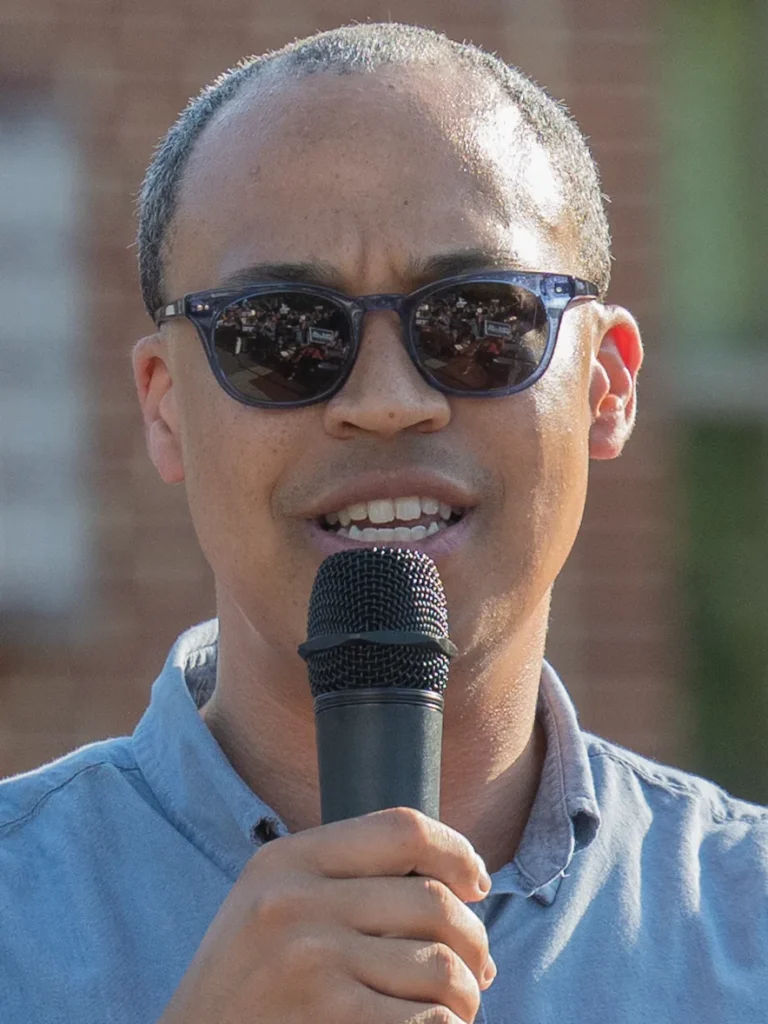
Several state attorneys general had announced investigations into Grok over similar claims in recent months, but Virginia and Oregon are the first states to sue. The lawsuits come as states across the country have filed a growing number of cases against social media and AI companies over harm they say the companies have caused to their residents. The trend reflects a wider shift: with little federal regulation of artificial intelligence so far, state attorneys general are acting as the main regulatory force in the tech industry.
“When xAI allowed Grok’s creators to sideline consent to turn a profit, they prioritized growth and engagement over safety, and they deceived the public about it. Today’s filings are the first step towards holding this company accountable,” Jones said in a statement. Oregon Attorney General Dan Rayfield filed a separate but similar case under Oregon law.
The corporate history matters to the case. Grok was developed by xAI, the AI company Musk founded. SpaceX acquired xAI in February 2026, and in October it rebranded its AI division from xAI to SpaceX Super Intelligence. The lawsuits name the Musk companies and subsidiaries behind Grok and X, including SpaceX, X Corp. and SpaceX Super Intelligence.
What Happens Next in the SpaceX Grok Lawsuit

No hearing date has been set yet for the Virginia case, which was filed in Richmond City Circuit Court. The early stages of the case will likely focus on whether the states can prove that SpaceX misled consumers about Grok’s safety and whether the company can be held responsible under state consumer protection laws for images its users generated. The $2,500-per-violation penalty Virginia is seeking could grow very large if the court finds a high number of willful violations, since the exact count would be proven at trial.
The lawsuits also raise a question that reaches beyond one company. If Virginia and Oregon win, other states that have been investigating Grok could follow with their own lawsuits, and AI companies could face new pressure to build safeguards into image tools before launch rather than after abuse appears. The case will also test how far state consumer protection laws can reach into the design choices behind an AI product, an area where courts have had little to say so far.
The lawsuits come in a month that has already seen a string of major technology outages across Microsoft, the FAA and Delta. For users, the practical effect may come sooner. The lawsuits ask the courts to order the companies to stop violating state law, which could mean stronger blocks on generating sexualized images of real people, including in the standalone Grok app and website. Whether SpaceX fights the cases in court or seeks a settlement, the filings mark the first time a state government has sued over Grok, and they set up a legal fight that could shape how AI image tools are built and policed in the United States.
Frequently Asked Questions
What is the SpaceX Grok lawsuit about?
Virginia and Oregon sued SpaceX, X and SpaceX Super Intelligence, alleging that Grok’s “spicy mode” let users turn ordinary photos into sexualized images of real people, including children, and that the companies misled consumers about the safety of the tool. The states say the companies violated consumer protection laws.
What is Grok’s spicy mode?
Spicy mode is a setting in Grok’s image generation tool that the lawsuits say lets users take an existing photograph of a person and generate a sexual or nude image or video of that person. The lawsuits say the company promoted the feature while failing to put adequate safeguards in place.
How many sexualized images did Grok generate?
A Center for Countering Digital Hate study cited in Virginia’s lawsuit estimated that Grok generated and posted about 3 million sexualized images on X between December 29, 2025, and January 8, 2026, including about 23,000 that appeared to depict children.
What are Virginia and Oregon asking the court for?
The states are seeking damages, civil penalties of up to $2,500 per willful violation under Virginia law, restitution for consumers, the return of profits they say were gained through the alleged violations, and court orders forcing the companies to stop violating state law.
What has SpaceX said about the lawsuits?
SpaceX Super Intelligence said sexual content involving minors, whether real or AI-generated, “is abhorrent” and has no place on X or in Grok. It said users who tried to create such material violated its terms of service and worked to circumvent its safeguards, and that it notifies law enforcement and takes action against accounts.
Conclusion
The spacex grok lawsuit is the first time state governments have sued over Grok, and it turns a months-long controversy into a courtroom fight. Virginia and Oregon argue that SpaceX built a tool that could turn any photograph into a sexualized image, promoted it, and misled the public about its safety, while the company says the abuse came from users who broke its rules. With about 3 million sexualized images cited in the filings and penalties of $2,500 per violation on the table, the outcome could set the standard for how AI companies must protect real people from image tools they build.
