Elon Musk Says He Feels ‘Pretty Foolish’ Over $500 Million Midterm Spending
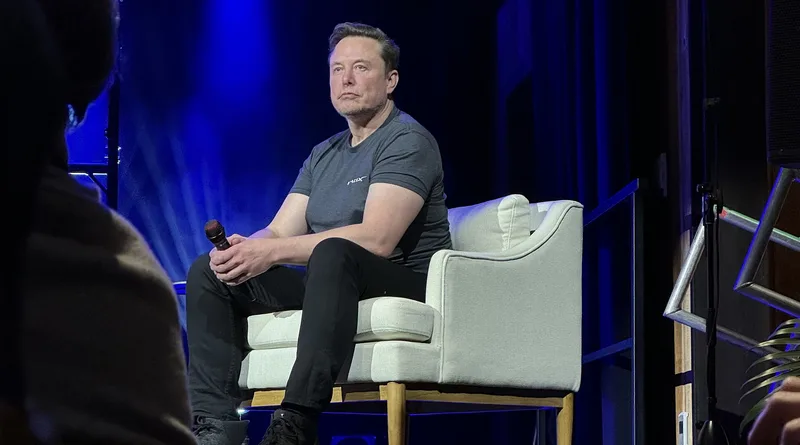
The elon musk dealbook interview produced the bluntest admission of the 2026 midterm season. Speaking by video link from China on Wednesday, November 18, at the New York Times DealBook Summit, the Tesla and SpaceX chief executive said he feels “pretty foolish” about spending nearly $500 million backing Republican candidates who mostly lost. “I feel pretty foolish about having spent so much money and not seeing much for it,” Musk told interviewer Andrew Ross Sorkin. “Probably, if I could rewind the clock, I would have spent less money.” The interview was his most detailed reaction since the largest political spending spree by a non-candidate in a single election cycle failed to deliver the results he wanted.
Musk was among the biggest financial backers of Republican candidates in the midterms, and his goal was to preserve a 51-seat Republican Senate majority heading into 2029. Instead, Democrats won control of both chambers of Congress and the Texas governor’s race. “It certainly shows that American elections are not just about money,” Musk said. “Obviously, you can put a lot of money into an election and have an effect that is relatively minor, and I think that that was the case here.” The admission marks a sharp turn from May 2025, when Musk said he intended to spend “a lot less” on future elections and had “done enough” after contributing more than $290 million during the 2024 cycle. Instead, he dramatically increased his contributions in 2026.
Table of Contents
Elon Musk DealBook: ‘I Feel Pretty Foolish’
Musk joined the DealBook Summit remotely from China, where he is part of President Donald Trump’s delegation at the APEC summit in Shenzhen. The setting underlined how entangled his business and political lives have become: the same trip that put him in the room with the president also put him on stage to explain a political bet that failed. Sorkin pressed him on whether the spending had been worth it, and Musk did not dodge the question. He acknowledged the push “failed, by the way, obviously,” and said the outcome left him questioning whether pouring money into elections actually yields results.
The scale of the spending is what makes the regret newsworthy. Campaign finance watchdog OpenSecrets puts Musk’s spending on Republican federal races at at least $445 million, while Federal Election Commission filings cited by the BBC put the figure at $445.7 million. Musk himself described it as nearly $500 million. Either way, it was by far the most spent by any individual donor in the cycle, and it did not prevent what TheWrap called a Republican rout in the November elections. Democrats took both chambers of Congress, and the new Democratic majorities have raised the prospect of greater scrutiny of Musk’s businesses, including Tesla and SpaceX.
Musk also used the interview to distance himself from partisan politics, describing his views as moderate despite his extensive financial support for Republican candidates. “I’m not MAGA,” he said, before qualifying the statement. “I’m not sure what MAGA means, but I don’t think I’m, like, if it means sort of blind adherence to a set of policies by the Republican Party, then I certainly don’t have that.” He added that both parties have positive and negative qualities, and that he is “not in favor of a supermajority of Republicans either.” “I think we want to have some checks and balances here,” he said.
Where the Money Went
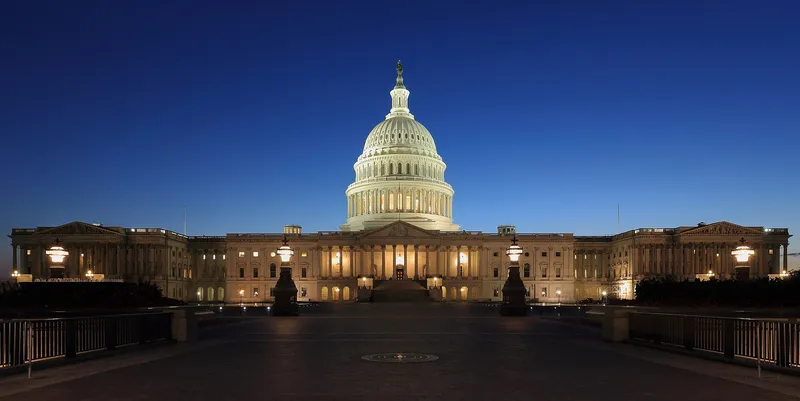
Most of the money flowed through Musk’s super political action committee, America PAC. At least $168 million of it went through America PAC on the Texas Senate race, according to NBC News, backing Republican Attorney General Ken Paxton against Democrat James Talarico. Musk donated $158 million to a Republican Senate super PAC, which transferred matching sums to a group supporting Paxton. Reports put about $200 million of Musk’s total spending toward defeating Talarico. Paxton lost anyway.
The losses were particularly striking in Texas, where Tesla and SpaceX are headquartered. Texas voters also ousted Republican Governor Greg Abbott in favour of Democrat Gina Hinojosa. Musk had reportedly spent at least $5 million to re-elect Abbott. After his victory, Talarico told ABC’s “The View” that Texas voters had sent Musk a message: “Texas is not for sale.” The result in Texas was the clearest evidence for Musk’s own conclusion: even the largest checks in American political history could not buy the outcome he wanted.
The Democratic sweep went beyond Texas. Democrats won the Alaska Senate seat with Mary Peltola’s victory over Dan Sullivan, giving them 56 seats in the Senate, as our report on Peltola winning the Alaska Senate race explains, and House Democrats nominated Hakeem Jeffries for speaker, covered in our report on Jeffries becoming the first Black speaker nominee. Musk’s money was aimed at stopping exactly that outcome, and it failed in both chambers.
Texas Was the Costliest Bet
The Texas Senate race was Musk’s single biggest bet, and it is the one he will be asked about most. Paxton was a high-profile Republican attorney general, and Musk’s spending on his behalf, around $200 million by some counts, was extraordinary even by the standards of this cycle. Talarico, a Democrat, won despite being outspent by a wide margin, and his “Texas is not for sale” line has become the shorthand for the race. The result suggests that in a high-profile race with a motivated opposition, money has diminishing returns, a point Musk himself conceded at DealBook.
The governor’s race told the same story on a smaller scale. Abbott was a two-term incumbent with the backing of the state’s Republican establishment, and Musk put at least $5 million behind his re-election. Hinojosa won anyway. Together, the two Texas losses cost Musk roughly $200 million or more and delivered him nothing, which is why the “pretty foolish” quote has travelled so far. It is rare for a donor of his scale to admit, on the record, that the money did not work.
“I Am Not MAGA”
The other headline from the interview was Musk’s break with the MAGA label. In 2024 he described himself as “not just MAGA, I’m dark MAGA” at a Trump rally, and he donated at least $250 million to help Trump win the 2024 presidential election, according to The Guardian. At DealBook he said the opposite. “I’m not MAGA,” he told Sorkin, arguing that he does not blindly support Republican policies and that there are “positives and negatives in both parties.”
The shift matters because Musk was one of Trump’s biggest supporters in 2024, and his political identity has been tied to the movement ever since. His comments at DealBook suggest he now wants to be seen as a political centrist rather than a partisan, a repositioning that may also be aimed at the Democratic majorities now in Congress. Those majorities have signalled fresh scrutiny of his companies, and some Democrats have called for investigations or suggested he should face prison time. Musk dismissed that at DealBook. “I haven’t committed any crimes,” he said. “It really needs to be first crime, then prison. Not the other way around.”
Musk also defended former Nvidia chief executive Jensen Huang during the interview and addressed the use of SpaceX’s Starlink in Ukraine, two topics that connect his companies to the geopolitics of the moment. Huang’s exit from Nvidia and the halt to H200 chip sales to China are covered in our report on Nvidia stopping H200 sales to China, and the board’s decision on Huang’s future is covered in our report on Nvidia ruling out a Huang return.
What Comes Next for Musk and His Companies
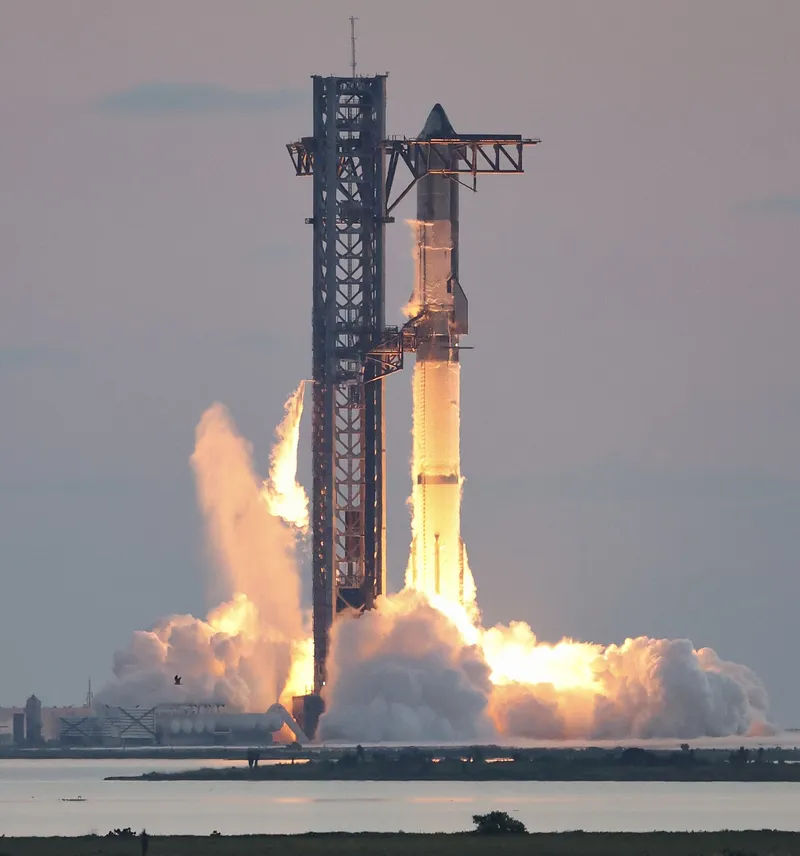
The interview also carried a business signal. Musk indicated that Anthropic, the AI company behind Claude, could seek an additional 10 gigawatts of computing capacity from SpaceX, a deal that would tie his rocket company to the AI boom. Anthropic priced its record $81.3 billion IPO at $83 a share this week, as our report on the Anthropic IPO price explains, and its appetite for computing power is one of the biggest stories in the market.
What Musk does next politically is an open question. He told Sorkin he would have spent less if he could do it over again, but he did not say he would stop spending altogether. His stated aim was to preserve divided government rather than secure unified Republican control, and he framed the spending as an effort to keep checks and balances in place. Whether the Democratic majorities now in Congress treat him as a centrist businessman or as a partisan donor will shape how much room his companies have in Washington. The full interview is covered by TheWrap and the Economic Times.
Frequently Asked Questions
What did Elon Musk say at DealBook?
Musk told the New York Times DealBook Summit he feels “pretty foolish” about spending nearly $500 million backing Republicans in the 2026 midterms, adding: “Probably, if I could rewind the clock, I would have spent less money.” He also said “I’m not MAGA.”
How much did Musk spend on the midterms?
OpenSecrets puts his spending on Republican federal races at at least $445 million, and FEC filings cited by the BBC put it at $445.7 million. Musk himself described it as nearly $500 million, the most by any non-candidate donor in a single cycle.
Where did the money go?
Most of it went through his America PAC. About $200 million went toward the Texas Senate race backing Ken Paxton against James Talarico, who won. At least $5 million went to re-electing Texas Governor Greg Abbott, who lost to Gina Hinojosa.
Why did Musk say he is not MAGA?
Musk said he does not blindly adhere to Republican policies and sees positives and negatives in both parties. He added he does not favour a Republican supermajority and wants checks and balances.
Will Democrats investigate Musk now?
Some Democrats have called for investigations into Musk and his companies, and the new Democratic majorities in Congress have signalled fresh scrutiny. Musk said at DealBook: “I haven’t committed any crimes.”
Conclusion
The elon musk dealbook interview was a rare public reckoning from the biggest political donor in American history. Musk spent nearly $500 million trying to keep Congress Republican, lost both chambers and the Texas governor’s race, and admitted on stage that he feels “pretty foolish” about it. His break with the MAGA label and his warning that elections are not just about money will be quoted for a long time. Whether he spends less next time, or simply spends differently, is now one of the open questions of American politics.
