US Spy Chief Confirms Alice Huang and Megaspeed Investigation
The Alice Huang investigation is now confirmed at the highest level of American intelligence. Director of National Intelligence Jay Clayton said on Sunday that the United States is investigating both Alice Huang and her company, Megaspeed, over an alleged network that supplied Nvidia’s advanced artificial intelligence chips to Chinese customers. Clayton spoke on ABC’s This Week and CNN’s State of the Union, calling Nvidia’s chips “the jewel” that everybody wants. His confirmation came on the same day the New York Times reported that Alice Huang stayed in contact with an officer from China’s Ministry of State Security for more than a year. The case has already cost Nvidia its chief executive, wiped trillions from its market value, and forced Washington to rethink how it polices the world’s most valuable technology.
Table of Contents
What Jay Clayton Confirmed on Sunday
Clayton left little doubt about the status of the case. Asked on ABC’s This Week whether Alice Huang had passed information to the Chinese government, he said, “There is an investigation ongoing into her firm and into her,” and added that he would await its outcome. The interview was hosted by Jonathan Karl, who pressed Clayton on what the intelligence community knows and what it still cannot say in public.
Clayton gave the same message in a separate interview on CNN’s State of the Union. “Attorney General Blanche has been very clear that this is a matter under investigation, both Ms Huang and her company, for various matters,” he said. “And I’m going to let that investigation play out.” He added that the inquiry is not limited to the Justice Department. “There is not only the DOJ investigation, but I’m sure the board of directors and Nvidia is looking into what happened. Regulatory agencies, let’s let all that play out. Let’s gather the facts.”
The spy chief also explained why the case matters so much to Washington. “Nvidia chips, they are the jewel. They are the absolute top that everybody wants,” Clayton said on ABC. “That’s why we’re focusing on this. People will do a lot, they will break the law. There are indictments already involving other companies where people have broken the law to get access to Nvidia chips.” He said the United States wants to lead the world in building artificial intelligence infrastructure while keeping its most advanced capabilities at home. “We want to lead the globe in the build out of this infrastructure, but we also want to keep the most exquisite capabilities for America,” he said.
Clayton would not say where former Nvidia chief executive Jensen Huang is now. He also declined to comment on the Commerce Department’s record on export controls, saying he would not be drawn into internal administration deliberations. That refusal matters, because the export control question is now at the center of a political fight inside Washington, and the Alice Huang investigation sits at the heart of it.
Who Alice Huang and Megaspeed Are

Alice Huang formerly led Megaspeed International, a Singapore-based data center company and an important Nvidia customer that once accounted for billions of dollars in Nvidia chip sales. Megaspeed said she left the company on August 30, 2025. United States authorities have been investigating Megaspeed since 2024 over concerns that it smuggled Nvidia’s advanced AI chips to China, in violation of American export controls. The Commerce Department began investigating the firm in 2024 for possible violations of the rules that restrict sales of sensitive technology abroad, and the Justice Department later took over the criminal probe, the two agencies said in a joint statement.
The newest reporting adds a sharper edge to the case. According to the New York Times report, Alice Huang kept in contact with an officer from China’s Ministry of State Security from the spring of 2025 until the fall of this year, citing people with knowledge of intelligence reports that describe the encounters. The same reporting said her business partner, Kang Wei, who was often introduced as her husband, had links to the same Chinese intelligence agency. Spokespersons for Nvidia, Jensen Huang and the Chinese Embassy in Washington did not immediately respond to requests for comment, and Reuters has not been able to reach Alice Huang for comment.
The claims must be read with care. United States officials have repeatedly said they have not concluded that Alice Huang spied for China. Attorney General Todd Blanche said this month that the Justice Department had not yet reached a conclusion on whether she was a Chinese spy, and Clayton repeated that position on Sunday. The Times report itself noted that American officials have cast doubt on initial suggestions that Alice Huang was a spy. What is confirmed is that the Alice Huang investigation is active, that it covers both her and her company, and that it now involves the Justice Department, regulators, and Nvidia’s own board.
The Chips at the Center of the Case
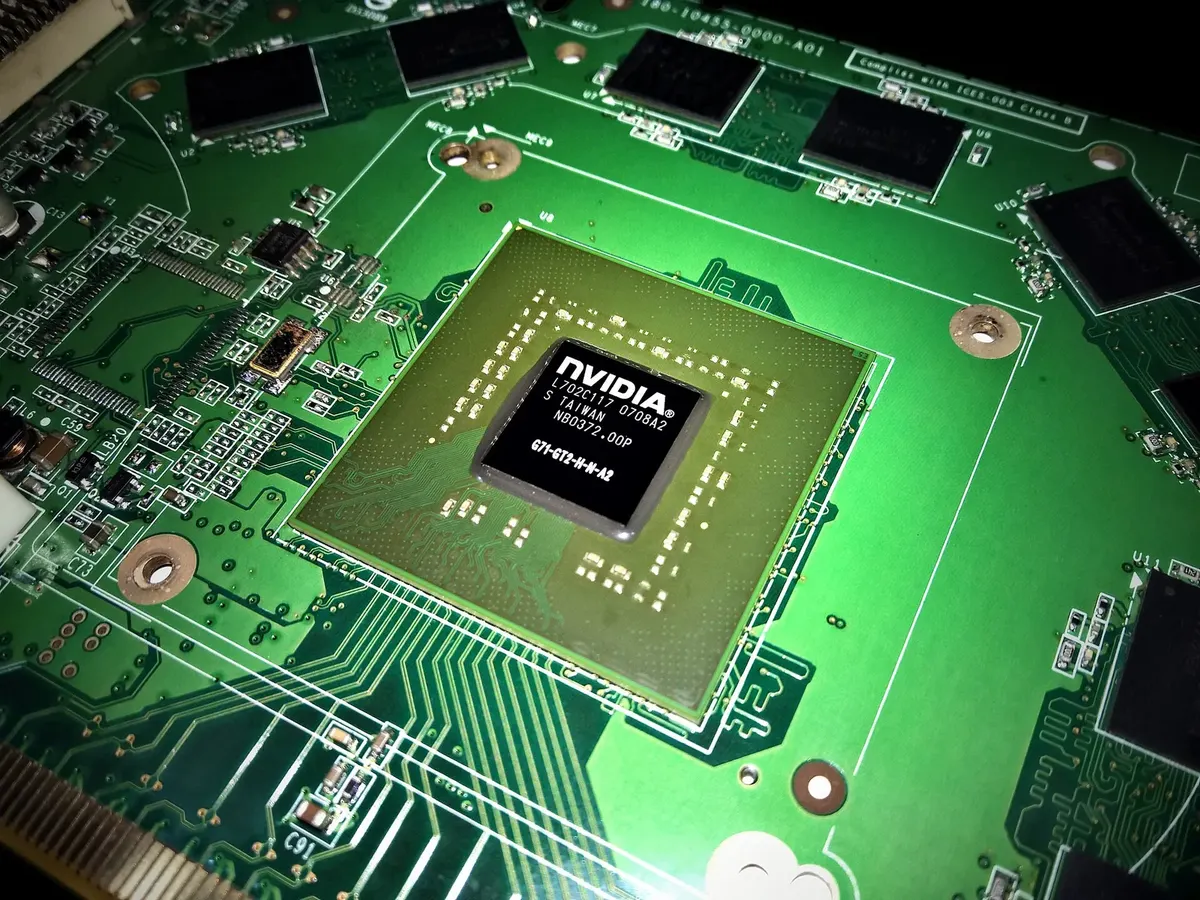
Nvidia’s chips are the most sought after hardware in the artificial intelligence race, and that is why the Alice Huang investigation carries such weight. The company’s graphics processors power the data centers where the most powerful AI models are trained, and the United States restricts their sale to China under export controls designed to keep the most sensitive technology out of Beijing’s hands. Smuggling networks that move these chips anyway have become a top priority for American law enforcement and intelligence agencies.
Clayton’s “jewel” remark captures the logic. If the chips are the crown of the AI economy, then anyone who can divert them to China can narrow America’s lead. That is why the investigation reaches beyond one company and one person. It tests whether the export control system works at all, and whether the government can enforce rules that the world’s most valuable company and its customers have strong incentives to bend. The indictments Clayton mentioned, involving other companies that broke the law to obtain Nvidia chips, show that prosecutors have already treated this as a pattern rather than a single case.
The stakes are also commercial. Megaspeed was once a customer worth billions to Nvidia, and the question of what its servers carried, and where they ended up, goes to the heart of Nvidia’s sales practices. That is the subject of a separate California investigation, and of a reported Securities and Exchange Commission inquiry into the company’s accounting. The Alice Huang investigation now connects those threads: a personal scandal, a corporate compliance failure, and a national security problem.
How the Scandal Unfolded
The scandal broke on October 29, when the New York Times published its first report on the affair between Jensen Huang and Alice Huang. Two weeks later, Jensen Huang resigned as Nvidia’s chief executive after admitting the affair and denying any wrongdoing. The resignation shocked Wall Street, and Nvidia’s shares have fallen hard ever since. The company has lost more than 40 percent of its market value since its October 6 peak, shedding about $2.5 trillion, and its shares fell 14.1 percent on Friday, November 20, alone. Our report on how the Nasdaq wiped out its 2026 gains covers the market damage in full.
The fallout has spread through Washington. Jensen Huang has agreed to testify before the US Senate, keeping the company in the headlines for reasons that have nothing to do with its products. California’s attorney general, Rob Bonta, is running a separate investigation into whether Nvidia illegally sold advanced chips to China and misled investors about the conduct. Our report on how California subpoenaed Nvidia has the details of that probe. Nvidia’s board ruled out Jensen Huang’s return as chief executive, although talk of a comeback has continued to circulate.
Politics has now caught up with the case. Republican Senator Tom Cotton has claimed that Commerce Secretary Howard Lutnick ignored warnings about chips being smuggled into China, a charge Clayton declined to address. Treasury Secretary Scott Bessent has criticised the Commerce Department’s enforcement of export curbs, and Republican Senator John Kennedy raised national security concerns about Nvidia’s role in AI and the alleged breach of export controls. The Alice Huang investigation has become a test of whether the administration enforced its own rules, and both parties are now asking that question in public.
What Nvidia and the Board Say

Nvidia’s board is now examining the matter itself, according to Clayton, alongside the Justice Department and regulatory agencies. That internal review will matter as much as the criminal probe, because it will decide what the company knew about Megaspeed, what its sales controls caught, and what they missed. Nvidia, Jensen Huang and the Chinese Embassy in Washington did not immediately respond to requests for comment on the latest Times report.
Jensen Huang has denied any wrongdoing, even as he admitted the affair that led to his resignation. His whereabouts are now unknown, at least to the intelligence chief. “He also said he did not know where Jensen Huang is,” according to reports of Clayton’s ABC interview. The silence from the former chief executive has fed speculation about his future, including reports that Treasury Secretary Bessent, who had pressed for changes at Nvidia, has since suggested a return is possible. For now, the board has ruled that out, and the company is being run without the man who built it into the world’s most valuable chipmaker.
The board’s review also sits beside the wider question of accountability. If Megaspeed moved advanced chips to China while it was a major Nvidia customer, investors will want to know what Nvidia’s compliance systems saw and when. That is the question behind the reported SEC inquiry and the California probe, and it is the question the Alice Huang investigation may ultimately answer.
Why Export Controls Are Now Under Fire
The Alice Huang investigation has forced a deeper look at Washington’s approach to export controls on China, with lawmakers from both parties questioning whether the Trump administration has been too lax on enforcement and regulation of the prized semiconductors. The rules themselves are not new. The US AI chip export rule closes loopholes that let advanced chips reach China through cloud services and third countries, and the Commerce Department has policed those rules since long before this scandal.
What is new is the doubt. If a major Nvidia customer could be under investigation since 2024 and still keep buying chips, critics ask, how strong was the enforcement? If warnings reached the Commerce Department and were ignored, as Senator Cotton claims, who is responsible? Clayton refused to answer those questions on Sunday, saying only that the investigation should play out. But the questions are now being asked in Congress, in the courts, and in the press, and they will not wait for the probe to finish.
The administration’s position is that the system is working: the Commerce probe began in 2024, the Justice Department took over the criminal case, and the intelligence community is now involved at the highest level. Critics reply that the scandal only surfaced because a newspaper reported an affair, not because regulators caught the smuggling. Both claims can be true at once, and the Alice Huang investigation will decide which one history remembers.
What Happens Next in the Alice Huang Investigation
The investigation will now play out on several fronts at once. The Justice Department’s criminal probe into Alice Huang and Megaspeed continues, with Attorney General Todd Blanche making clear that no conclusion has been reached. Regulatory agencies are examining the same facts, and Nvidia’s board is conducting its own review. Jensen Huang’s promised Senate testimony will put the scandal in front of lawmakers who are already demanding answers about export enforcement. California’s separate investigation adds a state level probe with its own subpoena power.
The most important question is the simplest: did Alice Huang pass information to China, and did Megaspeed move Nvidia chips there? Clayton would not answer the first question on Sunday, and the second is the subject of the criminal probe. Until those answers come, the Alice Huang investigation will keep Nvidia, the chip industry, and Washington’s export control system under the kind of scrutiny that rarely ends quietly.
Frequently Asked Questions
Is Alice Huang charged with a crime?
No. The investigations into Alice Huang and Megaspeed are ongoing, and US officials have said they have not concluded that she spied for China. No charges have been announced.
What is Megaspeed accused of?
Megaspeed is under investigation over concerns that it was part of a network supplying Nvidia powered servers and advanced AI chips to Chinese customers, in breach of US export controls. US authorities have been investigating the company since 2024.
Why did Jensen Huang leave Nvidia?
Jensen Huang resigned two weeks after the October 29 New York Times report on his affair with Alice Huang. He admitted the affair and denied any wrongdoing. Nvidia’s board has ruled out his return as chief executive.
What did the spy chief actually say?
On ABC’s This Week, Director of National Intelligence Jay Clayton said, “There is an investigation ongoing into her firm and into her.” He called Nvidia’s chips “the jewel” that everybody wants.
Conclusion
The Alice Huang investigation is now an official, multi-front case involving the Justice Department, the intelligence community, regulators, Nvidia’s board, and the state of California. The spy chief’s confirmation on Sunday removed any doubt that the probe is real, and the New York Times report on Alice Huang’s contacts with Chinese intelligence gave it new urgency. What remains unknown is the core of the case: whether she passed information to China, and whether Megaspeed moved America’s most advanced chips there. Those answers will decide the fate of a former chief executive, the credibility of US export controls, and the future of the company at the center of the AI boom.
