
Biden Spending Law Unconstitutional: Appeals Court Rules 9-8 on Proxy Votes
A federal appeals court ruled on Friday that a $1.7 trillion government funding bill passed during President Joe Biden’s administration was unconstitutional, because so many lawmakers voted by proxy instead of showing up in person. The Biden spending law unconstitutional ruling came in a narrow 9-8 decision from the full U.S. Court of Appeals for the 5th Circuit in New Orleans, and it strikes at the heart of how Congress operated during the pandemic. The court said proxy votes do not count toward a quorum under the Constitution, which means the House never properly passed one of the largest spending laws in American history. The immediate legal effect is narrow, but the reasoning could open the door to challenges against other laws passed the same way.
Table of Contents
How the House Passed the Bill by Proxy
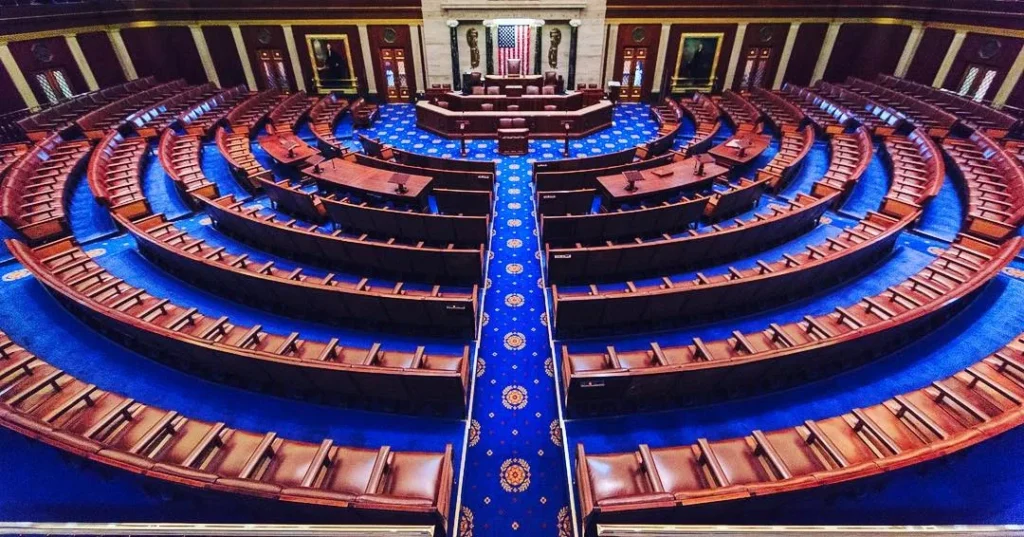
The bill at the center of the case is the Consolidated Appropriations Act of 2023, a sprawling $1.7 trillion package that funded the federal government, sent roughly $45 billion in emergency assistance to Ukraine and NATO allies, and provided around $40 billion for natural disaster relief. The House passed it on December 23, 2022, by a vote of 225 to 201, with one member voting present. According to the appeals court opinion, 226 lawmakers voted by proxy.
Proxy voting was a pandemic-era emergency measure. Then-Speaker Nancy Pelosi helped implement the rule in May 2020, after the onset of Covid-19, so lawmakers could vote without being physically present while the risk of a potentially deadly coronavirus infection was still high. The rule was ditched when Republicans took control of the House after the November 2022 elections, but the spending bill was one of the last major laws passed under it.
Texas Attorney General Ken Paxton brought the case in 2023. He was not asking the court to throw out the whole spending bill. He wanted to block one provision inside it, the Pregnant Workers Fairness Act, which requires some employers to provide accommodations to pregnant workers, from being enforced against the state of Texas. A U.S. district court judge agreed with him in 2022, and Friday’s ruling from the 5th Circuit upheld that injunction. The court went further than the narrow request, however, concluding that the passage of the entire act was unconstitutional because the Quorum Clause does not allow proxies to be counted when establishing a quorum. That finding is the core of the Biden spending law unconstitutional decision, and it is what makes the case bigger than a single workplace law.

What the 9-8 Majority Decided
Judge Cory Wilson, an appointee of President Donald Trump, wrote the majority opinion. “While the chambers of the legislature have much discretion regarding their rules of procedure, the Quorum Clause’s constraints on congressional power cannot be circumvented by congressional fiat,” Wilson wrote. The majority said the text, context, original understanding and unbroken historical application of the Quorum Clause all indicate that members of Congress must be present for quorum purposes, and that “proxy presence” does not count.
The majority also said the government did not establish that an “existence of an emergency” justified the proxy rule when it was adopted. That point matters because the House’s own rules allowed proxy voting only during a declared emergency, and the court questioned whether the conditions in late 2022 still met that standard.
The dissent was forceful. Judge James Graves Jr., an appointee of former President Barack Obama, called the ruling “illogical, inexplicable, and invalid.” Graves noted that less than a majority was physically present at the time of the vote, yet no member objected that a quorum was lacking. He argued the majority was reading a physical-presence requirement into the Quorum Clause that does not exist, and he questioned why, if the whole law was unconstitutionally passed, the relief should be limited to “one small sliver of the multitrillion-dollar bill.”
The 9-8 split, decided by the full court sitting en banc, shows how divided even one of the country’s most prominent appellate benches is on this question. That division is one reason a Supreme Court appeal is now highly likely.
What the Biden Spending Law Unconstitutional Ruling Means for Pregnant Workers
The practical effect of Friday’s decision is limited to Texas, at least for now. The opinion stressed that the ruling has a “narrow scope,” applying only to enforcement of the Pregnant Workers Fairness Act against the state of Texas as an employer. The court barred the Justice Department and the Equal Employment Opportunity Commission from enforcing that provision against Texas. The Biden spending law unconstitutional ruling does not change the law for pregnant workers in the other 49 states, where the act remains fully in force.
But workers’ rights advocates warn the real-world effect could be wider. Inimai Chettiar, president of A Better Balance, a workers’ rights organization that worked with lawmakers on the provision, said the implications may be broader for pregnant workers in states covered by the Fifth Circuit, which includes Texas, Louisiana and Mississippi. “If a worker was to try to get accommodations now in any of these states and an employer was going to deny the accommodation and then the worker sued, a district court judge in any of those states would point to this opinion,” Chettiar said. “So that’s why we think this is so incredibly harmful because the decision that the law is unconstitutionally enacted goes far beyond the specific fact patterns of the case.”
The Pregnant Workers Fairness Act itself remains the law across most of the country. The Equal Employment Opportunity Commission continues to enforce it outside Texas, and its guidance explains the accommodations employers must provide. Our readers can read the official guidance on the EEOC’s Pregnant Workers Fairness Act page. What the 5th Circuit has done is to carve out Texas as an employer, while leaving the bigger constitutional question open for the Supreme Court.
Why the Case Could Reach the Supreme Court
Legal experts had warned before the ruling that a decision against the law’s passage would have broad ramifications. Dozens of bills were passed with proxy votes during the pandemic, and the court’s reasoning, that proxy presence never counts toward a quorum, could in theory be used to challenge any of them. The majority opinion does not strike those laws down, and the relief it granted is narrow, but the constitutional logic it sets out is the part that worries lawyers on both sides.
The Justice Department defended the law in court, and neither the department nor Paxton’s office responded to requests for comment after the ruling, according to Reuters. The most likely next step is an appeal to the U.S. Supreme Court, where the justices would have to decide whether the Constitution really demands physical presence for a quorum, or whether each chamber of Congress has the power to set its own voting rules in an emergency.
The case also lands in the middle of a wider fight over Congress’s power. Lawmakers are facing a December 11 deadline to fund the government, a standoff our report on the government shutdown deadline covers in detail, and the administration has moved to limit congressional oversight of federal agencies, including the executive order covered in our report on the federal contractors order. The proxy voting ruling adds a court-drawn limit on how Congress itself can operate, and it comes from a court that is often the last word on Texas law before the Supreme Court steps in.
There is also a political edge. Paxton, who recently lost his bid for the U.S. Senate, brought the case as Texas attorney general, and the ruling hands his office a win on a provision it has opposed since 2023. The Senate, meanwhile, passed its own bipartisan energy permitting bill this week, covered in our report on the Senate permitting bill, showing that Congress can still move major legislation when it votes in person.
What Happens Next
The ruling does not defund the government or cancel the spending in the 2022 bill. The money was spent years ago, and the court’s order is limited to blocking enforcement of one provision against one employer, the state of Texas. What happens next depends on the Supreme Court. If the Justice Department appeals, the justices will decide whether to take the case, and their answer will shape how Congress can vote in any future emergency, whether a pandemic, a war or a natural disaster keeps lawmakers away from Washington. The Biden spending law unconstitutional appeal would put the Quorum Clause itself on trial before the highest court.
If the Supreme Court agrees with the 5th Circuit, Congress would need to be far more careful about remote voting in the future, and past proxy-passed laws could face fresh challenges. If it reverses, the proxy voting era will stand as a valid emergency measure, and the Pregnant Workers Fairness Act will be enforceable in Texas again. Either way, the case is a reminder that the rules Congress writes for itself are not only a matter of convenience. They are constitutional questions, and the courts are willing to answer them.
Frequently Asked Questions
What did the appeals court rule about the Biden spending law?
The 5th U.S. Circuit Court of Appeals ruled 9-8 on Friday that the $1.7 trillion Consolidated Appropriations Act of 2023 was passed unconstitutionally, because 226 House members voted by proxy and proxy votes do not count toward a quorum under the Constitution’s Quorum Clause. The Biden spending law unconstitutional ruling is the first time a full appeals court has struck down a federal spending law on these grounds.
Does the ruling cancel the $1.7 trillion spending bill?
No. The ruling’s relief is narrow: it only bars the Justice Department and the EEOC from enforcing the Pregnant Workers Fairness Act against the state of Texas. The spending itself is not undone.
Will the case go to the Supreme Court?
An appeal to the U.S. Supreme Court is highly likely, given the 9-8 split and the ruling’s implications for other laws passed by proxy vote during the pandemic.
What is the Pregnant Workers Fairness Act?
It is a workplace protection law, included in the 2022 spending bill, that requires some employers to provide reasonable accommodations to pregnant workers. The EEOC enforces it nationwide except where the Texas injunction applies.
Conclusion
The 5th Circuit’s ruling that the Biden spending law was passed unconstitutionally is a narrow decision with very wide implications. The immediate effect is limited to Texas and one workplace law, but the court’s reasoning challenges how Congress voted during the pandemic and sets up a Supreme Court fight over the Quorum Clause. The Biden spending law unconstitutional case will now be watched closely by every lawyer and lawmaker who cares about how laws are made. Until the justices weigh in, the ruling stands as the most consequential judicial rebuke yet to the emergency legislative practices of the Covid era, and a warning that the way a law is passed can matter as much as what it says.
