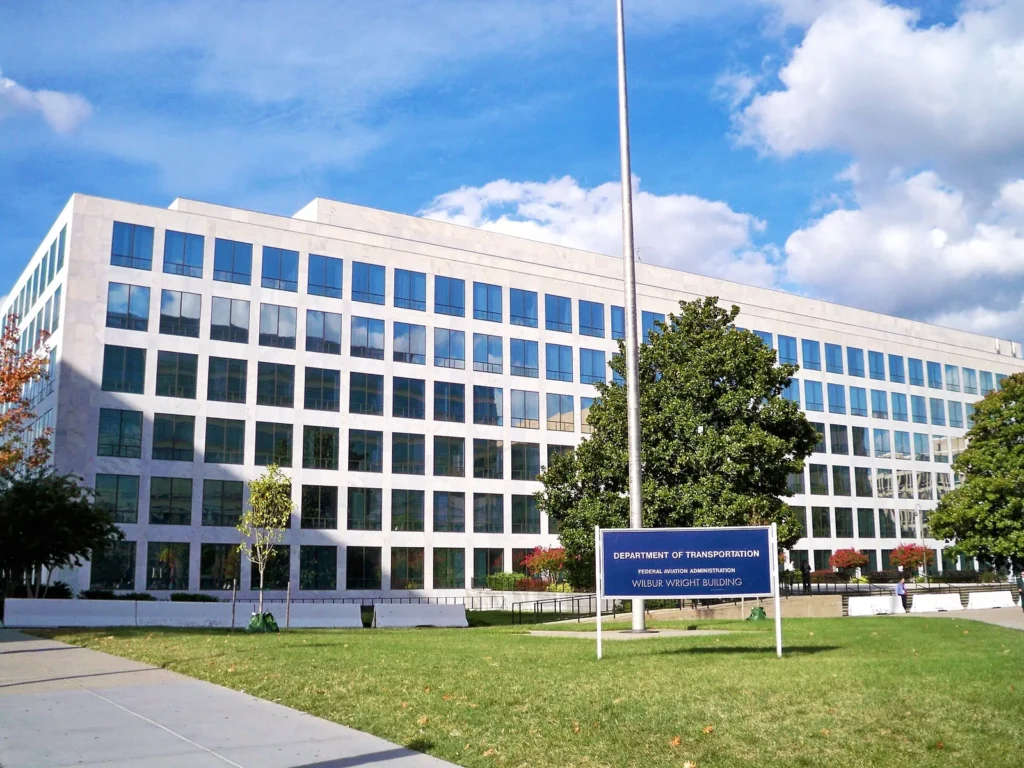
FAA to Reveal Cause of Nationwide Ground Stop That Grounded US Flights
The faa ground stop that froze American air travel for nearly five hours is about to get an official explanation. The head of the Federal Aviation Administration said on Thursday, November 19, that the government expects to announce this week the root cause of the router outage that led to the nationwide ground stop on Friday, November 13. The stop disrupted more than 18,000 flights and over one million passengers, and it was the longest nationwide shutdown of US airspace since the September 11, 2001, attacks. For travelers who spent that Friday stranded at airports, the announcement will finally answer the question of what went wrong.
FAA Administrator Bryan Bedford declined to discuss the findings in detail but said Transportation Secretary Sean Duffy would brief the public on the results. Duffy has already pointed to a single piece of equipment: a Juniper router installed by contractor L3Harris Technologies in a remote Arkansas facility. According to Duffy, the newly installed router began sending around a thousand connection attempts every four to five seconds across the FAA’s telecommunications network, overwhelming the switches and routers that carry aircraft communication and radar data. The disruption hit 17 of the country’s 22 air route traffic control centers, the facilities that guide flights across the United States.
Table of Contents

What Happened on November 13
The ground stop began at 3:54 p.m. Eastern Time on Friday, November 13, when the FAA issued a nationwide order citing extraordinary circumstances and reasons of safety. The trouble had started earlier that afternoon, at about 3:36 p.m., when air traffic control centers began reporting instability in their radar and communications systems. Switches and routers carrying critical data became overloaded and produced inconsistent information, and the FAA decided it could not safely keep departures moving while it did not understand the scale of the failure.
Flights already in the air were allowed to continue to their destinations, and some departures were cleared on a case-by-case basis as the evening went on. Flights within Alaska and within Hawaii were permitted to depart, and Pacific-bound flights from San Francisco were among the first cleared. But for most of the country, the runways stayed quiet. US-bound departures from Europe were suspended, and by 7:05 p.m. Eastern, at least 827 flights had been diverted, according to aviation analytics firm Cirium. The airspace reopened at 8:15 p.m. Eastern, after four hours and 25 minutes, but Duffy warned that night that flights would resume slowly and that it would take time for airlines to restore normal operations.
The scale of the disruption was enormous. More than 18,000 flights were disrupted and over one million passengers affected, according to Reuters. Flight tracking data showed more than 6,600 flights cancelled and 8,600 delayed on Friday, with another 1,500 already cancelled for Sunday, according to FlightRadar24. Aviation analysts warned that the four-hour grounding could disrupt airline schedules for days, as carriers worked to reposition aircraft and crews. It was only the second nationwide ground stop of all departures since the September 11 attacks, after a system outage in 2023.
The Router at the Center of the Failure
The early evidence points to a routine upgrade that went wrong. Duffy told reporters that the trouble likely stemmed from work to replace old copper telephone lines with fiber optic cables, a modernization effort that has been running for decades. In at least one remote FAA location, contractor L3Harris was doing that switch when the new router began flooding the network with connection attempts. The FAA and the FBI are now on site at one of L3Harris’s laboratories in Florida, analyzing the router that may have triggered the meltdown.
L3Harris said in a statement to CNN that it is working with the FAA to investigate the incident. “L3Harris has been modernizing the communications infrastructure supporting the National Airspace System in close coordination with the FAA,” the contractor said. “We are supporting the FAA in its investigation to understand the conditions that led to the Nov. 13 ground stop of our nation’s air travel. L3Harris takes the nationwide ground stop and its impact on travelers, airlines and air traffic operations seriously.” Duffy was sharper in his public comments, saying there could have been “mistakes made” by the contractor during the procedure.
The FAA has paused further installations of the Juniper routers while testing continues at the Florida laboratory, with the FAA, Cisco and the FBI on site. Duffy noted that 68 earlier installations of the same routers, made by Hewlett Packard Enterprise-owned Juniper Networks, had not caused any problems. The question investigators must answer is what made this one different: whether the fault lay in the router itself, in how it was configured, or in the network it was connected to. Duffy also said on Wednesday that the team monitoring the network is critical and that the incident was not identified quickly enough.
An Aging System Under Strain
The ground stop exposed how fragile parts of the American air traffic control system have become. FAA chief Bedford said the FTI network, the telecommunications system that L3Harris has operated since 2002, is in desperate need of replacement. “We have a patchwork, archaic federal telephone network, which is why we’ve got to get off of it as fast as humanly possible while maintaining safety,” Bedford said. Duffy said that while most copper wires have been switched to fiber, around 30 percent have yet to be replaced, and officials are still working to identify where those copper lines remain.
The failure is the latest and most dramatic sign of strain on a system beset by aging technology, equipment and communications problems, along with a shortage of several thousand air traffic controllers. Duffy has asked Congress to approve another 50 billion dollars quickly to complete massive upgrades to the aging air traffic control system and airports, after lawmakers approved 12.5 billion dollars last year. Some lawmakers support a smaller amount targeted at the safety upgrades. The funding debate will now run alongside the investigation, and the ground stop has given the modernization argument its most powerful example yet.
For travelers, the immediate question is whether it could happen again. Duffy addressed that directly on Saturday, telling stranded passengers “it is safe to fly” as air operations worked back to normal. US airlines were not required to compensate stranded passengers, because the carriers were not responsible for the FAA system failure. That left many travelers to absorb the cost of hotels and rebooked flights themselves, a frustration that added to the anger at airports on Friday night. Our guide on how to find cheap flights within the US can help travelers rebook at a lower cost when plans change, and our report on the California atmospheric river covers another recent weather disruption that hit American travel.
What Happens Next
The announcement Bedford promised this week will be the first official account of the root cause. Duffy is expected to brief the public on the findings, and the testing at the L3Harris laboratory in Florida will determine whether the router installations can resume. The FAA’s decision to pause the Juniper rollouts will stay in place until the investigation explains the failure, and the findings could reshape how the agency manages the fiber upgrade across the country.
The longer question is the modernization of the air traffic control system itself. The FTI network has been running since 2002, and the ground stop showed what happens when a single piece of new equipment can flood a network built on decades-old infrastructure. Congress must now decide how much money to approve, and how fast, while the FAA works to replace the remaining copper lines. Reuters reported the planned announcement at reuters.com, and the FAA publishes its own operational updates on faa.gov. The South Florida flooding that disrupted travel earlier this month is a reminder that American travelers face both weather and system failures, and the ground stop showed that the system failures can be the bigger problem.
Frequently Asked Questions
What caused the FAA nationwide ground stop?
The FAA says a Juniper router installed by contractor L3Harris in a remote Arkansas facility flooded the agency’s telecommunications network with connection attempts, disrupting communication and radar feeds at 17 of 22 air route traffic control centers. The government expects to announce the confirmed root cause this week.
How long did the ground stop last?
The nationwide ground stop lasted four hours and 25 minutes, from 3:54 p.m. to 8:15 p.m. Eastern Time on Friday, November 13, 2026. It was the longest nationwide shutdown of US airspace since September 11, 2001.
How many flights were affected?
More than 18,000 flights were disrupted and over one million passengers were affected, according to Reuters. FlightRadar24 counted more than 6,600 flights cancelled and 8,600 delayed on the Friday of the stop.
Are flights back to normal now?
Yes. The FAA lifted the ground stop on Friday evening, and operations returned to normal over the following days, though airlines needed time to reposition aircraft and crews. Transportation Secretary Sean Duffy said on Saturday that “it is safe to fly.”
Will the FAA say what went wrong?
FAA Administrator Bryan Bedford said on November 19 that the government expects to announce the root cause this week, and Transportation Secretary Sean Duffy will brief the public on the results.
Conclusion
The faa ground stop was a warning written in cancelled flights. A single router, installed as part of a long-overdue upgrade, overwhelmed a telecommunications network that the FAA chief himself calls a patchwork, and 17 of 22 control centers felt the failure at once. More than 18,000 flights and a million passengers paid the price. The official findings, due this week, will say whether the fault was the equipment, the installation or the network itself. Whatever they show, the ground stop has already made the case for replacing the aging system faster, and Congress will have to decide how much that speed is worth.
