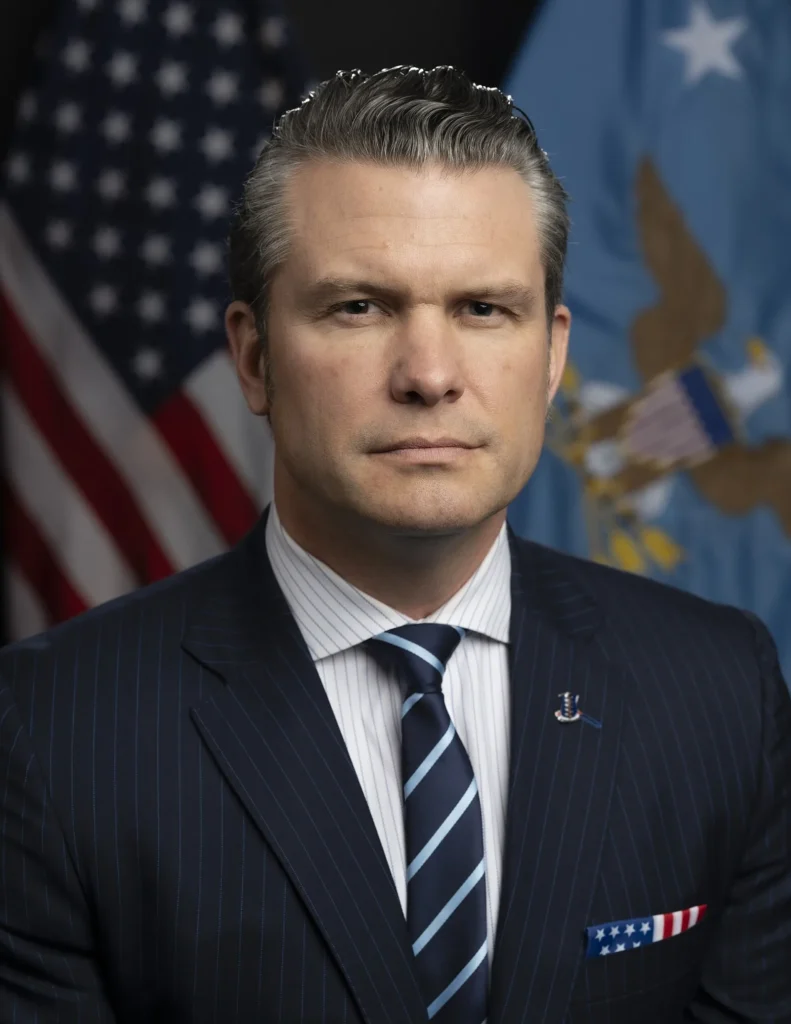
US and Venezuela Sign Military Pact as Hegseth Hails Donroe Doctrine
The US Venezuela military pact was signed on Wednesday, November 18, 2026, as Defense Secretary Pete Hegseth visited Caracas and announced a new agreement on military cooperation with Venezuela. Hegseth made the announcement alongside acting President Delcy Rodriguez, who welcomed him to the presidential palace, in his first visit to the country since US special forces deposed President Nicolas Maduro in a January raid in Caracas. The deal covers joint training, intelligence sharing and other aspects of military cooperation, and Hegseth used the visit to declare a revamped Monroe Doctrine for the Americas, which he called the Donroe Doctrine.
Table of Contents
What the US Venezuela Military Pact Covers
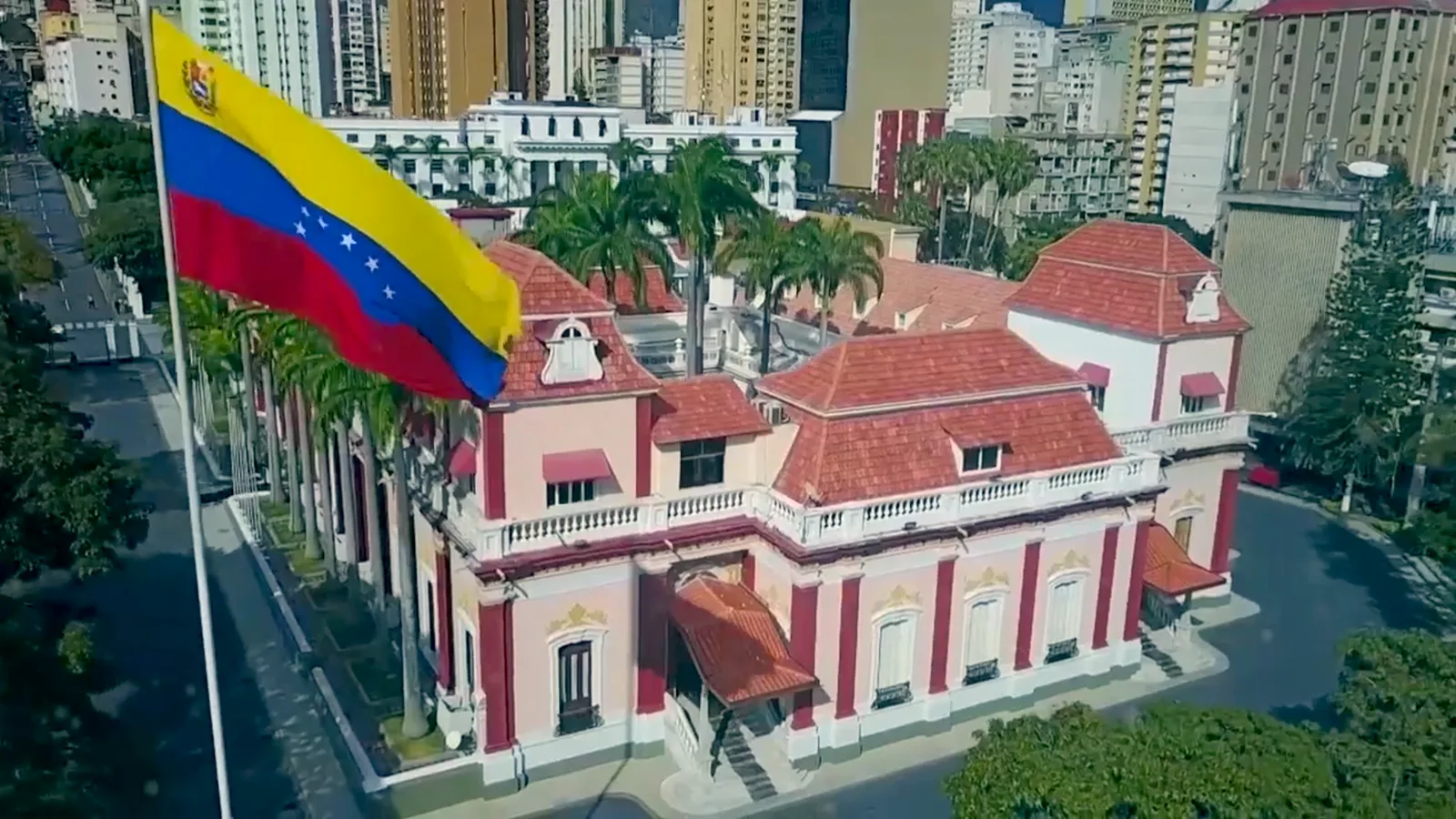
Hegseth announced the agreement at the presidential palace, where Rodriguez welcomed him. He said it covered joint training, intelligence sharing and other aspects of US-Venezuelan military cooperation, along with additional defense equipment. Rodriguez said the arrangement would help confront common threats and strengthen training for Venezuela’s armed forces.
Hegseth said the partnership would herald a significant ramp-up in joint action against drug trafficking groups. Speaking from the US embassy, he issued a direct warning to traffickers. “To the narco terrorists who have used this as a safe haven, your time is up. We will hunt you down. We will find you. And we will kill you,” Hegseth said.
The US Venezuela military pact formalizes a relationship that has been building since January, when US special forces raided Caracas and removed Maduro from power. Since then, Washington has moved quickly to shape Venezuela’s future, with a growing role in the country’s energy policy and investment. Secretary of State Marco Rubio has said the United States and Venezuela were in talks to secure a military presence in the South American country, and the new pact is the clearest step yet in that direction.
The Donroe Doctrine
As he addressed the gathering in Caracas, Hegseth invoked a revamped Monroe Doctrine, the 19th-century policy asserting US primacy across the Americas that critics associate with decades of US intervention. He called it the Donroe Doctrine, a play on President Donald Trump’s name.
“That is the Donroe Doctrine. Venezuela has gone from our most aggressive regional threat to a compliant security partner on its way to rebuilding its military alongside the United States,” Hegseth said. “The United States will not allow narco-terrorists to threaten Americans, erode our borders, nor run rampant through the Western Hemisphere.”
The doctrine is not new to this week. The Trump administration has prioritized the Western Hemisphere since the start of the year, and the term Donroe Doctrine has been used by officials to describe the push to curb cartels, secure supply chains and limit Chinese influence in the region. Hegseth’s Caracas speech was the most public embrace of the label yet, delivered in the capital of the country that was once the region’s most aggressive adversary of Washington.
Trump’s Latin America policy has expanded dramatically beyond its early focus on the Panama Canal. More than 200 people have been killed since the launch of US military strikes on suspected drug boats last year. The administration has also pressed allies across the region to join a 15-nation Shield of the Americas defense coalition alongside El Salvador, Colombia, Honduras, Guatemala and Panama.
The Oil Deal Behind the Partnership
Washington already holds growing influence in Venezuela, particularly in the oil sector. That role expanded sharply in August under a deal granting producer North American Blue Energy Partners, known as NABEP, long-term access to 17 oilfields that contain about a fifth of the country’s oil reserves through a partnership with the US government. The United States secured a 35 percent stake in NABEP’s parent, a guaranteed share of output and first refusal rights on the remainder.
Alejandro Betancourt, the Venezuelan businessman who controls NABEP and was central to the agreement, told reporters he discussed the progress of oil cooperation with Hegseth. He said NABEP plans to produce over 250,000 barrels per day of oil by year-end as it prepares to have 10 well clusters in service. That would be an increase from the 224,000 barrels per day it produced in mid-October, according to company figures.
Hegseth tied the oil deal directly to the Iran war. He said the deal with Venezuela “makes the Strait of Hormuz a non-factor for the Western Hemisphere,” because Venezuelan crude can supply American refineries without passing through the Gulf waterway where Iran has been firing on tankers.
Why Now

Hegseth’s trip to Venezuela to sign the US Venezuela military pact came two weeks after voter anger over the Iran war helped drive an election defeat for President Donald Trump’s Republican Party in Congress. The unpopular, nearly nine-month-old conflict has driven up gasoline prices in the United States and around the world, as Iran fires on tankers passing through the Strait of Hormuz off its coast. Our report on Iran’s retaliation against the US base in Kuwait covers the latest escalation, and our report on the US strike on the Qeshm Island missile site explains how the Gulf fighting reached this point.
Hegseth, who has defended the Iran war as courageous, presented the US Venezuela military pact as part of the answer: secure oil supplies closer to home, and a partner government that will fight drug trafficking alongside the United States. Whether American voters accept that argument will be tested in the months ahead, as gasoline prices remain high and the war in the Gulf continues.
The Caracas stop came at the start of a wider trip to Latin America. Hegseth was expected in Colombia on Wednesday to deliver military equipment and discuss security cooperation with Bogota. Colombia’s defense minister said Hegseth was due to hand over a Lockheed Martin Hercules C-130 aircraft and discuss US support as Colombia battles drug trafficking groups and other illegal armed actors. In August, Hegseth floated the possibility of joint strikes on Colombian armed groups.
What Happens Next
The US Venezuela military pact does not yet answer the biggest questions: how many US troops, if any, will be stationed in Venezuela, what the joint training will look like in practice, and how much the agreement will cost American taxpayers. Those details were not discussed at the announcement. What is clear is the direction of travel. Venezuela has gone from the region’s most aggressive adversary of Washington to a partner that hosts the US defense secretary at its presidential palace.
For the United States, the deal locks in a military relationship with a country that holds some of the largest oil reserves in the world. For Venezuela’s interim government, it brings American training, intelligence and equipment, and a public American endorsement. For the region, it is the clearest signal yet that the Donroe Doctrine is not a slogan but a policy, with American military partnerships as its centerpiece.
President Trump is meanwhile in China for a historic trilateral with Xi Jinping and Vladimir Putin, covered in our report on Trump landing in China and our report on Trump departing for Asia. Official information about US defense policy is published by the Department of Defense, and US foreign policy updates are published by the State Department.
Frequently Asked Questions
What is the US Venezuela military pact?
The US Venezuela military pact is a military cooperation agreement signed on November 18, 2026, covering joint training, intelligence sharing and other defense cooperation between the United States and Venezuela, announced by Defense Secretary Pete Hegseth in Caracas.
What is the Donroe Doctrine?
It is Hegseth’s name for a revamped Monroe Doctrine, the 19th-century policy asserting US primacy in the Americas. Hegseth said Venezuela has gone from America’s most aggressive regional threat to a compliant security partner.
Who is Delcy Rodriguez?
Rodriguez is Venezuela’s acting president. She welcomed Hegseth to the presidential palace in Caracas and said the agreement would help confront common threats and strengthen training for Venezuela’s armed forces.
Why did Hegseth visit Venezuela now?
The visit came two weeks after midterm elections in which voter anger over the Iran war hurt Republicans in Congress. The pact also builds on a US-backed oil deal giving an American-linked producer access to 17 Venezuelan oilfields.
Will US troops be stationed in Venezuela?
That has not been confirmed. Secretary of State Marco Rubio has said the United States and Venezuela were in talks about a military presence, but the pact announcement did not specify troop numbers or costs.
Conclusion
The US Venezuela military pact marks a sharp turn in American policy toward Caracas. Ten months after US special forces deposed Nicolas Maduro, the defense secretary stood in the presidential palace and signed a military cooperation deal with the interim government, then declared the Donroe Doctrine from the US embassy. The agreement promises joint training, intelligence sharing and a joint fight against drug trafficking, backed by a major oil deal. What it will cost, and how far the partnership will go, is still to be decided, but the direction is clear: Venezuela is now an American security partner, not an adversary.
