
Home Depot New CEO: Richard McPhail Takes Over on November 23
The Home Depot new CEO is Richard McPhail, the company’s longtime finance chief, who will take over the top job on Monday, November 23, 2026. Home Depot announced the change on Tuesday, November 17, naming McPhail to succeed Ted Decker, who has returned from a three-month medical leave and will stay on as chairman of the board. The appointment came on the same day Home Depot reported third-quarter results that beat expectations, with sales up 4.9 percent to $43.4 billion. The company also named a new president and chief operating officer and a new chief financial officer, completing a sweeping leadership reshuffle from within its own ranks.
Table of Contents
Home Depot New CEO Richard McPhail Takes Over November 23
McPhail will take over on November 23 from Ted Decker, who has been chief executive since 2022 and took a medical leave of absence in August. McPhail has held the chief executive role on an interim basis since August, when Decker stepped away, so the permanent appointment formalizes an arrangement that has already been running for three months. Decker has returned from his temporary medical leave and has stepped down as president and CEO, though he will continue to serve as chair of the board of directors.
McPhail joined Home Depot in 2005 and has served as the company’s chief financial officer since 2019. He is a 20-year veteran of the retailer who has held multiple executive roles, and he helped oversee several recent acquisitions, including HD Supply, SRS Distribution, GMS, Construction Resources and Mingledorff’s. Those deals have been central to Home Depot’s strategy of selling more to professional contractors, and McPhail’s background in finance and dealmaking fits the direction the company is heading.
Home Depot is turning to its own bench to fill a number of senior roles at once. The company said on Tuesday that Ann-Marie Campbell will become president and chief operating officer, and Jordan Broggi will become executive vice president and chief financial officer, both effective when McPhail takes charge. Campbell is a 41-year veteran of Home Depot who began her career as a store associate and most recently served as senior executive vice president responsible for US stores and operations, professional sales and services, and the businesses in Canada and Mexico. Broggi has been with the company for 13 years and most recently served as executive vice president of interconnected retail, where he led customer experience for the company’s digital properties, as well as payments, credit services and loyalty.
Who Is Richard McPhail?

McPhail is not an outsider brought in to shake up the company. He is a company insider who has spent two decades at Home Depot and seven years as its finance chief, and his appointment signals continuity rather than a change of direction. Analysts noted that the company remains a solid business with a clear strategy, which is likely why Home Depot selected its next leaders from within the organization.
Neil Saunders, managing director at GlobalData, said McPhail and Campbell are highly accomplished leaders who are well-respected in the business and have an intimate knowledge of what makes Home Depot tick. He added that they are also leaders who will focus, rightly in his view, on sharpening operations. That focus on operations matters because Home Depot is operating in a difficult market, and the new leadership team will have to keep the business growing while homeowners hold back on big projects.
McPhail himself struck a confident note about the housing market in an interview after the announcement. “Housing is a cycle, and we have been through a prolonged period of pressure in housing and all those things related to it,” he said. “Having said that, you should never bet against the housing market of the United States.” He also said Home Depot will continue to invest in its business, including by evolving its stores, launching new technology and improving its fulfillment network, to better control what it is able to and to position the company for growth once market conditions improve.
Strong Q3 Results Behind the Change
The leadership appointments came as Home Depot reported third-quarter earnings results that exceeded the company’s own expectations. The home improvement retailer reported that third-quarter sales increased nearly 5 percent year over year to $43.4 billion, topping Wall Street estimates of $42.8 billion. Both overall and US-based comparable sales increased 2.2 percent, a figure McPhail said marked the company’s best in four years. Analysts polled by FactSet had expected a 1.7 percent gain.
Profits improved in the quarter as well. Operating income increased 2.4 percent to $5.5 billion, and net income increased 3.1 percent to $3.7 billion, or $3.72 a share, compared with $3.6 billion, or $3.62 a share, a year earlier. On an adjusted basis, earnings came in at $3.86 a share, two cents higher than Wall Street models. Home Depot also updated its full-year guidance. The company now expects total sales to increase 4.5 percent, compared with prior guidance of 2.5 to 4.5 percent growth. Comparable sales are expected to increase 1.4 percent, compared with a prior range of flat to up 2 percent. Gross margin projections narrowed slightly, with the company now expecting it to come in at 33 percent compared with 33.1 percent.
McPhail pointed to the guidance as a sign of confidence. “I look back at the guidance we provided at the beginning of the year, and as I think about how much more difficult this market has become, we’re really proud that the updated guidance reflects just slightly better than the midpoint of our prior,” he said in an interview. The full announcement and the company’s earnings materials are available through Home Depot’s investor relations news releases.
A Tough Housing Market Ahead
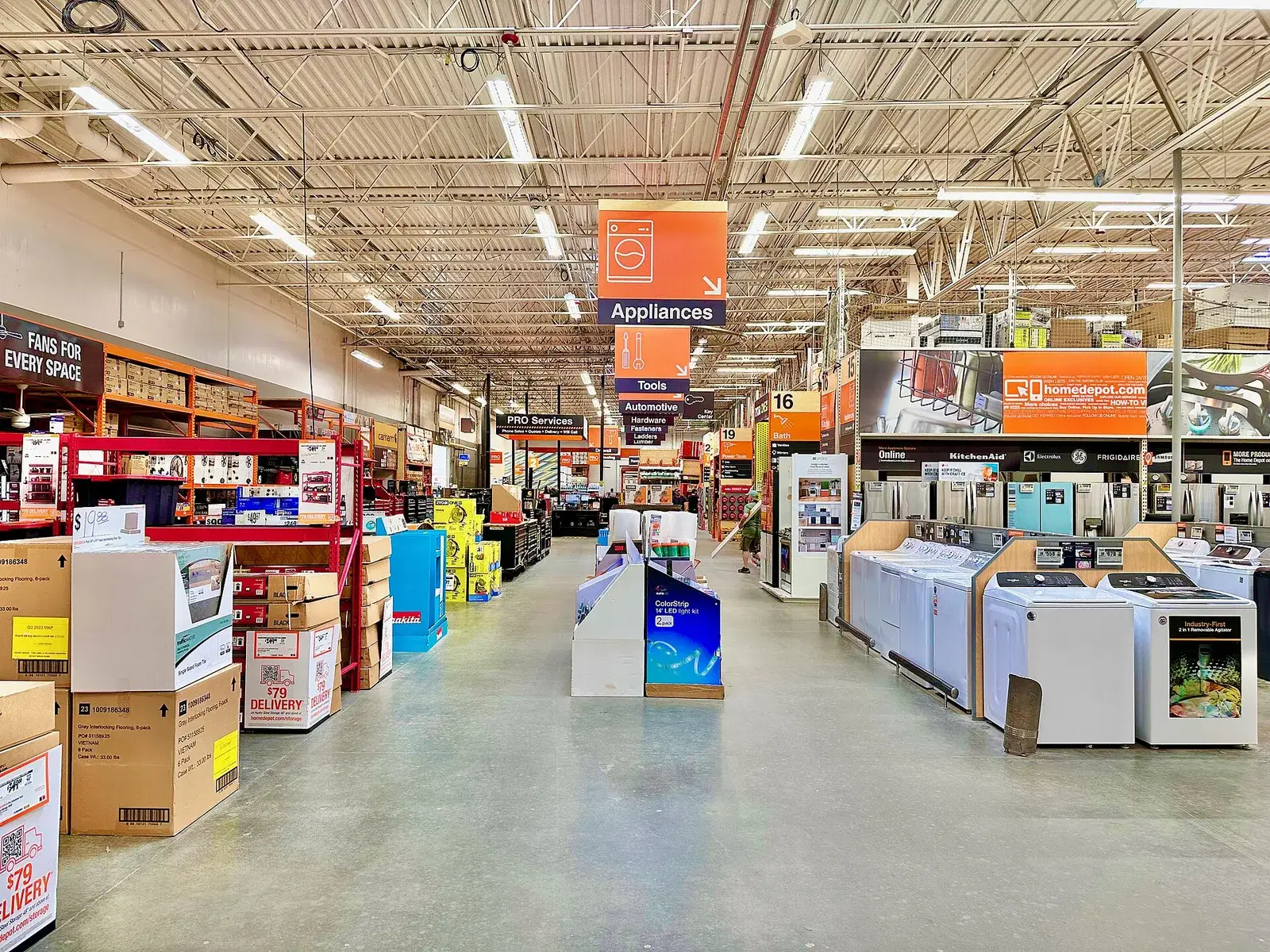
The strong quarter hides a difficult backdrop. Home Depot continues to scoop up market share, McPhail said, largely because of strength among professional contractors, who bought power tools and outdoor power equipment during the latest quarter. The company also saw encouraging sales trends across the middle of its stores, in areas such as electrical and plumbing. But homeowners continued to take on smaller home-improvement projects, while their willingness to take on larger projects remains pressured.
McPhail chalked the split up to two trends. “Number one, there’s this general economic uncertainty,” he said. “And number two, the rate environment right now is leading to a lot of continued deferrals of large projects.” The continually sluggish housing market is not helping. Existing home sales last week fell to their lowest level in more than 15 years, which means fewer people are moving into homes that need new kitchens, bathrooms and decks.
That is why the professional contractor business matters so much to the new chief executive. When homeowners defer big projects, contractors keep buying tools and materials for the jobs they do have, and Home Depot’s acquisitions of suppliers such as SRS Distribution and GMS were designed to deepen that relationship. The strategy has worked so far: comparable sales grew at their best pace in four years even while the housing market stayed weak. For homeowners thinking about their own budgets, our guide to how much renters insurance costs in 2026 breaks down one of the everyday housing costs that keeps rising, and our interest rate calculator guide explains how borrowing costs shape big purchases.
The market reaction will be watched closely in the coming days. Home Depot’s shares have been under pressure along with the wider housing sector, and investors will want to see whether the new leadership team can keep comparable sales growing while the housing market stays weak. The company’s own guidance suggests it can, but the test will come in the next two quarters, when McPhail will be running the company in his own right rather than as an interim chief. For a wider view of how markets are moving, see our stock market today report.
Frequently Asked Questions
Who is the new Home Depot CEO?
Richard McPhail, Home Depot’s chief financial officer since 2019, will become chief executive on November 23, 2026. He joined the company in 2005 and has held the chief executive role on an interim basis since August, when Ted Decker took a medical leave of absence.
Why is Ted Decker stepping down as Home Depot CEO?
Decker took a temporary medical leave of absence in August 2026. He has now returned from that leave and has stepped down as president and CEO, though he will continue to serve as chairman of the board of directors. He had been chief executive since 2022.
Who else was named in the Home Depot leadership change?
Ann-Marie Campbell, a 41-year veteran who began as a store associate, will become president and chief operating officer. Jordan Broggi, who has been with the company for 13 years, will become chief financial officer. Both appointments take effect when McPhail takes charge on November 23.
How did Home Depot perform in the third quarter?
Home Depot reported third-quarter sales of $43.4 billion, up 4.9 percent year over year and above Wall Street estimates of $42.8 billion. Comparable sales rose 2.2 percent, the best in four years, and net income rose 3.1 percent to $3.7 billion. The company raised its full-year guidance, now expecting total sales growth of about 4.5 percent.
What challenges does the new Home Depot CEO face?
A sluggish housing market, with existing home sales at their lowest in more than 15 years, and homeowners deferring large projects because of economic uncertainty and interest rates. McPhail has said the company will lean on professional contractors and keep investing in stores, technology and fulfillment while waiting for the housing cycle to turn.
Conclusion
Home Depot has chosen continuity, naming 20-year veteran and finance chief Richard McPhail as its new CEO from November 23, with Ann-Marie Campbell as president and chief operating officer and Jordan Broggi as chief financial officer. The change comes with strong third-quarter results behind it, with sales of $43.4 billion and the best comparable sales growth in four years. The challenge ahead is a weak housing market and cautious homeowners. McPhail’s bet is that professional contractors, sharper operations and steady investment will carry the retailer until the housing cycle turns.
