US Strikes Iran Qeshm Island Missile Site After Bahrain Radar Attack
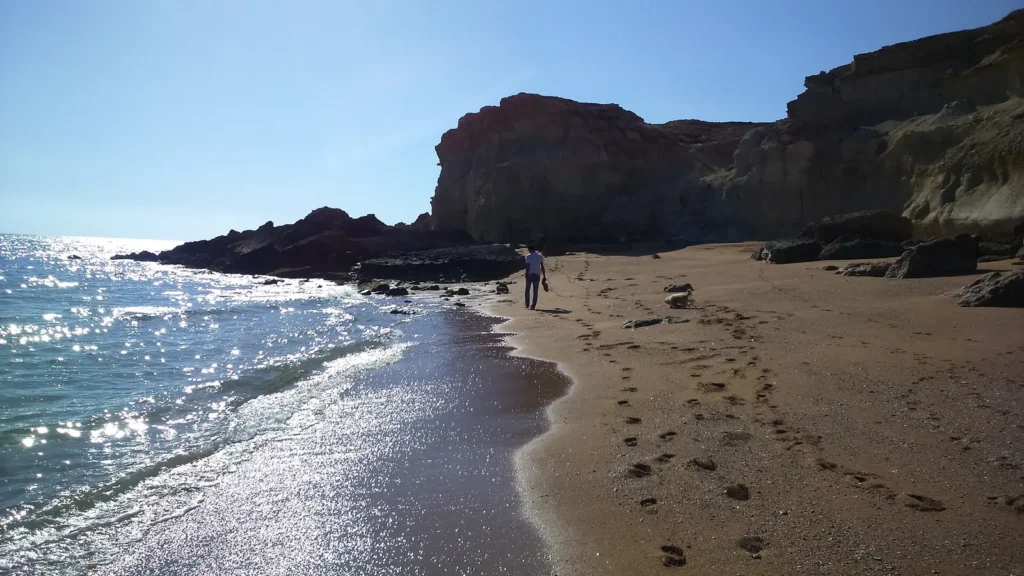
The US strike Iran Qeshm Island came on Tuesday, November 17, 2026, when American fighter jets hit an Iranian missile launch site in the Strait of Hormuz. A US military official said the jets used precision munitions against a site belonging to Iran’s Islamic Revolutionary Guard Corps, describing the operation as self-defense. The strike followed an Iranian drone attack earlier in the day on a US military radar system in Bahrain, the third Iranian attack on American targets in Bahrain in five days. Iranian officials said the attack caused no damage to homes, businesses or infrastructure on the island.
Table of Contents
US Strike Iran Qeshm Island: What Happened
A US military official, speaking on condition of anonymity, said US fighter jets fired on a Revolutionary Guards missile launch site on Qeshm Island in response to what the official called Iranian aggression targeting US personnel and assets. The strike was carried out on Tuesday, and Iranian media reported that five or six explosions were heard across the island on Tuesday evening. Ahmad Nafisi, the deputy provincial governor of Iran’s southern Hormozgan province, told the official IRNA news agency that the American attack caused no damage to residential, commercial or infrastructural areas, and that the situation on Qeshm Island was under control.
Qeshm Island sits in the Strait of Hormuz, the narrow waterway between Iran and Oman through which a large share of the world’s seaborne oil passes. The US military has carried out limited strikes on the island before, including earlier this month, in operations it has described as defensive and designed to keep energy tankers moving safely through the strait. The latest strike fits that pattern: a limited, targeted hit on a military site, rather than a return to the large-scale bombing of the early months of the war.
The exchange of fire came on the same day that talks between Iran and mediators continued. Qatari and Iranian officials met on Tuesday for talks aimed at bridging differences between the proposals on the table, according to Qatari spokesperson Majed Al Ansari. Iranian Foreign Minister Abbas Araqchi was visiting Oman, where he discussed safeguarding maritime corridors and keeping global shipping moving with Oman’s foreign minister, and also met Sultan Haitham bin Tariq about a diplomatic initiative to end the war.
The Bahrain Attack That Came First
Earlier on Tuesday, Iran’s Revolutionary Guards said they had launched a drone attack targeting a radar system operated by US forces at Sheikh Isa Air Base in Bahrain. The Guards said combat drones carried out a precision operation against the radar system, and described it as a response to repeated violations of Iranian airspace by US military drones. Bahrain, which hosts the headquarters of the US Fifth Fleet, said its air defenses intercepted the attack and that there were no reports of casualties or damage. The US military likewise said the attack inflicted no damage to US equipment and no injury to American personnel.
It was the third Iranian attack on American military targets in Bahrain in less than a week. Iran also fired on Bahrain on Sunday, saying it had targeted a US radar system at the Al-Rifaa helicopter base following what it described as hostile US actions. Tuesday’s attack on Bahrain followed the sentencing there of 64 people, mostly Shi’ite clerics, to life in prison on charges of colluding with Iran to undermine the state. Iran’s Foreign Ministry condemned the court ruling on Tuesday and said the accusations were baseless.
The Revolutionary Guards spokesperson, Hossein Mohebbi, said Bahrain had made three key mistakes, which he listed as cooperating in the invasion of Iran, remaining within the US security bubble, and encroaching on the sanctity of Shi’ite religious authority. He warned that if these continued, they would jeopardize Bahrain’s survival in the region’s new security order. Our earlier report on the Iranian drone attack on Bahrain covers the previous rounds of this confrontation in detail.
A Third Carrier and a Naval Blockade
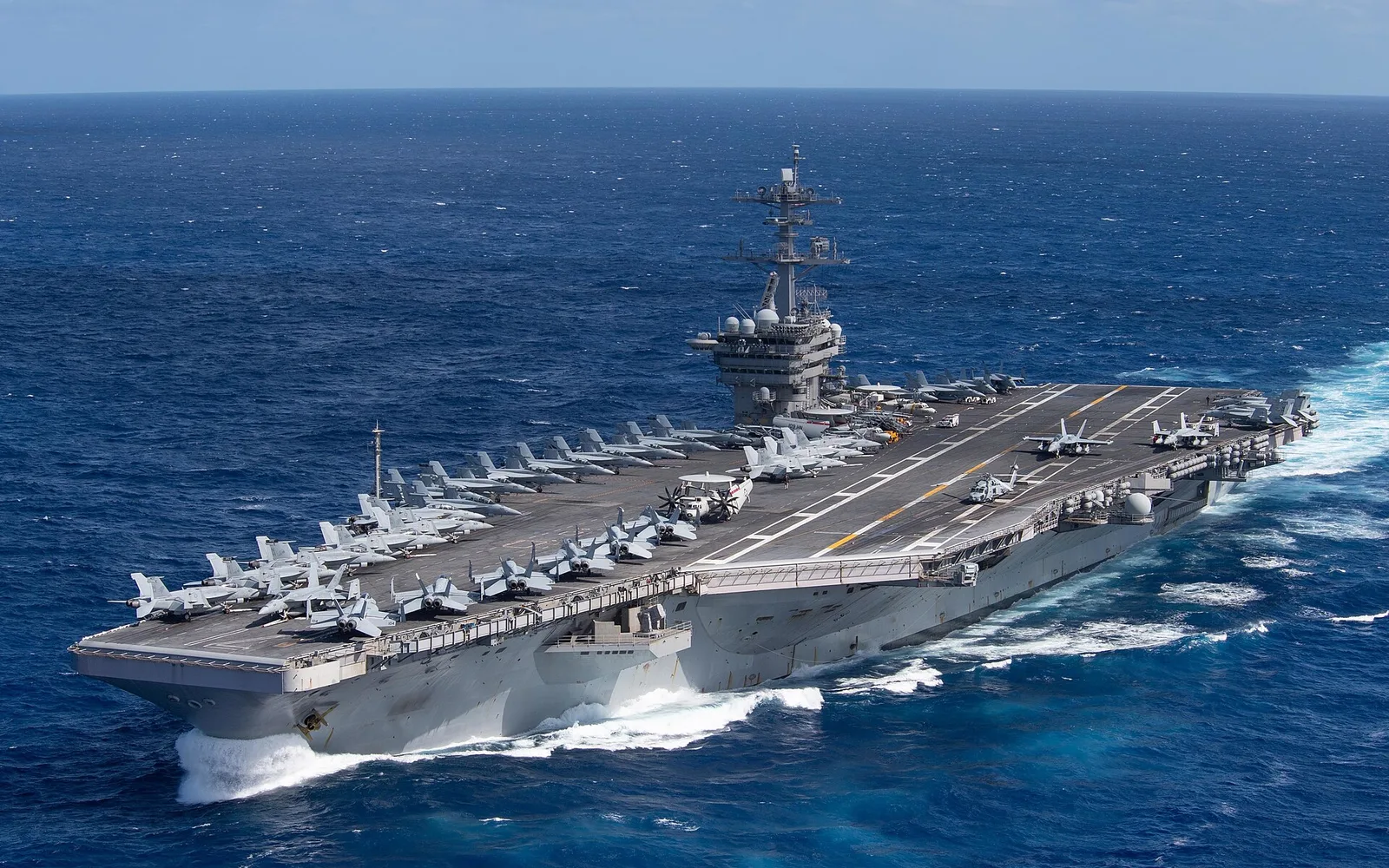
The US strike Iran Qeshm Island took place against a heavy American military buildup in the region. The USS Theodore Roosevelt aircraft carrier arrived in US Central Command’s area of responsibility on November 15, joining two other American aircraft carriers already in the Middle East. It is the first three-carrier concentration in the region since April, and it gives the United States far more air power within striking distance of Iran.
President Donald Trump has said he will maintain a US naval blockade on Iran because Tehran has continued to disrupt shipping in the Strait of Hormuz, and the blockade has become a sticking point in the negotiations. Trump has also said he might hold off from a wider attack on Iran if the United States does not face what he described as provocations from Tehran or from the Iran-backed Houthi group in Yemen. Tuesday’s exchange of fire shows how fragile that line is: a single drone attack on a radar station was enough to trigger an American strike in return.
The war itself has ground to a stalemate. The United States and Israel started the war with Iran on February 28, and Trump and other senior administration officials expected it to end within several weeks. Instead, the Iranian regime has refused to capitulate despite concerted military, economic and diplomatic pressure, and intense fighting has not taken place for several months. During this phase, the US military has conducted limited and infrequent strikes against Iranian targets to protect American personnel and military assets in the region.
The human and financial cost of the war keeps growing. The war has cost the US military at least $47 billion as of October 16, according to the latest estimate from the Pentagon, and the real number is certainly higher because that estimate does not include billions of dollars in damage to US bases in the Middle East. At least 23 US service members have died in the Middle East since the start of the war and another 865 have been wounded, according to the US military’s official casualty database. The war is also deeply unpopular among Americans, and voters showed their frustration with its economic consequences in the midterm elections, in which the Republican Party lost control of the House and the Senate.
The Strait of Hormuz and the Oil Price
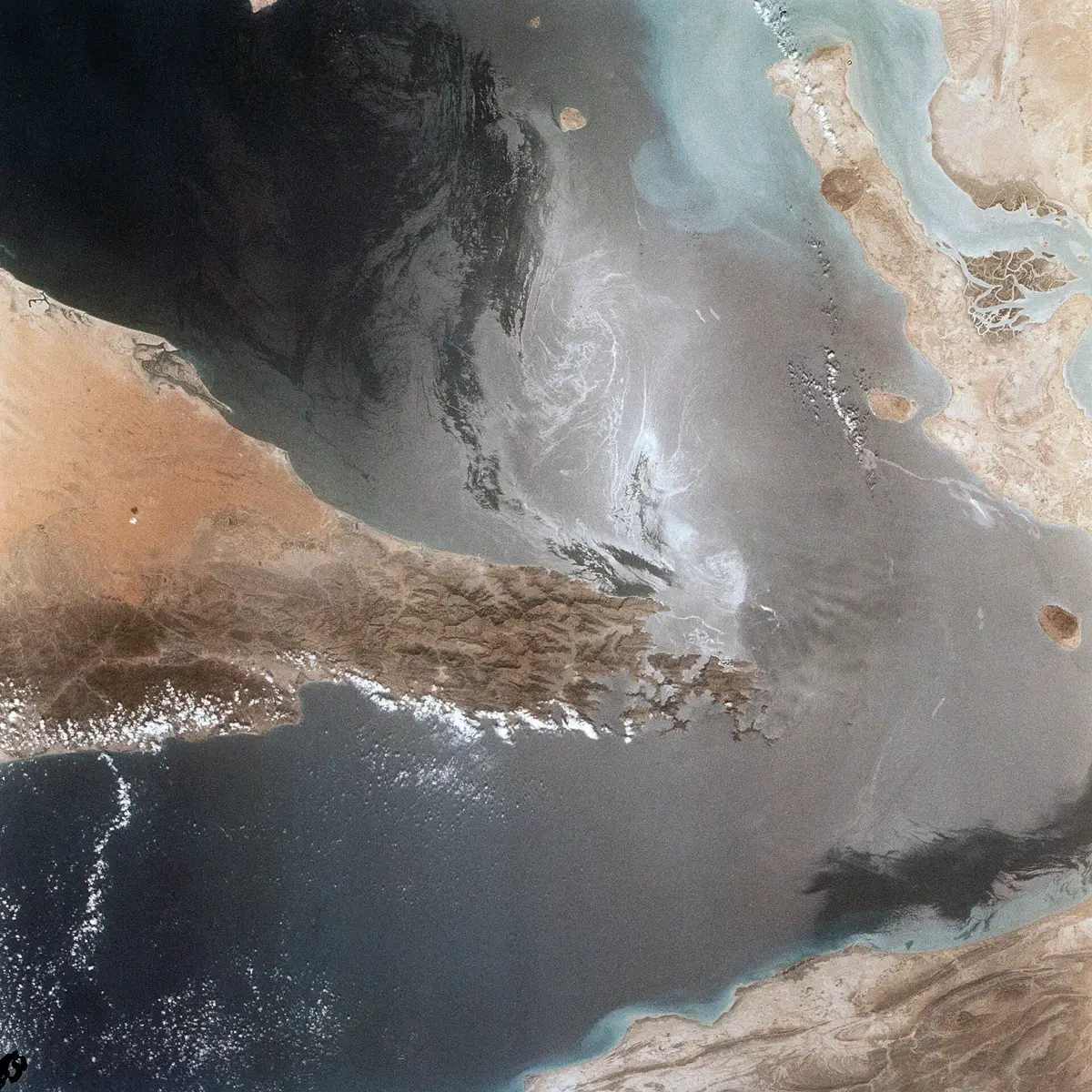
The Strait of Hormuz is the reason this confrontation matters far beyond the Middle East. The waterway carried about one-fifth of global oil and liquefied natural gas supplies before the war, and it is now partly blocked by Iran. According to the US Energy Information Administration, the Strait of Hormuz is one of the world’s most important oil transit chokepoints, which is why every clash near it moves energy markets.
Attacks on tankers have increased this month in the strait. The United Kingdom Maritime Trade Operations agency said the crew of a tanker passing through the waterway was unaccounted for after being attacked north of the Omani port city of Khasab. Iran’s Revolutionary Guards and navy said on Tuesday that a ship carrying liquefied natural gas and two oil tankers had caught fire in the strait, though those reports could not be independently verified. Benchmark Brent crude futures were up 0.4 percent at $92.76 a barrel on Tuesday, much higher than before the war but well below April’s wartime peak of $126.41.
The same day also brought a reminder of another threat. Trump said on Tuesday that the United States was taking seriously the possibility that Iran could be planning an attack involving a dirty bomb in Washington, after being asked about a CNN report citing US intelligence assessments. Iran’s Foreign Ministry spokesperson dismissed that report as part of a US campaign using baseless allegations. Our report on the reported Iranian dirty bomb plot has the full details of that intelligence assessment and the White House response.
Talks Continue Despite the Exchange of Fire
For all the shooting, neither side has walked away from the negotiating table. Oman has previously held talks with Tehran about controlling traffic in the strait, and Oman and Qatar are both acting as mediators between Washington and Tehran. Araqchi said in a post on Telegram that he met Oman’s Sultan Haitham bin Tariq and informed him about Iran’s diplomatic initiative to end the war. The Qatari meeting on Tuesday was described as an effort to bridge perspectives and narrow the gap between the proposals presented on the ground.
That diplomacy now has to survive a pattern that keeps repeating: an Iranian attack on an American target, an American strike in reply, and then a return to talks. The US strike Iran Qeshm Island was limited and drew no reported damage to civilian areas, which leaves room for both sides to step back. But the pattern has now repeated three times in Bahrain in five days, and each round raises the risk that a miscalculation turns a limited exchange into something larger. Trump is in Asia this week for meetings with regional leaders before talks with the leaders of China and Russia, and the Qeshm strike will follow him into those rooms. Read our report on Trump’s Asia trip for the schedule and what is at stake in those meetings. Official statements and schedules from the trip are published on the White House briefings and statements page.
Frequently Asked Questions
What happened on Qeshm Island on November 17, 2026?
US fighter jets struck an Islamic Revolutionary Guard Corps missile launch site on Qeshm Island in the Strait of Hormuz, using precision munitions. A US military official described the strike as a self-defense operation in response to Iranian aggression against US personnel and assets. Iranian officials said the attack caused no damage to residential, commercial or infrastructural areas.
Why did the US strike Qeshm Island?
The strike came hours after Iran’s Revolutionary Guards said they had launched combat drones at a US military radar system at Sheikh Isa Air Base in Bahrain. It was the third Iranian attack on American military targets in Bahrain in five days. The US military said the Qeshm strike was a response to that aggression.
Was anyone hurt in the Qeshm Island strike or the Bahrain attack?
No casualties were reported in either attack. Bahrain said its air defenses intercepted the drone attack and there were no reports of casualties or damage, and the US military said the same. Iranian officials said the Qeshm strike caused no damage to homes, businesses or public infrastructure.
Has the US struck Qeshm Island before?
Yes. The US military has carried out limited strikes on Qeshm Island earlier this month, in operations it described as defensive and designed to help energy tankers pass safely through the Strait of Hormuz.
Is the US at war with Iran?
The United States and Israel began a war with Iran on February 28, 2026. The war has ground to a stalemate, with no intense fighting for several months, but limited strikes and counter-strikes continue alongside a US naval blockade and mediation efforts by Oman and Qatar.
Conclusion
The US strike Iran Qeshm Island was a limited, targeted response to a third Iranian drone attack on American targets in Bahrain in five days. No casualties or civilian damage were reported on either side, and talks between Iran and mediators continued on the same day. But the exchange shows how close the region sits to a wider escalation, with three American carriers in the Middle East, a naval blockade in place, and tanker attacks rising in the Strait of Hormuz. Whether the diplomacy survives the next round of fire will decide what happens next.
