Baluchi Hound: The Afghan Hound’s Original Name Explained
The Baluchi hound is not a separate breed. It is the original name of the dog the world now knows as the Afghan hound, one of the oldest and most eye catching breeds in existence. The name points directly at the dog’s homeland: Balochistan, the vast arid region stretching across parts of modern Afghanistan, Pakistan, and eastern Iran. This guide explains what a Baluchi hound is, where the name comes from, what the breed looks like and how it behaves, and what life with one actually requires, from grooming to exercise.
Table of Contents
What Is a Baluchi Hound?
A Baluchi hound is an Afghan hound. The two names describe the same dog. The world’s kennel clubs universally recognize the breed under the name Afghan Hound: the American Kennel Club admitted it in 1926, and The Kennel Club in the UK, the Canadian Kennel Club, and the Federation Cynologique Internationale all use the same primary name. The name Baluchi Hound does not appear in any official breed standard today, but it is not forgotten. It survives in old breed books, in the history of the foundation bloodlines, and in the list of alternate names that includes the Tazi, the Balkh Hound, the Barakzai Hound, and the Sage Baluchi.
The name comes from geography. Balochistan shaped some of the world’s most capable hunting dogs over thousands of years, and the Baluchi hound was the dog of that region. The first foundation strain brought to Britain, the Bell-Murray line, was imported to Scotland in 1920 by Major and Mrs. G. Bell-Murray and Miss Jean C. Manson, directly from Balochistan. Those desert and steppe type dogs, lighter coated and sleeker than the mountain type, are the strain most directly tied to the Baluchi name. A second strain, known as Ghazni after Mrs. Mary Amps’s kennel in Kabul, represented the heavily coated mountain type. Together, the two strains became the modern Afghan hound.
History: From Balochistan to the Show Ring
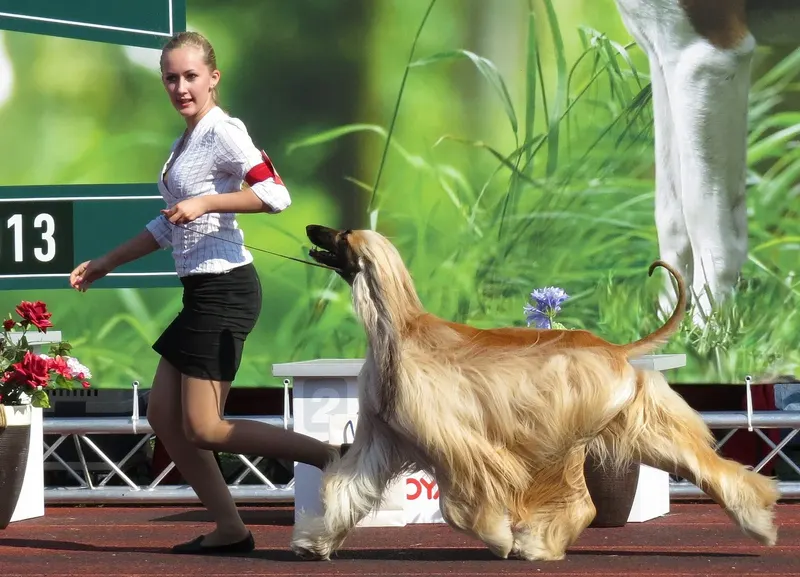
The Afghan hound has been identified as a basal breed, one that predates the emergence of modern breeds in the 19th century, and its closest relative is the Saluki. For centuries these sighthounds were bred by nomadic tribes to hunt gazelles, foxes, and rabbits in harsh mountain terrain. The work demanded speed, agility, and a coat that protected against the cold. The breed’s double suspension gallop, where all four feet leave the ground twice in each stride, lets it reach speeds near 40 miles per hour.
The breed’s local names tell the same story as its history. In Dari it is Sag-e Tazi, in Pashto Tazi Spay, and the regional names, Balkh Hound, Barakzai Hound, Kabul Hound, Kuchi Hound, all point to the places and peoples that kept the dogs. British observers in the colonial period sometimes called it the Eastern Greyhound or the Persian Greyhound. The American Kennel Club describes the breed as among the most eye catching of all, and it remains a show ring favorite a century after its recognition.
Size, Coat, and Appearance
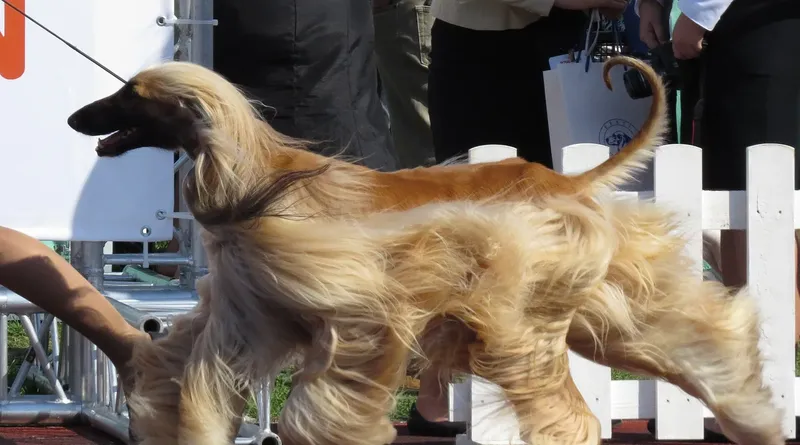
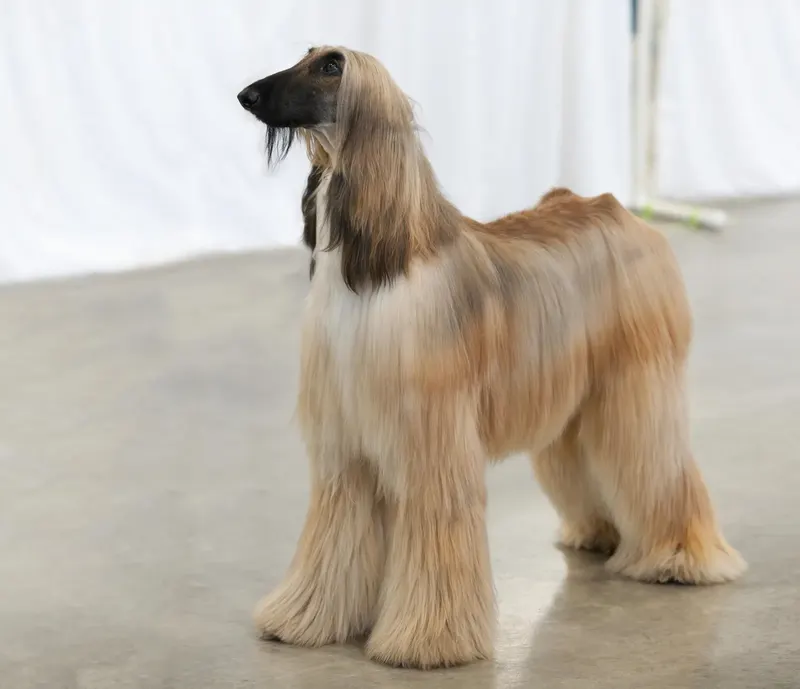
The Baluchi hound is a large dog with an aristocratic bearing. Males stand about 27 inches at the shoulder, females about 25 inches, and weight ranges from 50 to 60 pounds. The AKC breed standard describes a tall, narrow headed dog with almond shaped eyes, large drooping ears, big feet, and a tail with a ring curl at the end. High hipbones are a distinctive feature of the breed.
The coat is the breed’s signature: long, thick, fine, and silky, with a shorter haired saddle on the back. All colors occur, including cream, black, red, brindle, and parti-color. That coat is beautiful and demanding. It needs regular brushing to prevent matting, and many owners keep the dog in a shorter puppy clip if they do not show it. The FCI classifies the breed in Group 10, Section 1, long haired or fringed sighthounds, alongside the Saluki and other ancient coursing breeds.
Temperament and Personality
The Baluchi hound is aloof, dignified, and independent, and affectionate with its own family. It is calm indoors but fast and active outdoors, eager to chase anything small that moves. This is not an obedient breed in the way a Labrador or a German Shepherd is obedient. It is an independent minded dog that does what it wants, which is why trainers describe it as one of the more challenging breeds for first time owners.
With family, the breed is loyal and gentle. With strangers, it is reserved rather than fearful or aggressive. It is generally quiet, not a frequent barker, and it does well with older children who respect its space. Small pets are a different matter: the hunting instinct is real, and a Baluchi hound should never be trusted off leash around cats or small animals unless it was raised with them. A secure fence is not optional, because the breed has a strong escaping tendency and can clear a surprising height when it decides to chase.
Exercise and Training Needs
A Baluchi hound needs real exercise every day. A long walk is the minimum, and a chance to run in a securely fenced area is much better. Lure coursing, the sport the breed was built for, is the ideal outlet and is offered by many sighthound clubs in the United States. Without enough activity, the breed gets bored, and a bored Afghan hound finds its own entertainment, usually at the expense of your furniture.
Training needs patience and a light touch. Harsh corrections do not work on this breed and will make it shut down or walk away. Short, positive sessions with food rewards work best. Recall training deserves special effort, because the breed’s instinct is to chase first and listen later. Even a well trained Afghan hound should only be off leash in a fenced area. If you want a running partner, build up slowly: our guide on how to train for your first 5K covers the same gradual approach that works for dogs as well as people.
Grooming and Health
Grooming is the biggest ongoing commitment of owning a Baluchi hound. The long silky coat mats easily, especially behind the ears, under the legs, and around the collar. Plan on brushing several times a week and bathing every few weeks. Ears need regular checking, since the long ear feathering can trap moisture. Many owners learn to do the grooming themselves, but a professional groomer every six to eight weeks is a reasonable alternative.
Life expectancy is 12 to 14 years, and litters are usually six to eight puppies. The breed’s most significant health concern in recent years is chylothorax, a condition where fluid collects in the chest cavity, and the Afghan Hound Club of America has been working with researchers at the University of Missouri to study its prevalence and inheritance. Responsible breeders follow the health testing requirements of the Canine Health Information Center program. Before buying a puppy, ask the breeder for health clearances and for the results of the recommended tests.
Is a Baluchi Hound Right for You?
A Baluchi hound suits an owner who wants a beautiful, independent, athletic dog and is willing to pay for that beauty with grooming time and a secure yard. It suits a calm household, an active lifestyle, and someone who enjoys a dog with a mind of its own. It does not suit a first time owner who wants instant obedience, a household with small pets and no fence, or anyone who cannot commit to regular coat care.
If you decide the breed is right for you, go to a reputable breeder or a breed rescue. The Afghan Hound Club of America, the AKC parent club, maintains a breeder referral list and a rescue network. Expect to wait for a well bred puppy, and expect to pay for the privilege: this is an expensive breed to buy and to keep. The puppy stage brings the usual house training work too, and our guide on how to potty train a puppy in an apartment covers the balcony and pad options that work in small spaces.
Frequently Asked Questions
Is a Baluchi hound the same as an Afghan hound?
Yes. Baluchi hound is an old regional name for the Afghan hound, taken from Balochistan, the region the breed comes from. All kennel clubs recognize the breed as the Afghan hound today.
How big does a Baluchi hound get?
Males stand about 27 inches tall and weigh around 60 pounds. Females stand about 25 inches and weigh around 50 pounds. The breed is tall and narrow rather than heavy.
Are Baluchi hounds good family dogs?
They are gentle and affectionate with their own family and good with older children, but they are aloof with strangers and have a strong prey drive. They need a fenced yard and should not be trusted off leash around small pets.
How much grooming does a Baluchi hound need?
A lot. The long silky coat needs brushing several times a week to prevent matting, plus regular bathing. Owners who do not show their dogs often keep the coat in a shorter clip to make care easier.
Conclusion
The Baluchi hound is the Afghan hound under its original name, a basal sighthound from Balochistan with a history that reaches back thousands of years. It is tall, fast, and strikingly beautiful, with a long silky coat and a dignified, independent character. That beauty comes with real demands: daily exercise, patient training, a secure fence, and hours of grooming every week. For the right owner, a calm and active household that appreciates an independent dog, it is a remarkable companion. For anyone who wants easy obedience and low maintenance, it is the wrong choice, and knowing that before you buy is the kindest decision you can make.
