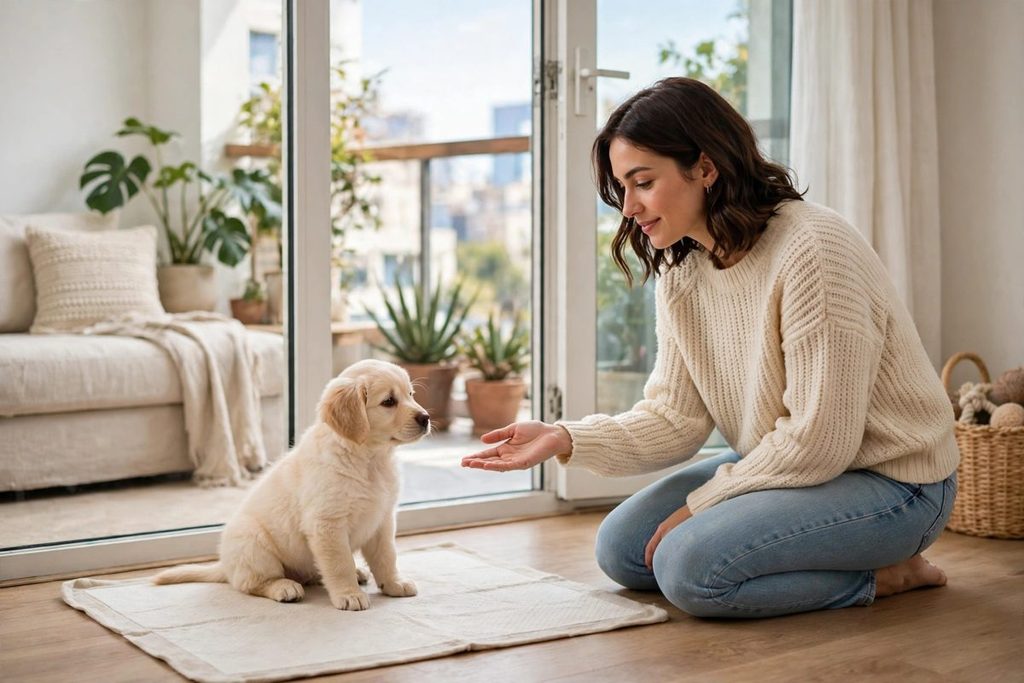
How to Potty Train a Puppy in an Apartment (Balcony and Pad Options Included)
It’s 2 a.m. You’re standing in a hallway in your socks, leash in one hand, a half-asleep puppy in the other, waiting for an elevator that seems to be stopping on every floor. Welcome to apartment puppyhood. The good news? Learning how to potty train a puppy in an apartment is completely doable. It just takes a clear setup, a boring routine, and a bit of patience (the American Kennel Club potty training timeline is a helpful extra read) while your puppy’s tiny bladder catches up with your expectations.
Table of Contents
How to Potty Train a Puppy in an Apartment: Start With the Setup
Before anything else, decide where the puppy is supposed to go. Puppies do best with one clear answer, not three maybes. In an apartment you generally have three choices: outside every time, a pee pad station indoors, or a grass pad on the balcony. Any of them can work. What matters is picking one main spot and sticking with it for the first few weeks.
If your long-term goal is outdoor-only, many trainers suggest skipping pads and going straight outside, because some puppies get confused about why the bathroom rug seems acceptable. But apartment life is real life. If you live on the 14th floor, work long hours, or your vet has told you to avoid shared outdoor areas until vaccinations are done, a pad or balcony grass patch is a sensible bridge, not a failure.
Set up the spot properly. Pads should sit in one fixed place, away from the puppy’s bed and food. Balcony grass pads need the balcony to be genuinely puppy-safe, with gaps blocked and nothing toxic within reach. Keep treats in your pocket or by the door, because the reward needs to happen within seconds, not after a trip back to the kitchen.
The Schedule That Makes It Click
Puppies don’t need a complicated system. They need repetition. A young puppy can typically hold it for roughly one hour per month of age, plus one, so a three-month-old needs a chance about every two waking hours, sometimes sooner.
Take your puppy to the spot at these moments, every single time:
- Right after waking up, even from a short nap
- Within 15 minutes of eating or drinking
- After play sessions, which get everything moving
- Last thing before bed, and usually once or twice overnight for young pups
Say the same cue each time, something like “go potty,” in a calm voice. Then wait. Be boring. The moment the puppy finishes, throw a small party: praise, a high-value treat, a bit of play. That celebration is the whole engine of training. The puppy learns that going in the right spot makes wonderful things happen, and going anywhere else makes nothing happen at all.
Supervise in between trips. A puppy wandering loose through three rooms will absolutely make a private decision behind the couch. Use a leash indoors, baby gates, or a playpen so accidents can’t happen out of sight while habits are forming.
Keep the puppy’s world small at first. One or two puppy-proofed rooms are plenty for the early weeks; new spaces can open up as the accidents fade. A smaller world means fewer surprise puddles in forgotten corners, faster cleanup when they do happen, and a puppy who is almost always within reach when the squat signals start.
Accidents Will Happen: Handle Them the Right Way
Even with a perfect routine, you will clean up puddles. Every apartment puppy owner does. When you find one, don’t scold the puppy, she genuinely can’t connect your frustration now with something she did twenty minutes ago, and punishment mostly teaches her to hide it next time.
Clean with an enzymatic cleaner made for pet messes. Regular sprays can leave behind scent markers that only dogs can smell, and those markers basically say “bathroom here.” If you catch the puppy mid-accident, interrupt gently, carry her straight to the right spot, and reward her if she finishes there.
Watch for the signals so you can prevent the next one: sniffing in circles, suddenly wandering off, squatting after an intense play burst. Catching those moments early is how the accident count drops week by week.
How to Potty Train a Puppy in an Apartment When You Work All Day
This is the question every working apartment dweller asks, and honestly, it’s the hardest part. A very young puppy cannot hold it for eight hours, and no routine changes that biology. So you build support around it.
A midday visit from a friend, neighbor, or dog walker for the first few months makes an enormous difference. If that’s not possible, a playpen setup with a pad at one end and the bed at the other is the realistic fallback, puppies naturally avoid soiling near where they sleep, so the layout works with their instincts instead of against them.
Keep departures and arrivals low-key, feed on a consistent schedule so potty times become predictable, and be patient with the overnight stretch. Most puppies start sleeping through, or close to it, somewhere around four months old.
Have a potty training trick that worked in your building? Write for us and share it with our readers.
FAQs
How long does it take to potty train a puppy in an apartment?
Most puppies get the basic idea within a few weeks and become fairly reliable between four and six months. Small breeds often take a little longer because their bladders are smaller.
Are pee pads a bad idea for apartment puppies?
Not necessarily. Pads are a practical option for high-rise living, bad weather, or pre-vaccination periods. Just keep the pad in one fixed spot and transition outdoors gradually if that’s your end goal.
How often should I take my puppy out at night?
Young puppies usually need one or two nighttime trips. Set an alarm based on how long your puppy has been sleeping comfortably, then stretch the interval as she grows.
My puppy goes right after coming back inside. What am I doing wrong?
Probably nothing, puppies get distracted outside. Stay a few minutes longer, keep the trip boring until she goes, and reward immediately. Also make sure the outdoor spot is quiet and familiar.
When should I worry and call a vet?
If a puppy who was doing well suddenly starts having frequent accidents, strains, or goes unusually often, get it checked. Urinary infections are fairly common in puppies and are easy to miss.