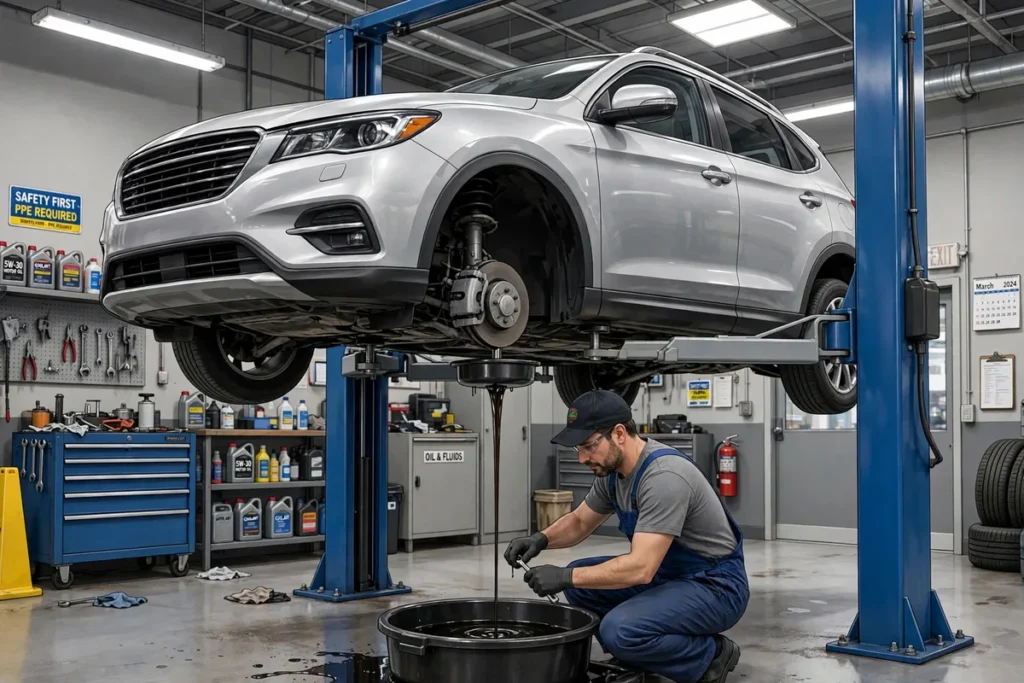
How Long Does an Oil Change Take? Time by Shop Type
Most oil changes take 15 to 45 minutes of actual work at a quick lube shop, 30 to 60 minutes at an independent shop, and 1 to 2 hours or more at a dealership. If you do it yourself at home, plan on 30 to 60 minutes. Those numbers cover the work itself, not the time you spend waiting for your turn, and that waiting time is where most drivers lose their morning.
Table of Contents
How Long Does an Oil Change Take?
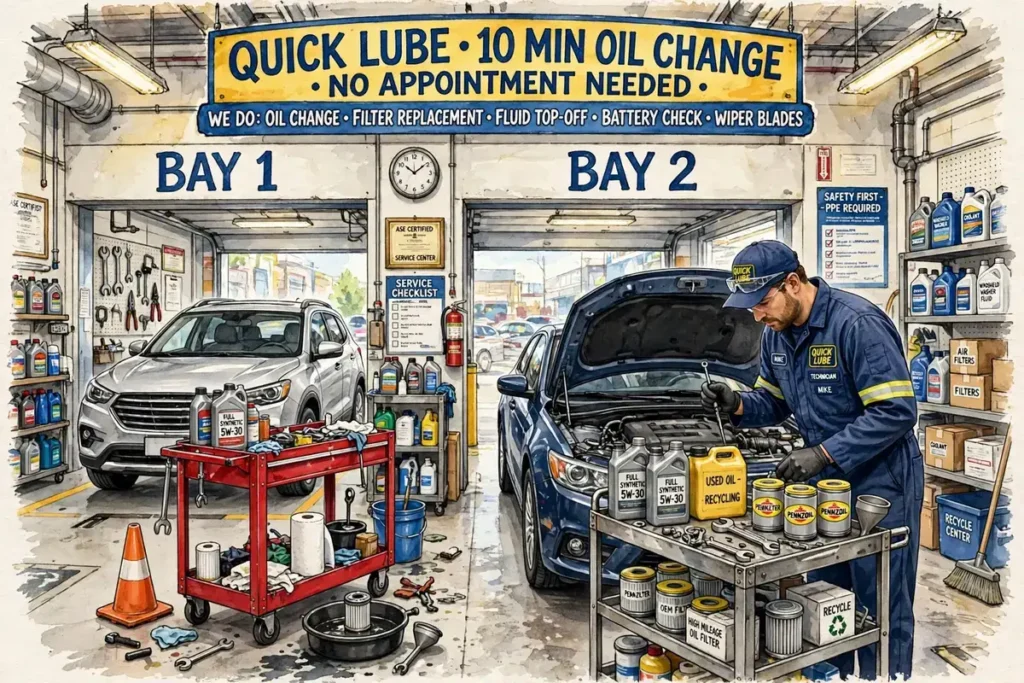
The honest answer depends on where you go, because the work is similar everywhere but the process around it is not. The table below shows the typical work time for each option, and the total time to plan for once waiting is included.
| Service option | Work time | Total time to plan for |
|---|---|---|
| Quick lube shop | 15 to 45 minutes | 30 to 60 minutes |
| Independent repair shop | 30 to 60 minutes | 45 minutes to 1.5 hours |
| Dealership service center | 45 minutes to 1.5 hours | 1 to 2 hours or more |
| DIY at home | 30 to 60 minutes | 30 to 60 minutes |
The most useful distinction is work time versus appointment time. Work time is the minutes a technician spends on your car, while appointment time adds check-in, the queue, the inspection, paperwork, and payment. Quick lube shops are built for speed, with drive-in bays and no appointment needed. Dealerships also handle warranty work and complex repairs, so your car may sit in a queue even when the work itself is quick.
Synthetic oil does not take longer to change than conventional oil. The drain and refill steps are identical, and any difference in the bill comes from the price of the oil itself, not the time on the clock.
What Happens During an Oil Change
An oil change follows the same basic sequence at almost every shop. The job is simple, but each step has a reason, and skipping one can cost you an engine.
First, the technician warms the engine briefly so the oil flows out easily, then lifts the car and removes the drain plug so the old oil can drain into a pan. While it drains, the old oil filter is removed and a new one is fitted, which matters because a clogged filter cannot protect clean oil. Next, the drain plug is replaced, fresh oil is poured in to the level your manufacturer specifies, and the engine runs for a short check for leaks around the plug and filter.
Finally, the oil level is checked with the dipstick and topped up if needed, and the service light is reset. Many shops add a multi-point inspection at this stage, checking tire pressure, fluid levels, belts, hoses, and lights. That inspection is usually what pushes a 20 minute job toward 45 minutes, but it can also catch a worn belt or low coolant before it becomes a breakdown. While you wait, think about related upkeep, such as how often to rotate your tires, since many shops can do both jobs in one visit.
Why Some Oil Changes Take Longer
The biggest factor is your vehicle itself. Some cars have the oil filter in an easy spot under the hood, while others hide it behind an undertray or above a crossmember. Trucks and SUVs that take more oil also take longer to drain and refill, and European models with cartridge filters can be slower than cars with simple spin-on filters.
The queue is the second factor, and it is usually the largest one. A shop with three cars ahead of you will keep you waiting even if your own job takes 20 minutes, and Saturday mornings are the busiest time at almost every service center. Extra services stretch the visit too: a tire rotation, a cabin air filter swap, or a fluid top-up adds 10 to 20 minutes each.
Your oil change interval also plays a part. Cars that follow the recommended interval drain cleanly, while oil left far too long can be thick and slow to drain, and a seized drain plug can turn a routine job into a longer repair. Sticking to the schedule in your owner’s manual keeps each visit short and predictable. If your car has other symptoms worth checking, such as a car that shakes when braking, mention it at check-in so the technician can look at it during the same visit.
DIY vs Shop: How Long Each Takes
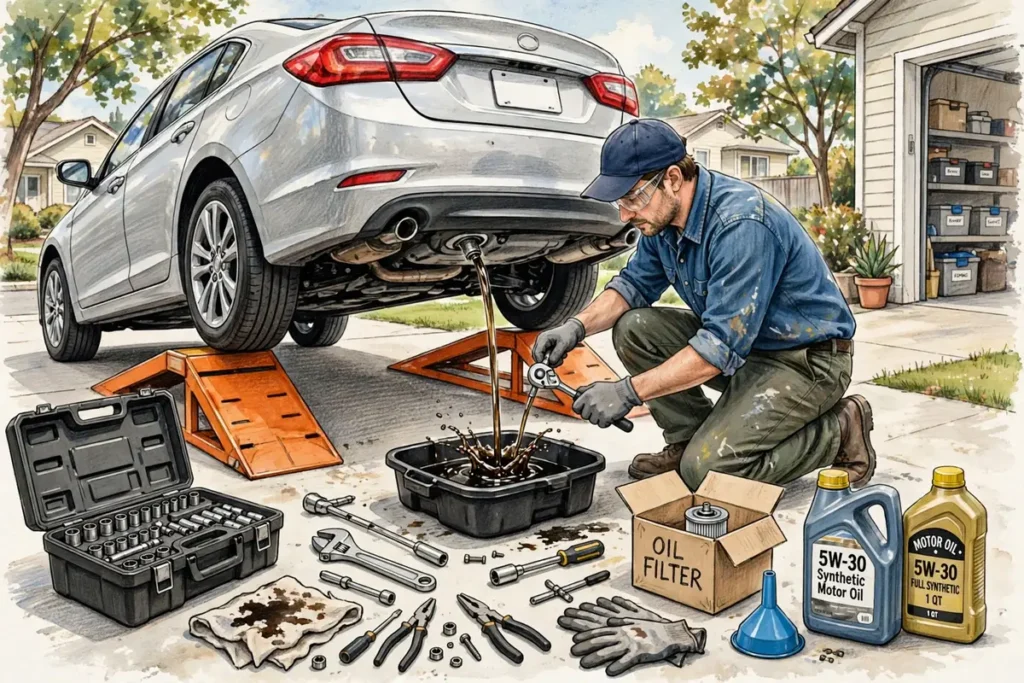
Doing the oil change yourself takes 30 to 60 minutes once you have done it a few times, and a little longer on your first attempt. The work itself is about 20 to 30 minutes: lifting the car safely, draining the oil, swapping the filter, and refilling. The rest is setup and cleanup, including laying out tools and taking the used oil to a recycling point afterward.
A shop is faster at the work itself because the car goes on a lift and the technician has done the same job hundreds of times. The trade-off is the trip and the wait. Driving to the shop, checking in, waiting for your turn, and paying can easily add 30 to 60 minutes around a 20 minute job, which is why a DIY oil change sometimes takes less of your day overall even though the hands-on work is slower.
DIY makes sense if you enjoy working on your car, you have a safe flat space and the right tools, and your car has an accessible drain plug and filter. A shop makes more sense if you are short on time, you lack space or tools, or your car needs a lift to reach the filter safely. Never work under a car supported only by a jack, and always use ramps or jack stands rated for your vehicle weight. After the job, a quick cabin refresh is a nice finish: see how to freshen your car interior. For a full rundown of what a professional service covers, see Bridgestone’s guide to how long an oil change takes.
How to Spend Less Time Waiting
You cannot change how long the work takes, but you can change almost everything around it. Book an appointment instead of walking in, because an appointment puts your car in the schedule rather than at the back of a queue. Midweek mornings are usually the quietest time at most shops, while Saturday mornings and the days before a holiday are the busiest.
Call ahead and ask two questions: how long the job will take for your exact model, and whether the oil filter for your car is in stock. Arriving with that answer avoids the most common delay, which is a shop discovering mid-job that it needs to order a part. Bring your owner’s manual oil specification with you, or know your oil grade and capacity, so there is no back and forth at the counter about which oil your car needs.
Frequently Asked Questions
How long does a synthetic oil change take?
A synthetic oil change takes the same time as a conventional oil change: 15 to 45 minutes at a quick lube shop and 30 to 60 minutes at an independent shop. The steps are identical, so synthetic oil costs more because of the oil itself, not extra labor time.
How long does an oil change take at a dealership?
Plan on 1 to 2 hours or more at a dealership. The work itself usually takes 45 minutes to 1.5 hours, but check-in, the service queue, the inspection, and the car wash many dealers include add waiting time. An early weekday appointment is the fastest option.
How long does a DIY oil change take?
A DIY oil change takes 30 to 60 minutes for most people, including setup and cleanup. The hands-on work is about 20 to 30 minutes, and first timers should allow an extra 15 to 30 minutes to work carefully.
Do I need an appointment for an oil change?
Quick lube shops accept walk-ins, and that is part of their appeal. Independent shops and dealerships usually work faster with an appointment, and booking ahead can cut your total visit time in half on a busy day.
How often should I change my oil?
Follow the interval in your owner’s manual, typically 5,000 to 7,500 miles for conventional oil and 7,500 to 10,000 miles for full synthetic oil in many modern cars. Frequent short trips, towing, or dusty roads can call for shorter intervals.