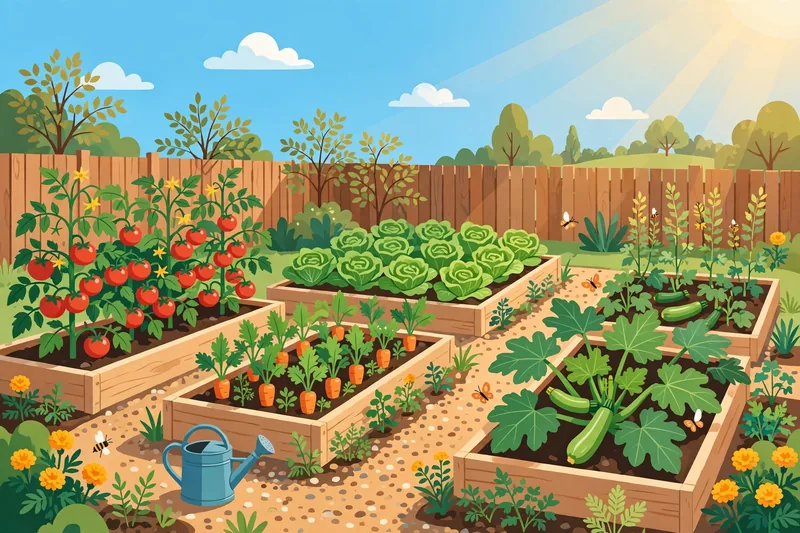
How to Start a Vegetable Garden: Step-by-Step Guide
Learning how to start a vegetable garden is one of the most rewarding home projects you can take on. A small bed can turn a sunny patch of yard into fresh tomatoes, crisp lettuce and herbs. You do not need experience, a large yard or expensive tools, just a sunny spot, healthy soil and a few easy crops. This guide covers each step, from choosing the location to the first harvest.
Table of Contents
How to Start a Vegetable Garden
Start small, even if your yard is large. A single 4 by 8 foot bed, or three to five containers, is enough for a first season and takes about 20 minutes of care a day. A bigger garden often turns into a weeding chore by midsummer.
Grow what your household already eats: list five weekly vegetables, then pick three or four for the first bed. You need only a garden fork, a hand trowel, a watering can and gloves. With compost, seeds and mulch, a first bed costs roughly 50 to 100 dollars. The University of Minnesota Extension offers free, research based advice on vegetable gardening for home growers, including planting dates and varieties for different climates.
Choose the Right Location and Sunlight
Sunlight is the one thing you cannot fix later, so choose the location before you buy anything. Watch your yard for a day and find the spot that gets six to eight hours of direct sun. Most vegetables need at least six hours, while fruiting crops such as tomatoes, peppers, squash and cucumbers do best with eight or more. Leafy greens tolerate some shade, so save the sunniest ground for fruiting crops.
Pick a level spot close to water and easy to reach, near the back door if possible. Avoid low spots where water pools, and keep the bed away from large trees, whose roots steal water and whose shade cuts sunlight. Renters should check with the landlord before digging. The choice between renting and owning shapes what you can plant, so read our guide on renting vs buying a home first.
Build Healthy Soil
Soil is where your harvest comes from. Most vegetables grow best in loose, well draining soil with a pH between 6.0 and 7.0. A soil test from your local cooperative extension office costs about 15 to 25 dollars and tells you the pH and nutrient levels.
Clear the grass and weeds, then loosen the top 8 to 12 inches with a garden fork. Spread 2 to 3 inches of finished compost over the surface and mix it into the loosened layer. Compost improves drainage in clay and water retention in sand. Compost plus a light organic fertilizer covers what most beginner vegetables need, and soil improves every season.
Raised Beds vs In-Ground Gardens
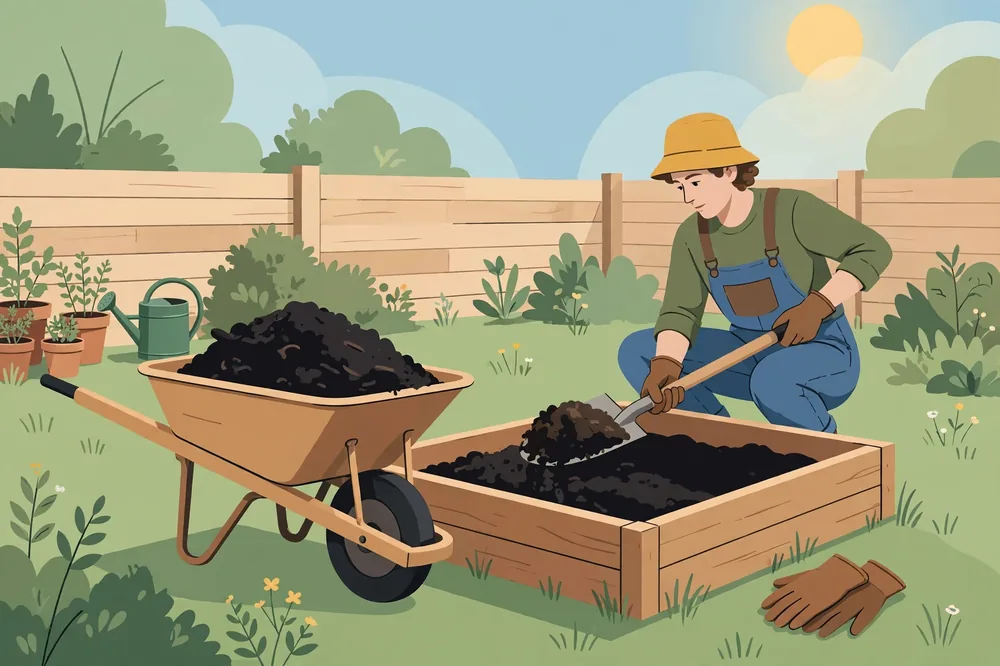
The right choice depends on your soil, your budget and your back. An in-ground garden is cheapest, since you use the soil you have, and it holds moisture longer.
Raised beds suit rocky, heavy clay or contaminated ground, where you control the soil fully. Their soil warms up earlier in spring, drains well and is easier to reach. A standard 4 by 8 foot bed needs about one cubic yard of fill, roughly 60 percent topsoil and 40 percent compost. The trade-off is cost: lumber, soil and compost for one bed can run 150 to 350 dollars, while an in-ground bed of the same size may cost under 60 dollars. Containers suit a balcony or patio, and you can move them to chase the sun.
Easy Vegetables for Beginners
Choose forgiving crops, and include one fast crop: radishes are ready in 22 to 30 days, lettuce in 40 to 55, and bush beans in 50 to 60.
| Vegetable | Start from | Days to harvest |
|---|---|---|
| Radishes | Seed, direct sow | 22 to 30 |
| Lettuce | Seed or transplant | 40 to 55 |
| Bush beans | Seed, direct sow | 50 to 60 |
| Zucchini | Seed or transplant | 45 to 55 |
| Cherry tomatoes | Transplant | 60 to 80 |
| Carrots | Seed, direct sow | 60 to 80 |
Cherry tomatoes are the most forgiving type for beginners, producing heavily even in imperfect conditions. Buy starter plants for tomatoes and peppers in your first year. Sow root crops directly, since they do not transplant well. Save corn, watermelon and cauliflower for year two: they need more space, time or care. Sweet potatoes are worth trying in warm climates, and your harvest can go into these sweet potato recipes.
Planting Your First Vegetables, Step by Step
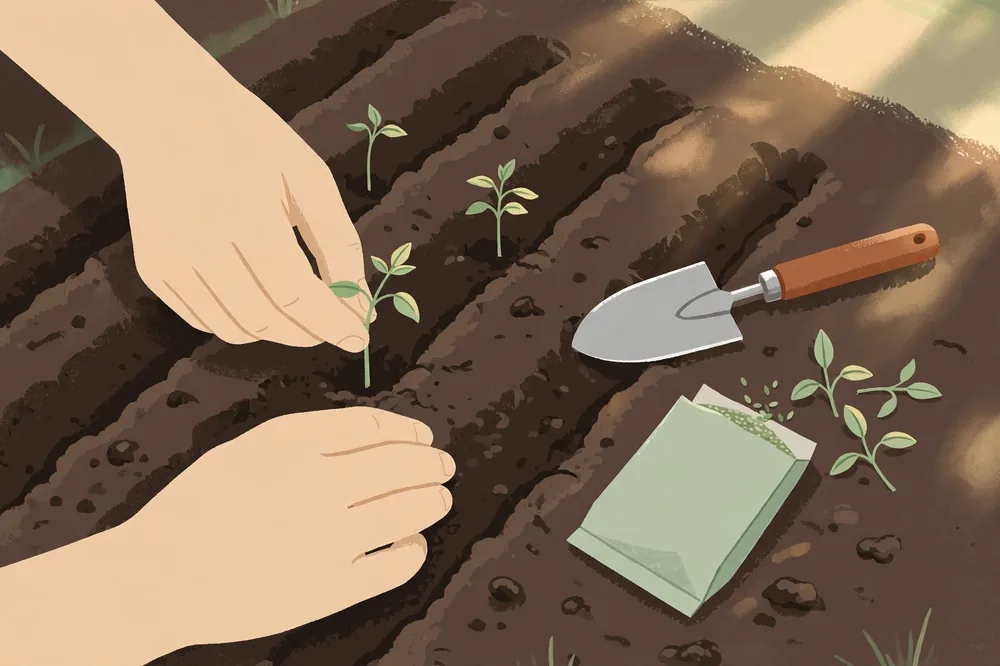
Planting dates depend on your average last spring frost, not the month. Find your last frost date and USDA hardiness zone, then work backward from them. Sow cool season crops four to six weeks before the last frost, and warm season crops about two weeks after it.
Follow the spacing on the seed packet: crowded plants compete for light, water and nutrients, and produce less. A tomato needs 24 to 36 inches, and a zucchini plant three to four square feet. Sow seeds at the depth on the packet and water gently right after planting. Label every row, because young seedlings of different vegetables look alike.
Watering, Mulching and Feeding
Vegetables need about one inch of water per week, including rain, delivered in two or three deep watering sessions rather than a daily sprinkle. Deep watering grows roots downward, while daily sprinkles keep them shallow, where they dry out fast. Water in the early morning, aiming at the soil, not the leaves, since wet leaves invite disease.
Mulch cuts watering and weeding work in half: spread two to three inches of straw or shredded leaves around plants, keeping it away from stems. Mulch holds moisture, keeps soil cool, blocks weeds and breaks down into organic matter. Feed lightly with compost or diluted liquid feed every three to four weeks.
Common Mistakes to Avoid
The most common beginner mistake is starting too big. A garden you cannot tend in 20 minutes a day becomes a chore. The second mistake is planting too early: warm season crops can die in one cold night, so check your frost date and wait.
Overwatering is as harmful as underwatering, so check the soil first: if the top two inches are dry, water, and if damp, wait a day. Crowded plants stay damp, catch disease easily and yield poorly, so give each plant its space. Check for pests weekly, looking under leaves and picking off caterpillars and beetles by hand. Harvest often, since picking young beans, zucchini and cucumbers keeps plants producing. Your harvest can star in holiday cooking, such as these turkey recipes.
Frequently Asked Questions
How much does it cost to start a vegetable garden?
About 50 to 100 dollars for a small in-ground bed, including tools, compost and seeds. A raised bed runs 150 to 350 dollars, and containers can start under 50 dollars.
How much sun does a vegetable garden need?
Six to eight hours of direct sun each day. Fruiting crops need the most, while leafy greens manage with four to six hours.
What is the easiest vegetable to grow for beginners?
Radishes are easiest, sprouting in days and ready in three to four weeks. Lettuce, bush beans, zucchini and cherry tomatoes are also very forgiving.
When should I start a vegetable garden?
It depends on your last spring frost date, not the calendar month. Plant cool season crops four to six weeks before it, and warm season crops about two weeks after it.
Can I start a vegetable garden in containers?
Yes, especially on a balcony or patio. Use large pots with drainage holes and quality potting mix, and grow compact varieties such as cherry tomatoes, bush beans, lettuce and herbs. Check moisture daily in hot weather.