Why Does My Car Shake When I Brake? 7 Common Causes
A car that shakes when you brake is trying to tell you something. The shaking is not normal, and it is not something to ignore, because your brakes are the one system you depend on every single drive. The good news is that the cause is usually easy to find once you know what to look for. Mechanics hear the question “why does my car shake when i brake” so often because the symptom has several possible causes.
Most of the time the shaking comes from one of seven places: the brake rotors, the brake pads, the wheels and tires, the wheel alignment, the suspension, a sticking caliper, or a worn wheel bearing. Below is each one in plain language, with the symptom that points to it, so you can walk into a repair shop knowing what to ask for instead of guessing. If you have ever asked, “why does my car shake when i brake,” this guide has the answer.
Table of Contents
1. Warped Brake Rotors (the Most Common Cause)
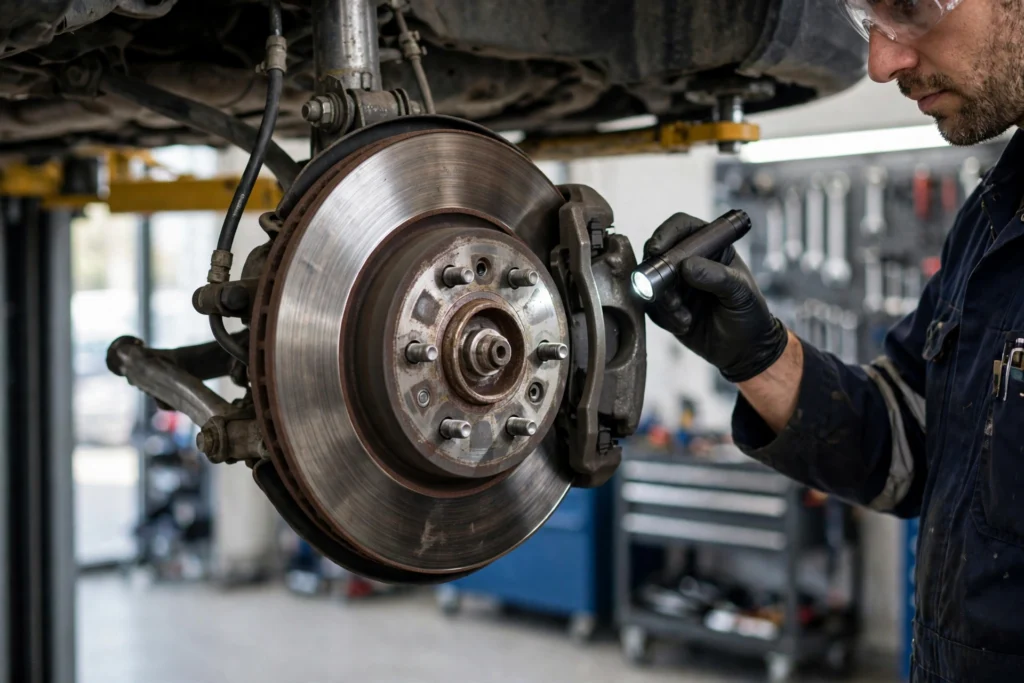
Your brake rotors are the smooth metal discs your brake pads squeeze to slow the car. Over time, heat from braking can make a rotor wear unevenly, which drivers often describe as a “warped” rotor. When the pads press against an uneven surface, the pedal pulses and the whole car shakes, and the shaking usually gets worse at highway speed.
If the shaking shows up mainly through the brake pedal, the front rotors are the first suspect. A mechanic measures the rotor thickness and checks for runout, which is how much the disc wobbles as it turns. Light uneven wear can sometimes be fixed by resurfacing the rotor, but a rotor that is too thin or badly worn needs replacing, in pairs, so both front wheels brake evenly.
2. Worn Brake Pads
Brake pads are designed to wear down. When they get thin, they lose the even contact that keeps braking smooth, and the car can shudder as the pads grab and release instead of gripping steadily. A worn pad can also damage the rotor it presses against, turning a cheap pad job into a more expensive rotor job.
Listen for a squeal or a grinding noise when you brake. A squeal is often the pad’s wear indicator telling you replacement time is near. Grinding means metal is meeting metal, and the car should not be driven far. Brake pads are one of the most routine repairs a shop performs, and replacing them early is always cheaper than waiting.
3. Wheels Out of Balance or Damaged Tires
Sometimes the shaking starts with the wheels, not the brakes. A tire that has lost a wheel weight, a wheel with a slight bend, or a tire with a bulge or flat spot can shake the car, and braking makes the vibration more obvious because the car is slowing through the speed where the imbalance shows up.
If the steering wheel shakes more than the pedal, start here. A wheel balance costs little and is often the first thing a shop checks. Tires with uneven wear, sidewall bulges, or damage from a pothole need to be replaced rather than rebalanced, because no amount of balancing fixes a damaged tire.
For a related check you can do without any tools, read Free Air Near Me: Where to Fill Your Tires for Free – correct tire pressure alone prevents a surprising amount of vibration.
4. Wheel Alignment Problems
Wheel alignment is about the angle at which your tires meet the road. Hit a pothole or a curb hard enough and those angles move. The car may pull to one side, the steering wheel may sit off center, and braking can bring out a shake that was barely noticeable at steady speed.
A professional alignment fixes the angles back to the manufacturer’s settings. While the car is on the alignment rack, the shop can also spot bent suspension parts that an alignment alone would not fix, which is why a good shop checks both together.
5. Worn Suspension Parts
Your suspension keeps the tires pressed to the road, so when its parts wear out, the car shakes under braking. The usual suspects are worn bushings, ball joints, or tie rod ends. These parts develop play over time, and braking loads them in exactly the direction where that play shows up as a shake.
Suspension wear is a wear-and-tear problem, not a defect, and it shows up on higher-mileage cars first. A mechanic checks for play by lifting the car and moving each wheel by hand. Worn suspension parts are a safety issue, not a comfort issue, so this one should not be postponed.
6. A Sticking Brake Caliper
A brake caliper squeezes the pads onto the rotor, then releases. If a caliper sticks, one wheel keeps braking after you lift your foot. That wheel pulls and shakes, the car may drift to one side, and the affected wheel can feel hot or smell of burning after a drive.
A sticking caliper can come from a corroded slide pin, a damaged hose, or a caliper piston that no longer moves freely. A shop will usually service the slide pins or replace the caliper. If you ever notice one wheel much hotter than the others after driving, that is the clue to look for.
7. Worn Wheel Bearings
A wheel bearing lets the wheel spin freely around the axle. When it wears, the wheel wobbles slightly, and braking makes that wobble show up as shaking, often with a humming or growling noise that changes with speed.
Wheel bearings are sealed units on most modern cars, so they are replaced rather than repaired. The noise is the giveaway here: if the shaking comes with a hum that rises and falls with speed, tell the mechanic to check the bearings first.
What to Do Next
Do not wait to find out which one it is. A shake under braking is one of those symptoms that only gets more expensive with time, and the brake system is not a place to gamble. Note when the shaking starts, whether you feel it in the pedal or the steering wheel, and whether it changes with speed. That information helps a mechanic find the cause faster and saves you paying for a wrong guess.
Start with the cheap checks: tire pressure and a wheel balance. If those are fine, have the rotors and pads inspected, then the alignment and suspension. For routine maintenance habits that keep the whole braking system healthier, read How Often Should You Rotate Your Tires? – regular rotation catches uneven tire wear before it turns into shaking under braking. For a quick reference on brake warning signs, see AAA’s guide to 11 ways to know you may need new brakes. If you have worked through the checks above and you are still asking why does my car shake when i brake, a mechanic can measure the rotors and check the suspension for play in a single visit.
FAQs
Is it safe to drive if my car shakes when I brake?
Not for long. A mild shake at low speed may be a balance issue, but shaking under braking can also mean worn brakes or suspension. Have it inspected as soon as possible, and avoid highway driving until you know the cause. If you are wondering why does my car shake when i brake, do not wait for an answer: have it inspected as soon as possible.
How much does it cost to fix?
A wheel balance is cheap. Brake pads are moderate. Rotors, calipers, and suspension parts cost more. The exact price depends on the car and the cause, which is why a diagnosis comes before any quote.
Can bad tires cause shaking when braking?
Yes. A tire with a flat spot, a bulge, or uneven wear shakes the car, and braking makes it more obvious. Tires should be inspected for damage whenever shaking appears.
Why does the steering wheel shake but not the brake pedal?
That usually points to the front wheels: balance, tire damage, or a worn suspension part on the front axle. Pedal-only shaking points more toward the rotors. In short, if you are asking why does my car shake when i brake and the pedal feels steady, the front wheels are the first place to look.
Does a shaking car always mean warped rotors?
No. Warped rotors are the most common cause, but worn pads, bad tires, alignment, suspension, calipers, and bearings can all cause the same symptom. The pattern of the shaking is what tells them apart. Warped rotors are the most common answer when you ask why does my car shake when i brake, but they are not the only one.