
GED Classes Online: Study, Pass, and Earn Your Diploma
If you left school before earning a diploma, online GED classes can give you a second chance without forcing you to sit in a classroom every day. They prepare you for the GED test, a high school equivalency exam that many employers, colleges, and training programs accept in place of a diploma. You can study from home, on your own schedule, and at your own pace.
Table of Contents
GED Classes Online: How They Work
The GED test covers four subjects: Mathematical Reasoning, Science, Social Studies, and Reasoning Through Language Arts. Most online GED prep programs are organized around these four subjects, with video lessons, practice questions, and full practice tests. Some are full/y self-paced, so you study whenever you have time. Others add live classes, a tutor, or a coach who checks your progress.
A good program starts by finding out where you stand. Many offer a short placement test, then build a study path around the subjects where you need the most help. Spend more time on math if numbers are your weak point, and move quickly through reading if that part already feels comfortable.
Online classes fit around work and family life. You can study for 30 minutes during a lunch break, an hour after the kids are asleep, or a longer session on the weekend. That flexibility is the main reason many adults choose online prep over evening classes at a local center.
Before you pay for anything, check what your state requires, since rules about online testing, test fees, and age limits vary by state. Visit the official GED Testing Service site to check your state rules and find a testing center near you.
Free vs Paid Options Compared
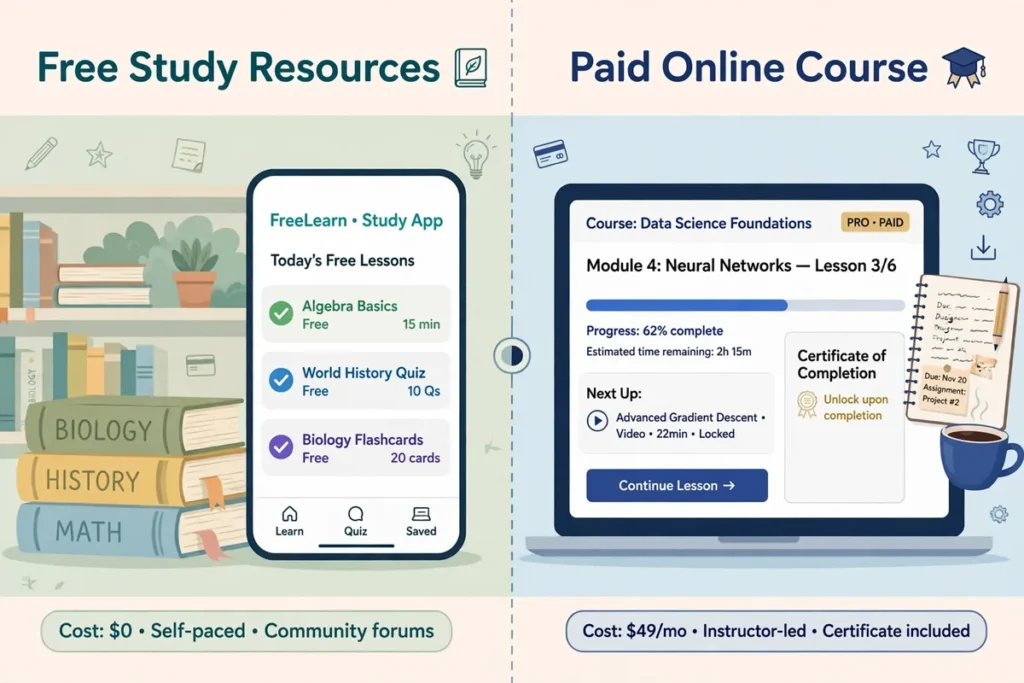
You do not have to spend money to start preparing. Several respected free options cover the same four subjects, and many learners pass using free materials alone. Paid programs add structure, more practice questions, and sometimes live help, which can be worth the cost if you need extra support.
| Program | Format | Price | Best for |
|---|---|---|---|
| USAHello | Self-paced lessons | Free | Simple lessons for new learners |
| Khan Academy | Videos and practice | Free | Math and reading practice |
| GED.com free tools | Practice questions | Free | Learning the test format |
| Adult education | Online or in-person | Free or low cost | Local support and a teacher |
| Public libraries | Online resources | Free with a card | Free study materials |
| Onsego | Self-paced videos | About $79 to $199 one-time, per listings | A complete course with practice tests |
| Kaplan | Self-paced or live | About $129 for 3 months, per listings | Structured lessons, known brand |
| Mometrix | Self-paced course | About $29.99 per month, per listings | Short lessons, lots of practice |
| Essential Education | Self-paced course | About $19.99 per month or $99.99 lifetime, per listings | Low monthly cost, full plan |
Prices change often, so confirm the current price before you buy. Free options are a smart first step, because they show which subjects need the most work before you spend anything. The best online GED classes for you are the ones you will actually finish, so pick a format that fits your routine.
If money is tight, start with the free resources and a library card. If you are planning for college after the GED, read our guide on how to get scholarships for college in the US, since many scholarships accept GED graduates.
How Much Do GED Classes and the Test Cost
The cost has two parts: the classes and the test itself. Classes range from free to a few hundred dollars. The test fee is separate, and it varies by state.
According to GED Testing Service information, the test costs about $26 to $50 per subject, or roughly $105 to $200 for all four subjects. Some states charge less, some charge more, and some offer vouchers or fee waivers for first-time test takers or for students in adult education programs. Ask your state adult education office whether you qualify for help with the fee.
A free study plan plus the test fee may cost you only the test itself. A paid course plus the test fee may cost a few hundred dollars in total. Compare that with what a GED diploma can unlock: better job options, higher pay, and the chance to apply for college or job training.
A Study Plan That Works
A study plan works best when it is simple, regular, and focused on your weakest subjects first. Most adults do well with 45 to 60 minutes a day, five days a week, for about two to three months.
Start with a GED practice test in all four subjects. This shows you exactly where to begin. If you score well in Social Studies but struggle with Math, spend most of your time on math and review the other subjects lightly. This is the fastest way to improve, because you are not repeating lessons you already know.
A practical plan looks like this. Weeks 1 and 2: take practice tests and build your schedule around your weakest subject. Weeks 3 to 6: work through lessons in your two weakest subjects. Weeks 7 to 9: take full practice tests and review every question you got wrong. Week 10: take the GED Ready test for each subject and book the real test where you score in the passing range.
Study one subject at a time and finish it before moving on. Use the practice questions at the end of each lesson, not just the videos, because answering questions builds test-day skill. Write down formulas, key dates, and reading strategies in a notebook for a quick review in the final week.
How to Take the GED Test Online or at a Center
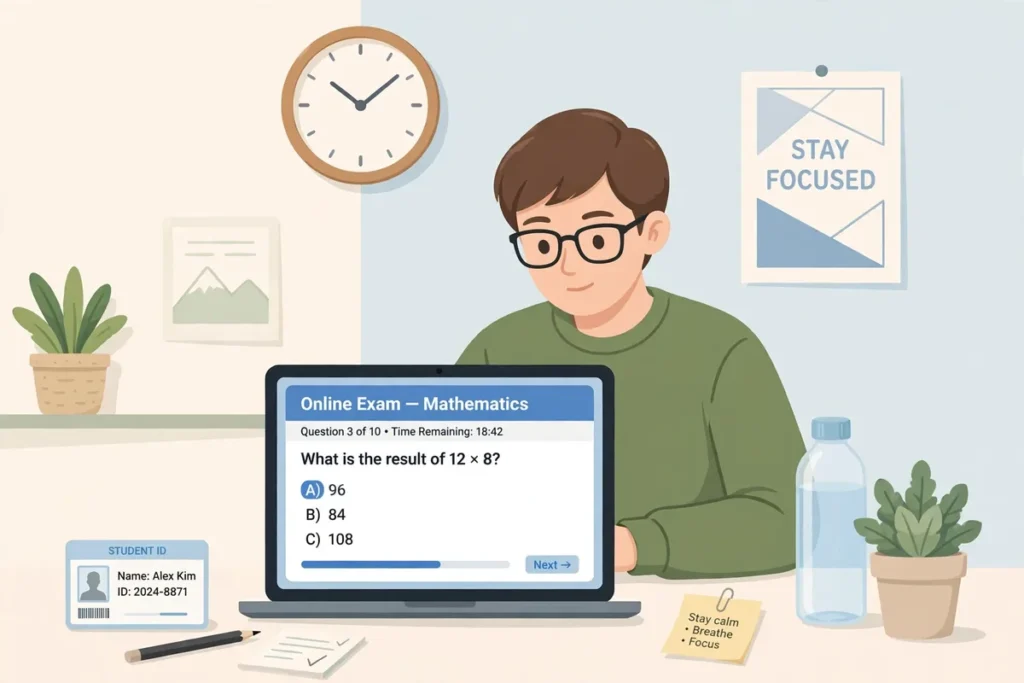
When your practice scores show you are ready, book the real test through the official GED website or at a testing center. Many states now allow online testing from home, but only if you meet the requirements: a quiet, private room, a computer with a webcam, a stable internet connection, and a valid photo ID. An online proctor watches you through the webcam for the whole test.
If online testing is not available in your state, or if you prefer a testing center, take the test in person instead. Centers provide the computer, a quiet room, and staff who can help if something goes wrong. Some learners prefer this because it removes worries about internet problems or webcam setup at home.
You can take the four subjects on separate days. Pass one subject, then move on to the next. If you do not pass a subject, you can retake it, though retake rules and fees vary by state. Once you pass all four subjects, your state issues your GED credential. No prep program issues the credential itself.
Choosing a college major is the next big decision for many GED graduates, so when you are ready, read our guide on how to choose the right college major to think through your options before you apply.
FAQ
Can I get my GED fully online?
You can prepare fully online, and in many states you can also take the test online from home if you meet the requirements. The credential is issued by your state after you pass the official test.
How long does it take to prepare for the GED online?
Most adults need about two to three months of regular study, at 45 to 60 minutes a day, five days a week. If you study less often, allow extra time.
Are free GED classes online good enough to pass?
Yes, many learners pass using free resources such as USAHello, Khan Academy, GED.com free tools, and state adult education programs. Paid courses add structure and extra practice.
How much does the GED test cost?
The test fee is about $26 to $50 per subject, or roughly $105 to $200 for all four subjects, depending on your state. Some states offer vouchers or fee waivers.
What score do I need to pass the GED?
You need a passing score on each of the four subject tests. The GED Ready practice test shows whether you are likely to pass before you pay for the real test.
Online GED classes put a diploma within reach for busy adults. Pick a program that fits your budget, follow a steady study plan, use practice tests to check your progress, and book the real test when you are ready.