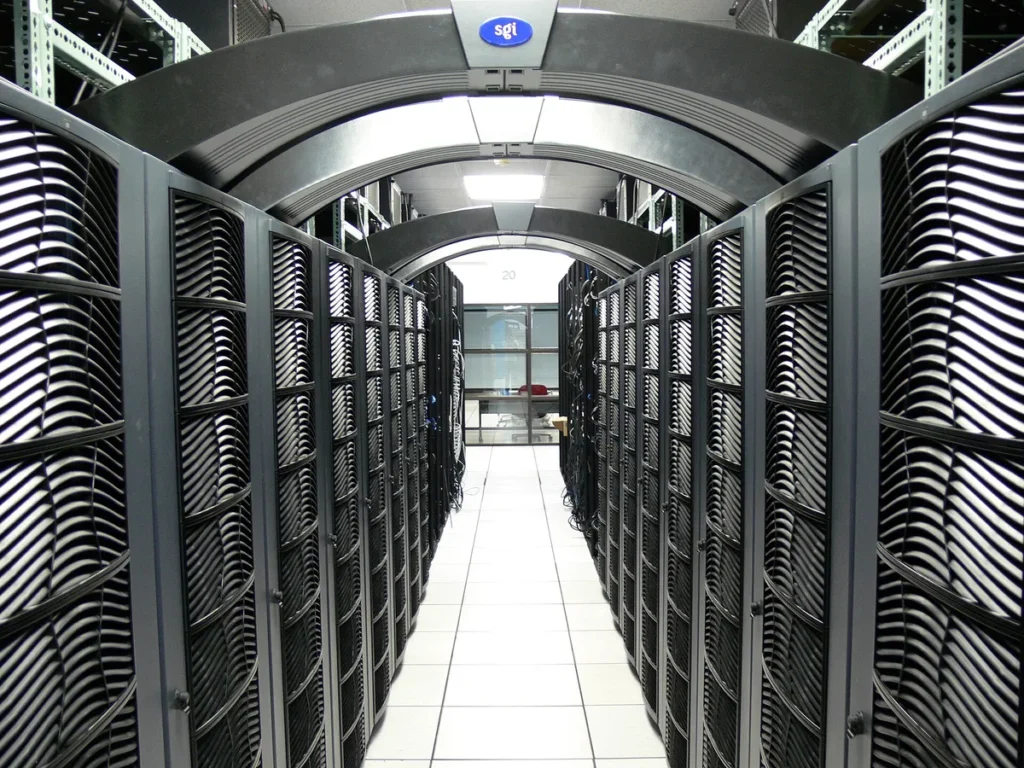
Trump Threatens Tremendous Tax on US Firms That Build Data Centers Abroad
President Donald Trump said on Friday, November 20, that the United States will penalize American companies that build data centers overseas, warning of a “tremendous tax” on firms that move the work abroad. The trump data center tax threat came at a White House news conference after his return from a trip to Asia, and it puts the president at odds with some of the biggest technology companies in the country, many of which are planning data centers outside the United States. The companies say the facilities are essential to the AI race, while critics say a tax would raise costs and slow the buildout. Here is what Trump said, why the companies are building abroad, and what happens next with the trump data center tax.
Table of Contents
Trump Data Center Tax: What the President Said

“We’re not going to allow our companies to build data centers outside of our country,” Trump said at the White House news conference, according to Reuters. “We’ll put a tremendous tax on them if they do it.” He added: “We’re going to fight very hard for the data centers.”
Trump named the states where he wants the facilities built instead. “If they won’t go in Texas or they won’t go in California, they’re going to go in West Virginia. We have a lot of places that want them badly, and they’re great places,” he said, according to USA Today.
The announcement was short on detail. According to the Associated Press, Trump said he had not yet told his staff about the proposal, and it was not immediately clear how it would be enforced. No tax rate was named, no legislation was introduced, and no executive order was signed at the news conference. The threat, for now, is a statement of intent rather than a policy with a mechanism behind it.
Trump framed the issue as a contest with China. He calls artificial intelligence “super intelligence,” and he argues that whoever leads in building it will lead the future. “We’re going to fight very hard for the data centers because we’re leading China,” he said. He warned that if companies are allowed to build overseas, they will all build in China, and he said the United States made a mistake in the past when it allowed companies to make chips in other countries, causing it to fall behind.
The news conference came a day after Trump returned from Asia, where he attended the Asia-Pacific Economic Conference and met China’s President Xi Jinping. Trump said Xi congratulated him on how well the United States is doing with technology. The data center threat was one of several topics in a nearly 90-minute news conference that ranged from the wars in Ukraine and Iran to the technology outages that have unnerved Americans in recent weeks.
Why Tech Companies Build Data Centers Overseas

Data centers provide the computing power needed to train and run increasingly complex AI systems, according to Reuters, and the trump data center tax could complicate the global AI buildout. The largest American technology companies are already expanding overseas.
Amazon, Google, Microsoft, Meta, and Oracle all have data center operations outside the United States. Earlier this month, Alphabet announced plans to invest $15 billion in data center infrastructure in Malaysia in 2027 and 2028. Oracle has also expanded abroad: four of the seven gigawatts of power it plans to bring online in the next two years are tied to US hyperscaler campuses, with the rest spread across smaller or international sites, according to Morningstar. Several major American data center developers build and operate facilities outside the US, including Equinix and Digital Realty, according to Reuters.
The companies have practical reasons for building abroad. Data center developers often locate facilities close to users to reduce delays for time-sensitive tasks such as payment processing, and transmitting large volumes of data over long distances can add significant costs, according to Reuters. Overseas sites can also offer cheaper land, labor, and electricity, and they let companies bypass the local permitting battles that are slowing development in the United States.
The scale of the spending explains why the threat matters. Economists at UBS estimate that the largest high-tech firms are projected to spend as much as $1.8 trillion next year developing AI, mostly on data centers, according to the Associated Press. A tax that pushed even a small share of that spending back to the United States would be worth billions, but a tax that slowed the buildout could also raise costs for the same companies Trump wants to keep ahead of China.
The China Factor and New Chip Export Curbs
The data center threat is part of a wider push to keep advanced computing inside the United States. On Monday, November 16, the Commerce Department moved to restrict exports of advanced AI chips to several Southeast Asian countries, part of a broader effort to prevent China from obtaining the technology through third countries, according to Reuters. The United States already bars direct sales of the most advanced AI chips to China, but Chinese companies have continued to access them by renting computing capacity at data centers in countries that can legally import the chips.
That loophole is exactly what the trump data center tax threat targets. If American companies build the data centers abroad, the computing power can be rented by anyone in that country, including Chinese firms. Trump argued that this is how the United States lost its edge in chip manufacturing, and he does not want the same pattern repeated with data centers. “The next thing we know, they’ll build them in space,” he joked at the news conference. “That could happen, too.”
The threat is unusual for an administration that has otherwise taken a light-touch approach to AI regulation. It is a direct intervention in where private companies build, from a president who has generally favored letting the industry move fast.
The timing also matters. The threat came in the same week that the industry faced fresh questions about Nvidia and the stock market debut of Anthropic, the AI company that went public this week. Trump praised Anthropic for its stock launch at the news conference. Readers can read our earlier coverage of the Anthropic stock debut and of Trump’s Nvidia stock purchases for the background to that week. For the chip rules themselves, see our report on the AI chip export restrictions.
Data Centers Face a Backlash at Home
The trump data center tax threat lands in the middle of a political problem: data centers are deeply unpopular in many American communities. A Gallup poll in August found that 7 in 10 Americans do not want data centers in their communities. Voters weighed in on data centers in referendums in the midterm elections in at least 45 cities and towns across the country, and the answer in at least 44 contests was to rein in the industry with moratoriums, new regulations, or outright bans, according to Data Centers on the Ballot, a website tracking the legislation. Our earlier report on the data center ballot measures covers those votes in detail.
Communities blame the facilities for noise and higher electricity prices, while industry groups counter that they do not raise costs. Voter concerns about data centers contributed to a Republican wipeout in the midterm elections less than three weeks ago, according to the Associated Press. With Democrats winning large majorities in both houses of Congress, a tougher regulatory environment for AI giants and data center developers is expected to follow, even if Trump stalls any federal crackdown.
Trump’s answer to the backlash is negotiation, not shutdown. “You ought to take advantage of data centers,” he told communities at the news conference. “Make them pay. Make them pay your communities, but don’t shut them off.” He suggested that tax breaks, reduced utility bills, money for teachers, and direct payments to local residents could all be part of the deals communities strike with the companies seeking to build.
Congress is moving in the same direction. The Senate approved legislation on November 19 to ease the approval of data centers as part of a broader overhaul of permitting, and the bill now heads to the House. Trump said lawmakers must pass it because it will lead to “tremendous amounts of new building.” The Senate permitting bill would shorten the timeline to start big energy projects and make sure data centers pay for the energy they use and upgrades to the transmission network.
What Happens Next
The immediate question is whether the trump data center tax threat becomes a real proposal. Trump has not said how the tax would work, what rate it would carry, or whether it would need Congress to pass it. A tax on overseas construction would almost certainly need legislation, and the Democrats who won large majorities in both houses are more likely to regulate data centers than to hand the president a new tax power.
The companies will also push back. The largest technology firms have billions committed to overseas data centers, and a tax would raise their costs at the moment they are racing China to build AI capacity. Industry groups are likely to argue that it would slow American AI development rather than speed it.
Watch for three things in the coming weeks: whether the White House sends a formal proposal to Congress or issues an executive order, how the House handles the Senate permitting bill, and whether any major technology company changes its overseas building plans in response to the threat. Until one of those happens, the trump data center tax remains what it was on Friday: a warning from the president, not yet a law.
Frequently Asked Questions
What is the Trump data center tax?
President Trump said on November 20 that the US will impose a “tremendous tax” on American companies that build AI data centers outside the country. No rate or enforcement mechanism has been announced yet.
Which companies would the tax affect?
It would affect US technology companies building data centers abroad, including Amazon, Google, Microsoft, Meta, and Oracle, as well as data center developers such as Equinix and Digital Realty.
Why are tech companies building data centers overseas?
Companies build abroad to be close to users, reduce delays, and access cheaper land, labor, and electricity, while avoiding permitting battles in the United States.
Why does Trump say the tax is needed?
Trump argues the tax will keep AI infrastructure in the United States and stop China from gaining an edge, warning that companies building abroad will end up building in China.
Can Trump impose the tax on his own?
It is not clear. Trump said he had not yet told his staff about the proposal, and a new tax would most likely need Congress to pass legislation.
Conclusion
The trump data center tax threat is a clear statement of where the president stands: American AI infrastructure should be built in America, and companies that build it abroad should pay for the choice. But the proposal has no rate, no mechanism, and no legislation behind it yet, and it faces opposition from the same technology companies it targets and from communities that do not want the facilities at all. Whether the threat becomes policy will depend on what the White House proposes next and how Congress, now under Democratic majorities, responds.
