The Economist 2027 Cover Decoded: Symbols Explained
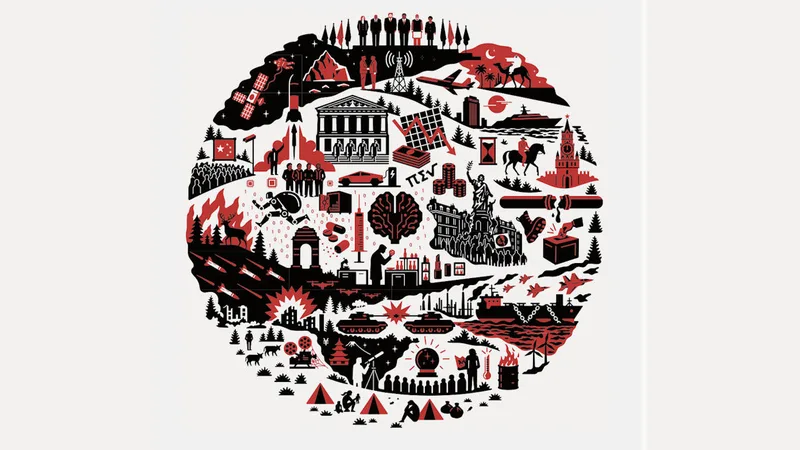
The Economist has released its annual forecast edition, The World Ahead 2027, and its cover is already one of the most shared images of the year. The artwork is a circular globe in red, black and white, crowded with silhouettes that seem to tell the whole year in one picture. This is an economist 2027 cover decoded guide, symbol by symbol, so you can see what is printed, what the magazine says, and where interpretation begins.
The edition was launched on 17 November 2026, with the print edition dated 21 November, and its editor is Tom Standage. The cover was illustrated by American artist Cleon Peterson. The cover is a commissioned piece of editorial art, not a leaked document and not a secret plan. It is a visual summary of the ten trends the magazine chose to highlight.
Before the symbols, a warning is needed. The Economist publishes no official symbol key, so every reading of a single silhouette is an interpretation, not a confirmed fact. Its forecasts are also often wrong, and fake AI generated 2027 covers circulated earlier this year. Read this guide as a map of risks and trends, not as prophecy.
Table of Contents
How to Read This Cover Without Being Fooled
Start with the printed words, because they are the only part of the cover that The Economist has stated in plain text. The six cover lines name the themes the magazine wants readers to notice. Map each symbol to one of the ten trends in the edition, not to a headline from social media. The Economist published Tom Standage’s ten trends to watch in 2027, and The Economist Group launch announcement repeats the same ten themes. Notice what is unnamed: the leaders, the horseman and the crowd around the crystal ball are types, not portraits of named people.
The Economist 2027 Cover Decoded: The Ten Trends First
The cover art is an illustration of this list, not a separate list of its own.
- The post-Trump era, as the race to succeed Donald Trump begins after the midterms.
- Aftershocks from the Iran war, with allies less trusting, enemies less fearful, and energy and food security under strain.
- The hottest year ever, again, with a possible strong El Nino, called a super El Nino in the edition.
- The AI backlash grows, as debt, cyber attacks and political risk rise around more capable models.
- Europe’s populist right, with Marine Le Pen having a good chance in France’s 2027 presidential election.
- Bond-market pressure, as rich countries live beyond their means and borrowing costs rise.
- Taiwan’s deadline, with 2027 cited as China’s military readiness deadline.
- The Ozempic effect, as GLP-1 weight-loss drugs change spending, not just waistlines.
- Cheaper space launch, with SpaceX Starship, Chinese rocket firms and private space stations.
- Rebooting Hollywood, as Star Wars returns for its 50th anniversary, the Avengers return, and a new James Bond is on the way.
The Six Printed Cover Lines
- Trump’s final chapter: Not going quietly
- Artificial intelligence: Acceleration, risks and backlash
- After Iran: Regional and global reverberations
- Climate change: Hottest year ever, again
- Populism on the rise: What is mightier than Le Pen?
- Hollywood reboots: Franchise fatigue
The World Leaders at the Top
At the top of the circular globe, a row of unnamed suited world leaders stands shoulder to shoulder. In interpretation, that grouping is the point: 2027 is shaped by leaders as a class, by summits, rivalries and competing national interests, rather than by one person alone. The magazine does not identify any figure, so no silhouette should be claimed as a particular president or prime minister.
Trump: Tower, Yacht and Hourglass
The clearest personal symbol is the tower marked TRUMP, shown beside a yacht and an hourglass. The tower is shorthand for the Trump brand. The yacht is read, in interpretation, as wealth placed close to power. The hourglass is the most important part of this group. It is a classic symbol of time running out, and it fits the printed line exactly: Trump’s final chapter, not going quietly. The magazine says that after the midterms, Trump will become even more aggressive, using executive orders, legal fights and military adventures to retain influence. A heavy boot also appears, and it is read as pressure, force and the weight of the state. For context, see our report on how Trump lands in China.
The Kremlin Tower and Horseman
A Kremlin tower and a horseman stand for Russia on the cover. The tower is a recognisable silhouette of Moscow power, and the horseman is read, in interpretation, as military tradition and the long shadow of war in Europe. This group maps to several trends at once. It fits the aftermath of the Iran war, the Taiwan trend, and the bond market and populism trends, because war, energy prices and defence spending feed into public debt and political pressure in Europe. Do not read the horseman as a prediction of a specific Russian action in 2027. The Economist does not name one, and the cover does not date the image.
After Iran: Desert, Camel, Oil Tanker and Broken Pipeline
A desert with a camel under a crescent moon sets the region, and the crescent is read, in interpretation, as a marker of the Middle East, not as a religious claim about any one state. Beside the desert, an oil tanker in chains and a broken pipeline tell the economic story. The tanker in chains is read as blocked trade, sanctions and energy held back by politics. The broken pipeline is read as damaged infrastructure and interrupted supply. In the edition, the Iran war is expected to reconfigure energy flows and threaten food security, so both symbols map directly to the second trend. See our report on the Iran attacks on a US base in Kuwait after the American strike on Qeshm Island.
China, Taiwan and Surveillance
A Chinese flag over a crowd, with a surveillance camera nearby, is the cover’s China symbol. The flag is the only national flag shown so clearly, and the crowd beneath it is read, in interpretation, as population, public order and the scale of Chinese society. The camera adds a second idea, surveillance, control and the technology of watching. This maps to the Taiwan trend, where 2027 is cited as China’s military readiness deadline, and to the AI trend, because surveillance is one of the most visible uses of artificial intelligence. The camera does not prove a specific programme, and it does not name a specific company or system.
Money and Debt: Plunging Chart, Banknotes and Casino Chips

A plunging red financial chart, with banknotes and casino chips beside it, is the cover’s money symbol. The red chart is read as market falls, rising borrowing costs and the risk of a crash. The banknotes are read as cash, debt and public spending. The casino chips are read, in interpretation, as gambling and speculation. This maps to two trends: bond-market pressure, as governments’ borrowing costs rise, and the AI backlash, because the danger of a crash will rise as AI firms take on more debt. For a recent sharp fall, see our report on how the Dow plunges 1,000 points as US stocks fall.
AI at the Centre: Circuit Board Brain, Falling Robot and Binary Code

At the centre of the circular globe, a circuit-board brain dominates the image. That placement is itself a message. AI is the technology that links the other trends, from surveillance and cyber attacks to space, health and finance. The brain made of circuits is read as machine intelligence, and the binary code around it is read as the software, data and models that power it. Beside the brain, a falling robot is shown. In interpretation, the falling robot is the backlash in visual form: a technology that is powerful and unstable at the same time. It fits the printed cover line exactly, acceleration, risks and backlash. For a recent example, see our report on how California sues OpenAI over rogue AI agent attacks.
Health and Spending: Syringe, Capsules, Scientist and Cosmetics
A syringe and capsules map directly to the Ozempic effect. GLP-1 weight-loss drugs are changing consumer behaviour, not only helping people lose weight. A scientist with a flask, plus lipstick and cosmetics, adds a second layer: research behind new drugs, and beauty spending that follows weight loss.
Climate: Burning Forest, Thermometer, Wind Turbines and Solar Panels

A burning forest and a thermometer are the cover’s climate warning, beside wind turbines and solar panels, its climate answer. The forest is read as wildfires, droughts and heat waves expected to return in 2027. The edition expects 2027 to be the hottest year on record, with a super El Nino. The turbines, solar panels and electric pickup at a charger are read as the energy transition.
France and Populism: Statue, Parisian Buildings, Ballot Box and PEN

A statue and Parisian buildings, with a ballot box and the letters read as PEN, are the cover’s France symbol. The statue and buildings are read, in interpretation, as Paris, French identity and the republic itself. The ballot box is read as an election, and the letters PEN are read as a reference to Marine Le Pen, leader of the populist-right National Rally. The magazine does not print her full name on the cover, so this reading is an interpretation, but it is a strong one, because the printed cover line asks directly: What is mightier than Le Pen? The edition says Le Pen has a good chance of winning the presidency in 2027.
Space: Rocket, Satellite and Astronaut

A rocket, a satellite and an astronaut are the cover’s space symbol. The edition expects SpaceX’s Starship to start making regular satellite launches in 2027, with Chinese rocket firms demonstrating their own capabilities. The astronaut is read as human presence in space, and as the link to private space stations and data centres in orbit.
War, Displacement and the Crystal Ball

Missiles, tanks and fighter jets are the cover’s war symbol, shown as a group, not as a single weapon. The missiles are read as long-range attack, the tanks as ground war, and the jets as air power. Together, they map to the Iran aftermath, to the Taiwan trend and to the wider theme of war changing with technology. At the bottom of the circle, refugee tents show the human cost. The tents are read as displacement, camps and people forced to leave their homes. Beside the tents, a crowd around a crystal ball is the cover’s most self-aware symbol. A crystal ball is a fortune teller’s tool, and a crowd around it is read, in interpretation, as the public, the media and the markets all trying to see the future.
Hollywood and the Cinema Symbol
Hollywood is the sixth printed cover line: Hollywood reboots: Franchise fatigue. The edition explains that Star Wars is re-released for its 50th anniversary, the Avengers return, and a new James Bond is on the way. Any cinema motif should be treated as an interpretation, not as a confirmed portrait of a specific film. The Economist does not label a Hollywood symbol by name, and this guide does not invent one.
What the Cover Gets Wrong, and Why Forecasts Fail
The Economist’s forecasts are often wrong. Annual forecasts overstate the year just ended, understate surprises, and treat trends as if they will continue in a straight line. Fake AI generated 2027 covers circulated earlier this year, but they were not made by The Economist and they did not carry the magazine’s six printed lines. The real cover was launched on 17 November 2026, illustrated by Cleon Peterson and edited by Tom Standage.
Frequently Asked Questions
Is the Economist 2027 cover a prediction or a prophecy?
No. It is an editorial forecast, a visual summary of ten trends for 2027. Read it as a map of risks, not as a prophecy.
Who illustrated The World Ahead 2027 cover?
American artist Cleon Peterson illustrated the cover. The edition was edited by Tom Standage and launched on 17 November 2026.
What are the six cover lines on The World Ahead 2027?
The six printed lines are: Trump’s final chapter: Not going quietly; Artificial intelligence: Acceleration, risks and backlash; After Iran: Regional and global reverberations; Climate change: Hottest year ever, again; Populism on the rise: What is mightier than Le Pen?; and Hollywood reboots: Franchise fatigue.
Does The Economist publish an official key to the symbols?
No. The ten trends and the six cover lines are published, and the symbols illustrate those trends. Any reading of a single silhouette is an interpretation.
Why did fake Economist 2027 covers circulate earlier this year?
Fake AI generated covers circulated because the annual covers are popular and easy to imitate. The real cover was released on 16 to 17 November 2026.
The Bottom Line: Use the Cover as a Map, Not a Prophecy
The economist 2027 cover decoded in full is a story about a world in transition. Trump is leaving, but not quietly. AI is accelerating, and the backlash is growing with it. Use the cover to ask better questions, not to find secret answers, and keep the interpretations labelled as interpretations.
