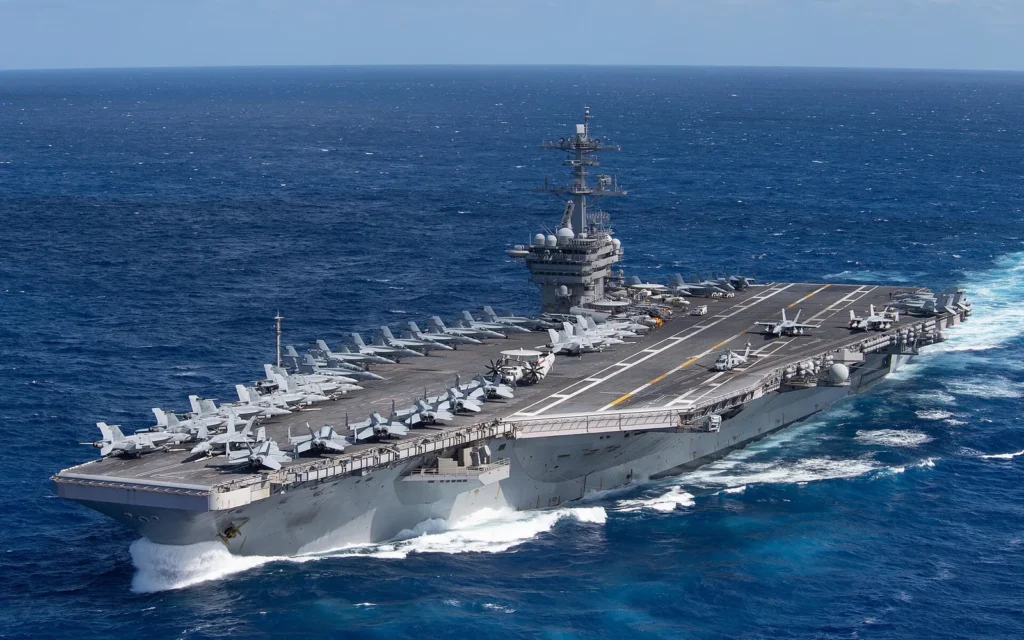
USS Theodore Roosevelt Arrives as Third US Carrier Near Iran
The aircraft carrier USS Theodore Roosevelt entered the Middle East on Sunday, November 15, 2026, giving the United States three aircraft carrier strike groups near Iran for the first time in this confrontation. The uss theodore roosevelt joined the USS George H.W. Bush and the USS George Washington, which were already operating in the Arabian Sea, in an unusually large deployment that American officials say is expected to be temporary. The arrival comes as Iran steps up attacks on shipping in the Strait of Hormuz and on American positions in the Gulf.
Table of Contents
A US official told ABC News on Sunday that the Roosevelt had entered the area of responsibility of US Central Command. A second US official told Al Jazeera on Monday that the ship had arrived in the Middle East. The Pentagon and Central Command have not formally confirmed the arrival. The three carriers are part of a deployment of more than 20 US Navy vessels enforcing an American blockade of Iranian ports, a blockade that began on April 13, 2026.
| Key fact | Detail |
|---|---|
| Ship arrived | Sunday, November 15, 2026 |
| Carriers in region | USS Theodore Roosevelt, USS George H.W. Bush, USS George Washington |
| Area | US Central Command, Arabian Sea and Gulf |
| Blockade began | April 13, 2026 |
| US Navy vessels in region | More than 20 |
| Roosevelt crew | About 5,000 sailors |
USS Theodore Roosevelt: A Third Carrier Changes the Balance
The USS Theodore Roosevelt left its home base in San Diego on September 27, 2026, for a deployment expected to last more than seven months. The carrier strike group includes Carrier Air Wing 11, the cruiser USS Chosin and the destroyers of Destroyer Squadron 23. It made a port call in Singapore in early November, then sailed west through the Strait of Malacca on November 9 toward the Indian Ocean.
The USS Theodore Roosevelt was sent to relieve the George Washington, which has been deployed in the region since August. The George Washington did not leave, so the United States now has three carriers in the region at once. Officials cited by the Jerusalem Post said all three could stay, though the deployment is expected to be temporary. The extra carrier sharply increases the airpower available to President Donald Trump if he orders renewed strikes, and it strengthens the force behind the blockade of Iranian ports.
The blockade covers commercial traffic entering or leaving Iranian ports on the Persian Gulf and the Gulf of Oman. It was imposed on April 13, after nuclear negotiations collapsed, six weeks after US and Israeli strikes opened the war on February 28. Central Command has reported redirecting large numbers of commercial vessels away from Iranian ports since the blockade began.
Iran Claims Six Ships Sunk in Hormuz
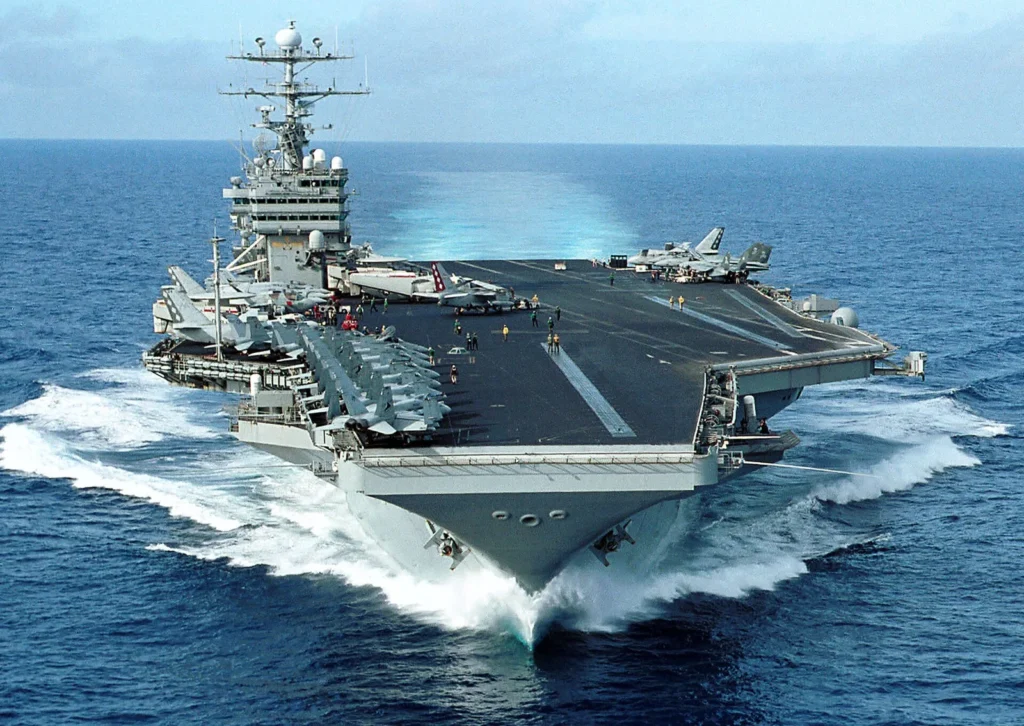
The carrier arrived on the same weekend that Iran escalated its campaign against shipping. Iran’s Islamic Revolutionary Guard Corps said two more tankers had struck sea mines and exploded in the Strait of Hormuz, bringing to six the number of vessels it claimed had caught fire and sunk in the strait since Sunday. Those claims could not be independently verified, and Reuters reported that it could not confirm them.
The Guards’ navy warned shipping companies against using what it described as an American backed southern route through the strait, calling it a “minefield of fire”. The IRGC said the attacks were punitive measures in response to what it called an “illegal American blockade” and violations of Iran’s rules for the strait. In a separate report on Monday morning, the United Kingdom Maritime Trade Operations office said it had received a report of a vessel being struck by an unknown projectile while leaving the Strait of Hormuz. The strike caused a fire but no casualties.
The Strait of Hormuz is one of the world’s most important energy routes, and the claims moved oil markets on Monday. Brent crude fell about 3 dollars a barrel as Middle East exports recovered and traders weighed the surplus outlook. Readers can follow the shipping picture in our earlier report on the Strait of Hormuz tankers.
The Bahrain Drone Attack Came First
The carrier’s arrival also followed a direct Iranian attack on an American position in the Gulf. On Sunday, Iran’s Revolutionary Guard said it fired six drones at a US early warning radar installation in Bahrain, claiming a precise and successful impact on Riffa air base. The United States said its defenses intercepted the attack. Our full report on that incident is here: Iran drone attack in Bahrain.
The Bahrain strike and the Hormuz shipping attacks are part of a wider confrontation that has been building since the war began in February. An Army whistleblower told 60 Minutes this week that the Pentagon ignored warnings before an Iranian drone strike in Kuwait in March killed six American soldiers, a claim the Pentagon disputes. That story is covered in our report on the Pentagon whistleblower and the Iran strike.
What Happens Next
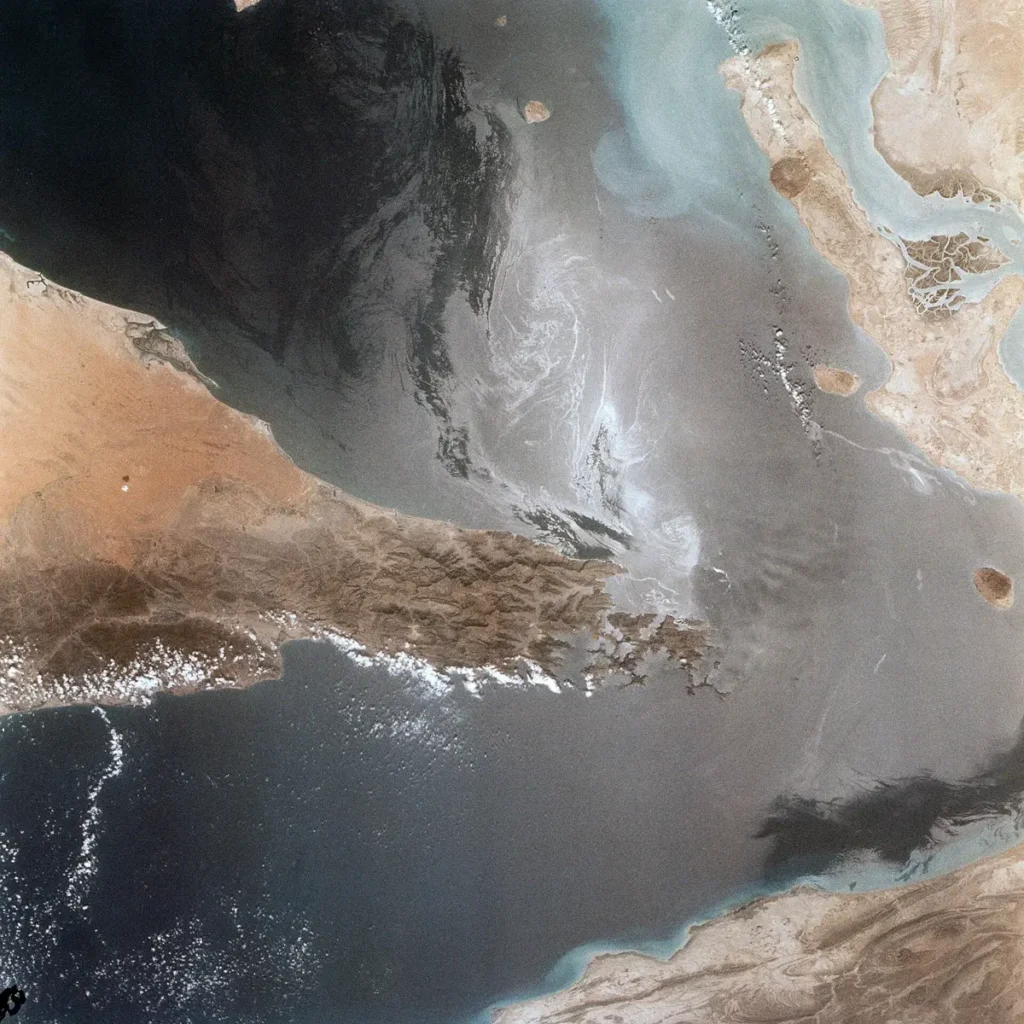
Three carriers in one region is a major commitment, and it raises the stakes on both sides. For Washington, the buildup gives Trump more options, from enforcing the blockade to launching new strikes, and it signals to Tehran that the United States is prepared to stay. For Iran, the carrier presence is both a target and a provocation, and the Guards have answered with threats against American forces, commercial shipping and Gulf states.
What is not yet clear is how long the three carriers will stay together. The USS Theodore Roosevelt was meant to replace the George Washington, not join it, and keeping three strike groups in the region costs money and strains crews. If the George Washington leaves in the coming weeks, the deployment will look like a routine handover. If all three stay, it will look like preparation for something bigger.
The other open question is the Hormuz shipping claims. If independent evidence emerges that tankers really did sink, the crisis will escalate quickly, and insurance rates and oil prices will follow. If the claims prove empty, they will stand as another round of information warfare in a conflict where both sides have made claims that could not be verified. For now, the facts that are confirmed are these: three American carriers are in the Middle East, more than 20 American warships are enforcing the blockade, and Iran is threatening shipping in the world’s most important oil strait.
Frequently Asked Questions
How many US aircraft carriers are near Iran now?
Three. The USS Theodore Roosevelt arrived on Sunday, November 15, 2026, joining the USS George H.W. Bush and the USS George Washington in the US Central Command area, in and around the Arabian Sea.
Why did the USS Theodore Roosevelt deploy to the Middle East?
The Roosevelt left San Diego on September 27, 2026, and was sent to relieve the USS George Washington, which has been deployed since August. The George Washington did not leave, so three carriers are now in the region. The deployment supports the US blockade of Iranian ports and gives the president more military options.
Did Iran really sink six ships in the Strait of Hormuz?
Iran’s Revolutionary Guard claims six vessels caught fire and sank in the strait since Sunday, including two tankers it says struck sea mines. Those claims could not be independently verified, and Reuters reported it could not confirm them. The UK Maritime Trade Operations office confirmed only one incident, a vessel struck by an unknown projectile with a fire and no casualties.
What is the US blockade of Iran?
The United States imposed a blockade of Iranian ports on April 13, 2026, covering commercial traffic entering or leaving Iranian ports on the Persian Gulf and the Gulf of Oman. More than 20 US Navy vessels are enforcing it.
Has the Pentagon confirmed the carrier arrival?
No. US officials told ABC News, Al Jazeera and other outlets that the Roosevelt entered Central Command’s area on Sunday, but the Pentagon and Central Command have not formally confirmed the arrival.
Conclusion
The arrival of the USS Theodore Roosevelt gives the United States three aircraft carriers near Iran, the largest American naval concentration of this confrontation. The buildup strengthens the blockade of Iranian ports and expands Washington’s military options, but it comes as Iran escalates attacks on shipping and on US positions in the Gulf. The claims of sunken tankers in Hormuz remain unverified, and the Pentagon has not formally confirmed the carrier’s arrival. What is certain is that the Gulf is now the most heavily armed stretch of water in the world, and the next move belongs to either side.