
Buffalo Shooting Social Media Ruling: Platforms Not Liable
New York’s highest court ruled on Monday that Google, Meta, Reddit and Snap cannot be held liable for the 2022 Buffalo supermarket massacre, a 4-3 decision that shuts down a closely watched test of whether social media companies can be sued for the way their platforms are designed. The buffalo shooting social media ruling turned on Section 230, the federal law that shields online platforms from liability for user content, and on whether the gunman’s attack was a foreseeable result of addictive algorithms. Families of the victims called the decision a closed door, while the dissent said a jury should have decided.
Table of Contents
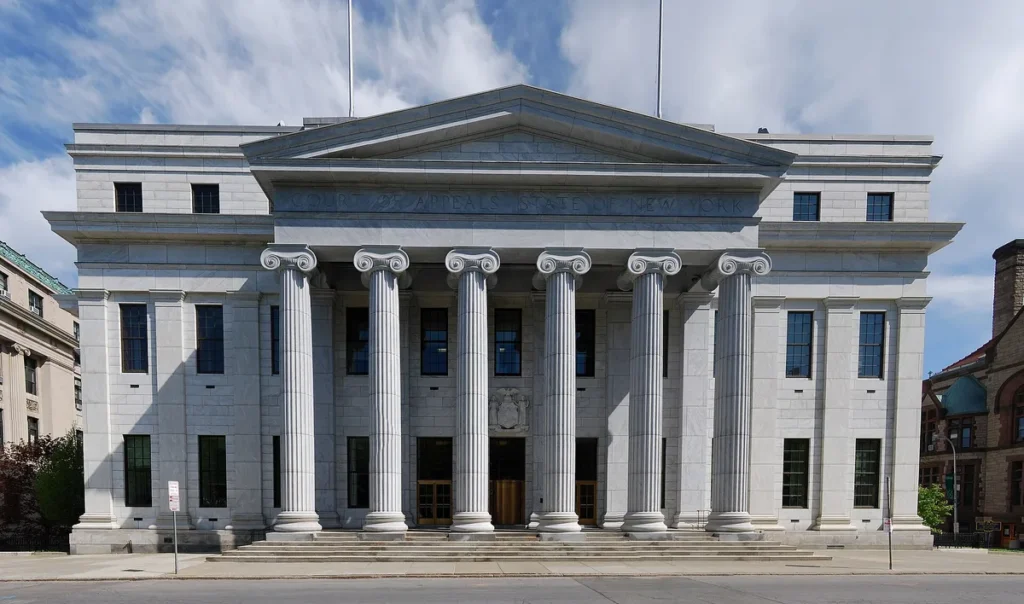
What the Buffalo Shooting Social Media Ruling Decided
In a 4-3 decision, New York’s Court of Appeals let stand a divided lower court ruling that found Alphabet’s Google and YouTube, Meta Platforms’ Instagram, Reddit and Snap’s Snapchat were immune under a federal law that protects online platforms from liability over user content. The court also upheld the dismissal of claims against Amazon.com, Discord, 4chan and Twitch Interactive related to the attack. The ruling was handed down on Monday, November 23, 2026, according to Reuters.
The majority opinion was unsigned. It said the victims of Payton Gendron’s attack on May 14, 2022, at Tops Friendly Markets failed to show that his actions were a “natural and foreseeable consequence” of the defendants’ decisions about how to design and run their platforms. “The shooter’s actions were so extraordinary as to sever the causal chain as a matter of law,” the majority said. In plain terms, the court held that the link between the companies’ design choices and a mass murder was too remote for the law to recognize, even if the platforms shaped what Gendron saw online.
The ruling ends, for now, four consolidated cases in which survivors and victims’ family members sought to hold the platforms liable for using allegedly defective algorithms to push content designed to addict young users. The companies did not immediately respond to requests for comment, according to Reuters. A lawyer for the plaintiffs said his clients are evaluating their legal options.
The 2022 Attack at the Center of the Case
The case grew out of one of the deadliest racist attacks in recent American history. On May 14, 2022, Gendron, an avowed white supremacist who was 18 years old at the time, killed 10 Black people at a Tops Friendly Markets grocery store on Jefferson Avenue in Buffalo, New York. The store sits in a predominantly Black neighborhood on the city’s East Side, and the attack devastated a community that had long fought for a full-service supermarket there.
Gendron pleaded guilty to state charges including murder and terrorism motivated by hate, and he was sentenced in February 2023 to life in prison without parole. He could face the death penalty at a related federal trial, where jury selection began on October 13, 2026. The criminal case against Gendron is separate from the civil lawsuit against the social media companies, and Monday’s ruling does not affect his prosecution or his sentence.
The families and survivors who sued did not claim the companies pulled the trigger. Their argument was about design. Victims’ relatives, as well as store employees and customers who saw the attack, contended that the defendants’ platforms were designed to addict and radicalize users like Gendron, steering him toward extremist content over time. That theory, that a product’s design can be a legal cause of real-world violence, was the question the court had to answer. The buffalo shooting social media ruling answers it with a no, at least under the facts of this case.
Section 230 and Why It Decided the Case
Section 230 of the federal Communications Decency Act is the law at the heart of the case. Passed in 1996, it says online platforms are generally not legally responsible for content posted by their users. The idea was to let the early internet grow without platforms facing a lawsuit over every post. Over time, courts have stretched the shield to cover not just hosting user posts but also the way platforms recommend, rank and promote content through algorithms.
Many courts have addressed the degree to which Section 230 should shield social media companies over conduct by young children and teenagers who use their platforms, Reuters noted in its report. The Buffalo case tested a newer argument: that the companies could be liable not for the content itself, but for the design of products that allegedly addict users and push them toward extremism. The majority did not accept that distinction as a way around the shield. That reasoning is central to the buffalo shooting social media ruling, and it is why the families’ design argument failed.
The buffalo shooting social media ruling does not decide every Section 230 question. It is a decision by one state’s highest court, in one case, on one set of facts. Other lawsuits against social media companies, including cases focused on harm to teenagers, are moving through courts in other states and in the federal system. But the Buffalo ruling gives the companies a powerful precedent to cite: a top state court, by a close vote, said platform design choices do not create liability for a mass shooting.
The Dissent: “Shutting the Courthouse Door”
Judge Jenny Rivera dissented, and her opinion framed the case very differently. She said juries should decide whether the prevalence of mass shootings would put social media companies on notice that their allegedly defective products, and failure to warn about their dangers, could trigger such violence. “No federal or state law requires that we slam the courthouse door on plaintiffs’ claims,” Rivera wrote.
The dissent matters for two reasons. First, the 4-3 split shows how close the court was, and how much turns on the judges’ view of foreseeability. The majority saw the attack as extraordinary and unforeseeable; the dissent saw a pattern of mass shootings that should have put the companies on notice. Second, the dissent gives the plaintiffs a roadmap if they seek further review, because it identifies the exact legal question a higher court would need to resolve: whether a jury, rather than a judge, should decide if the harm was foreseeable. The dissent does not change the buffalo shooting social media ruling, but it frames the question a higher court would face.
Matthew Bergman, a lawyer for the plaintiffs, said in a statement that his clients are evaluating their legal options. “The families affected by the tragic May 2022 Buffalo grocery store attack deserve accountability when dangerous product design choices contribute to real-world harm,” Bergman said. The same question of platform liability has also surfaced in other recent cases, including the lawsuit by Virginia and Oregon against SpaceX over Grok AI deepfakes, covered in our report on the SpaceX Grok lawsuit, where states are testing whether tech companies can be held responsible for harmful content their tools produce.
What the Ruling Means for Other Lawsuits
The immediate effect of the buffalo shooting social media ruling is narrow: the Buffalo families’ claims against the eight companies are dismissed, and the case against those defendants is over unless a higher court takes it up. The wider effect is larger. The buffalo shooting social media ruling strengthens the Section 230 shield in New York, the state where many tech companies are sued, and it signals to other courts that design-based claims face a steep climb. Companies facing similar suits will cite the majority’s reasoning that an attacker’s actions can sever the causal chain as a matter of law.
At the same time, the ruling leaves room for other kinds of claims. It does not address lawsuits built on different legal theories, such as claims that companies failed to protect children from specific harms, or cases where a platform’s own conduct, rather than user content, is the focus. Regulators are also pressing the same issues from a different direction: the Federal Bureau of Investigation is separately investigating the apparent hack of the national crime database, as covered in our report on the FBI NCIC hack, and the ports cyberattack surge reported in our coverage of US ports facing cyberattacks shows how digital systems keep colliding with the law. The Buffalo ruling is one piece of a much larger fight over who bears responsibility when online systems cause offline harm.

What Happens Next in the Buffalo Shooting Social Media Ruling Case
The plaintiffs’ next move after the buffalo shooting social media ruling is the open question. Bergman said the families are evaluating their legal options, and the most likely next step would be asking the US Supreme Court to review the case, since it turns on a federal law. The Supreme Court takes only a small share of the cases it is asked to hear, and it has so far avoided deciding the biggest Section 230 questions, so there is no guarantee it would take this one. If it declines, the New York ruling stands as the final word for these families.
Meanwhile, Gendron’s federal trial continues, with jury selection underway since October 13 and the death penalty on the table. And the community in Buffalo continues to live with the attack’s aftermath. The Tops store on Jefferson Avenue reopened months after the shooting, but the families’ fight for accountability, now shifted from the courtroom to a possible Supreme Court petition, is not over. The buffalo shooting social media ruling closes one door for them, but the dissent, and the narrow 4-3 margin, keep another one ajar.
Conclusion
New York’s highest court ruled 4-3 in the buffalo shooting social media ruling that social media companies are not liable for the 2022 Buffalo massacre, holding that the attack was not a foreseeable consequence of how the platforms were designed and that Section 230 shields them from the claims. The majority said the shooter’s actions severed the causal chain as a matter of law, while Judge Jenny Rivera’s dissent argued a jury should have decided. The families are now weighing whether to ask the US Supreme Court to take the case. Whatever they decide, the ruling sets a high bar for future lawsuits that blame platform design for real-world violence.
Frequently Asked Questions
What did the Buffalo shooting social media ruling decide?
New York’s Court of Appeals ruled 4-3 that Google, YouTube, Instagram, Reddit and Snapchat are not liable for the May 14, 2022 Buffalo attack, because the victims did not show the shooting was a natural and foreseeable consequence of how the platforms were designed. The court also upheld dismissal of claims against Amazon, Discord, 4chan and Twitch.
What is Section 230?
Section 230 of the federal Communications Decency Act is a 1996 law that generally shields online platforms from legal liability for content posted by their users. The Buffalo ruling applied that shield to the companies’ design and recommendation choices as well as to the content itself.
Who dissented in the Buffalo ruling?
Judge Jenny Rivera dissented. She argued that juries should decide whether the prevalence of mass shootings put social media companies on notice that their allegedly defective products and failure to warn could trigger violence. She wrote that no law requires the court to “slam the courthouse door on plaintiffs’ claims.”
What happened to the Buffalo shooter?
Payton Gendron pleaded guilty to state charges including murder and terrorism motivated by hate, and he was sentenced in February 2023 to life in prison without parole. He could face the death penalty at a related federal trial, where jury selection began on October 13, 2026.
Can the Buffalo families appeal the ruling?
The families’ lawyer said they are evaluating their legal options. The most likely next step would be asking the US Supreme Court to review the case, since it involves a federal law, but the Supreme Court accepts only a small share of the cases it is asked to hear.
