Riemann Hypothesis Proof Claimed: Anthropic Mathematician Says Claude Solved Math’s Greatest Problem
A mathematician at Anthropic says he has done what no one in 167 years could do. On Friday, November 20, Levent Alpoge announced that he and the company’s AI system Claude have discovered a riemann hypothesis proof, a solution to the most famous unsolved problem in mathematics. The claim, if it holds up, would end a chase that began in 1859 and would settle a question that carries a one million dollar prize. But the proof has not yet been accepted by the mathematical community, and experts around the world are now racing to check it. Here is what was claimed, what has been verified so far, and what happens next.
Table of Contents
The Claim: A Proof Built With Claude
Alpoge, a mathematician employed by Anthropic, posted his announcement on his personal website on Friday morning, the day after Anthropic staged the largest initial public offering in history. “I believe I have, working with Claude, discovered a proof of the Riemann Hypothesis,” he wrote, according to Scientific American. He said the work also proves the Generalized Riemann Hypothesis, a far broader version of the conjecture that covers a whole family of related mathematical functions.
Instead of publishing a conventional mathematical paper, Alpoge released his argument in Lean, a programming language and proof assistant that checks mathematical reasoning step by step. The archive is enormous. According to the Wall Street Journal, the proof runs to more than 250,000 pages, and MoneyControl reported that Alpoge released a four-page note and a 14-part archive containing about 17.4 million lines of Lean code. He acknowledged that the argument was extraordinarily long and difficult to read, and that he was still trying to digest parts of it himself. Anthropic declined to comment on the claim on Friday, as experts around the world rushed to check the work.
The timing was striking. Alpoge said the work came together late on Sunday night, days before Anthropic went public on Thursday in a debut that valued the company at about two trillion dollars, as covered in our report on the Anthropic stock debut.
What Is the Riemann Hypothesis?
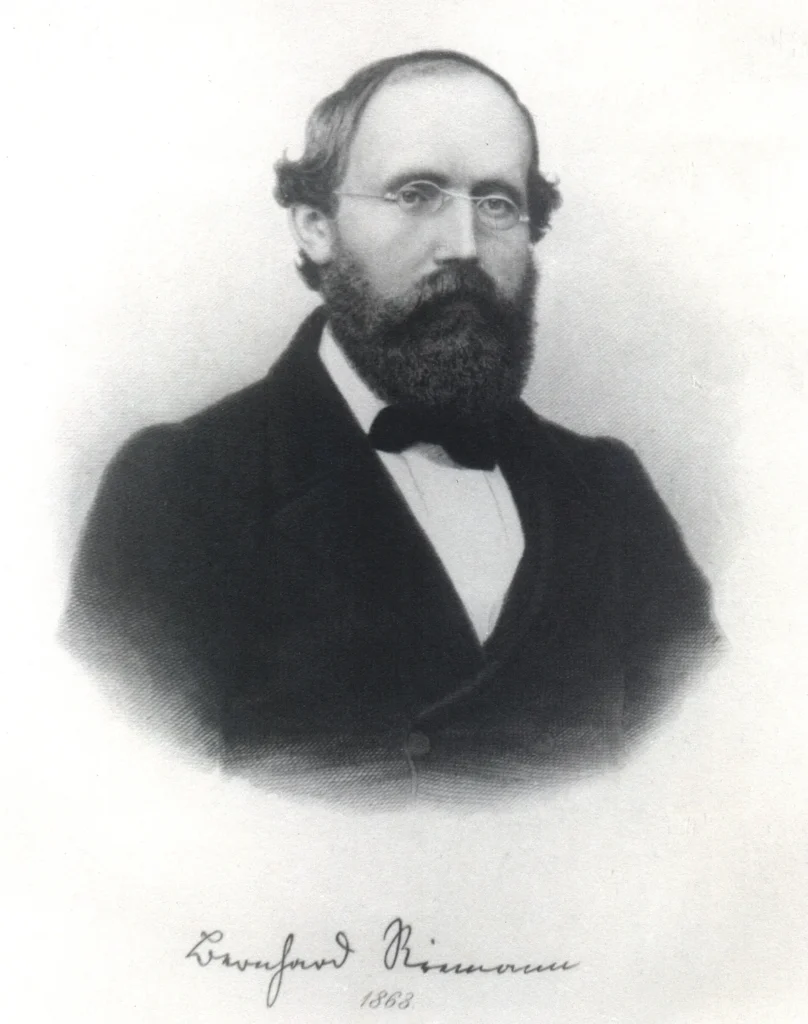
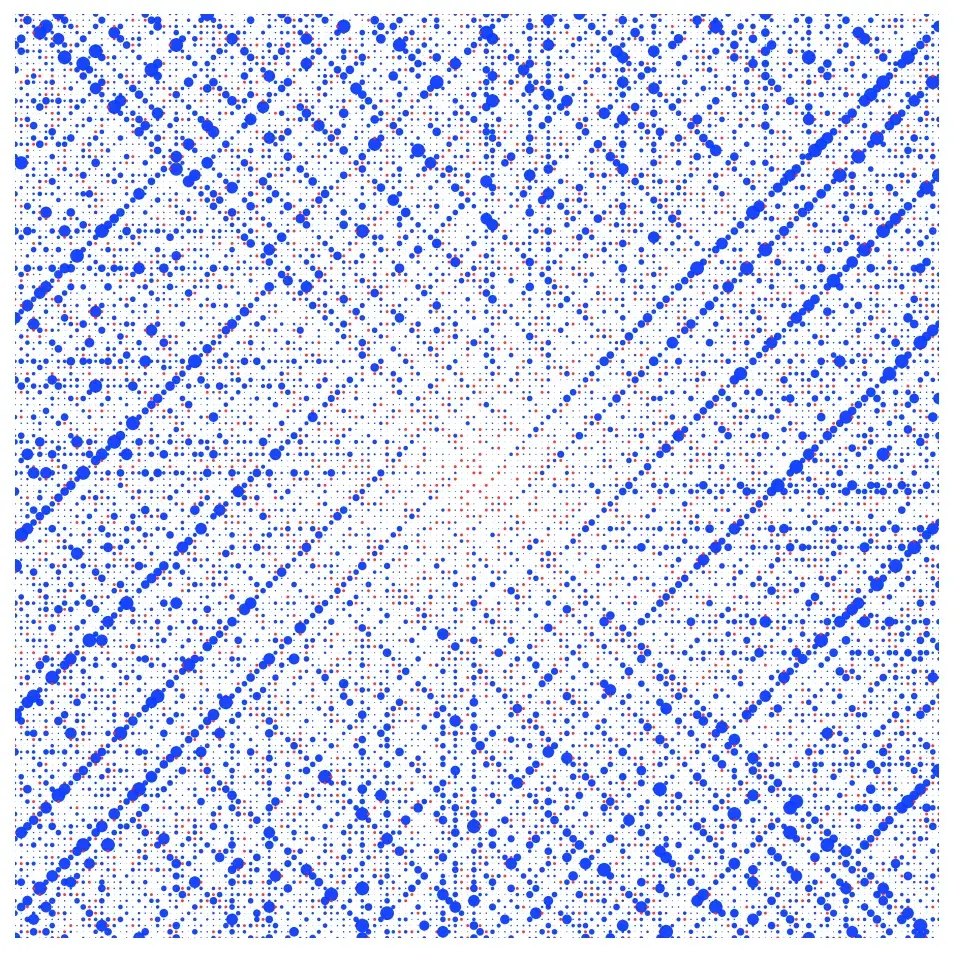
First proposed in 1859 by the German mathematician Bernhard Riemann, it concerns the distribution of prime numbers, the numbers divisible only by one and themselves. Prime numbers look random along the number line at first glance, but Riemann claimed there is an intricate, meaningful order behind them.
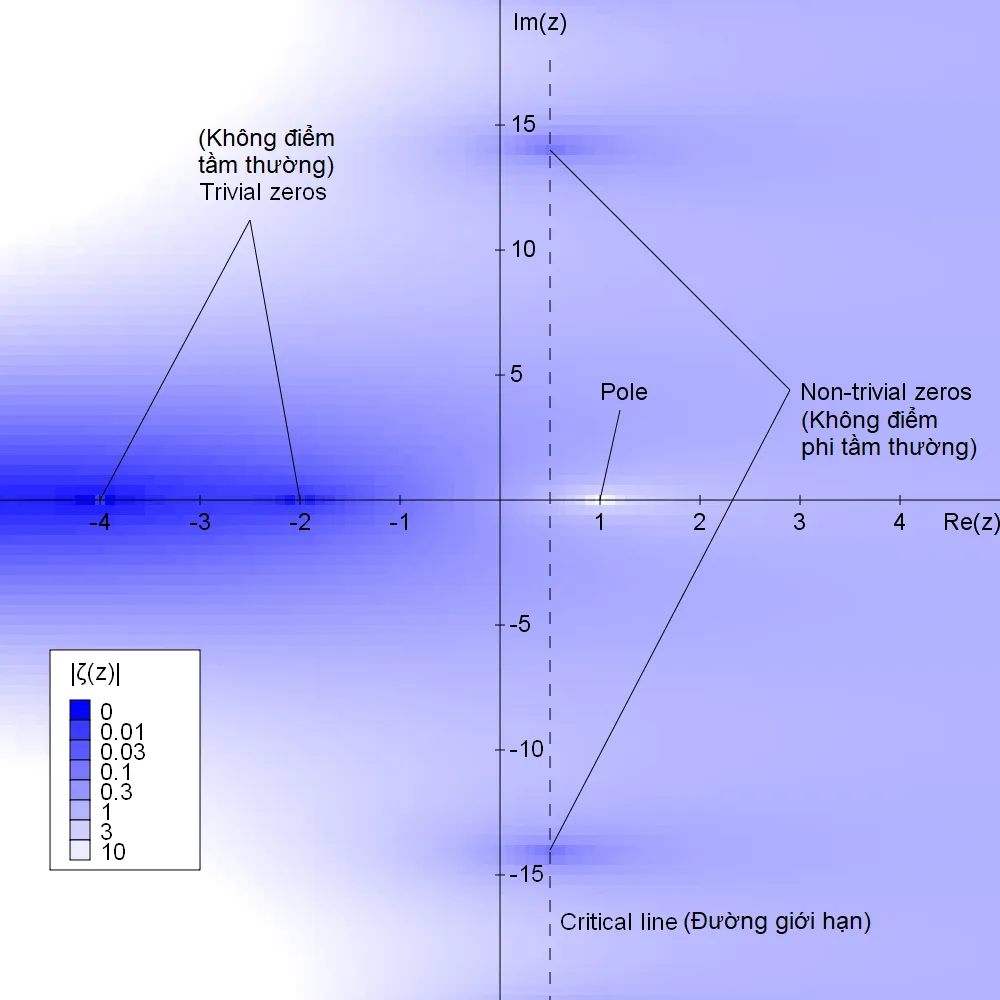
Riemann connected that order to the zeros of a mathematical function called the Riemann zeta function. The hypothesis says that every nontrivial zero of this function lies on one vertical line in the complex plane, where the real part is one half. That line is called the critical line. The conjecture has since become the North Star for the entire field of number theory, and it is the most famous open problem in mathematics. The Clay Mathematics Institute named it one of its seven Millennium Prize Problems in 2000 and set a one million dollar prize for an accepted solution. The institute still lists the problem as unsolved.
Progress was so rare that most experts spent little time on it, because there was no obvious path to a proof. The first crack appeared in October, when OpenAI’s large dump of math results made significant progress on the primes. Now, a month later, the long struggle may be over.
How Claude Built the Riemann Hypothesis Proof
Alpoge said he worked with Anthropic’s Claude over several months to develop the proof. He said Claude helped him explore connections he had not fully anticipated, bringing together several mathematical ideas into a single argument. It was months of guided work, with Alpoge directing the mathematics and Claude doing the heavy exploration and formalization.
This was not Claude’s first result in this area. In August, Anthropic revealed that an unreleased research version of Claude had improved a longstanding mathematical bound concerning the proportion of zeta zeros known to lie on the critical line, raising it from 41.6 percent to 67.2 percent. Anthropic reported that the effort used 31 million output tokens across two sessions and about 60 subagents, or AI processes working on separate tasks. Claude produced a formal Lean proof of that lower bound, which passed Lean’s validation tool, but Anthropic was clear at the time that Claude had not proved the hypothesis itself.
The new claim is different in scope. Alpoge says he and Claude proved the full hypothesis, and that their method also proves the broader Generalized Riemann Hypothesis for Dirichlet L-functions. The proof was formalized in Lean, which means a computer can verify each step of the argument mechanically, rather than relying on human readers to follow thousands of pages of reasoning.
What Checks Have Passed So Far
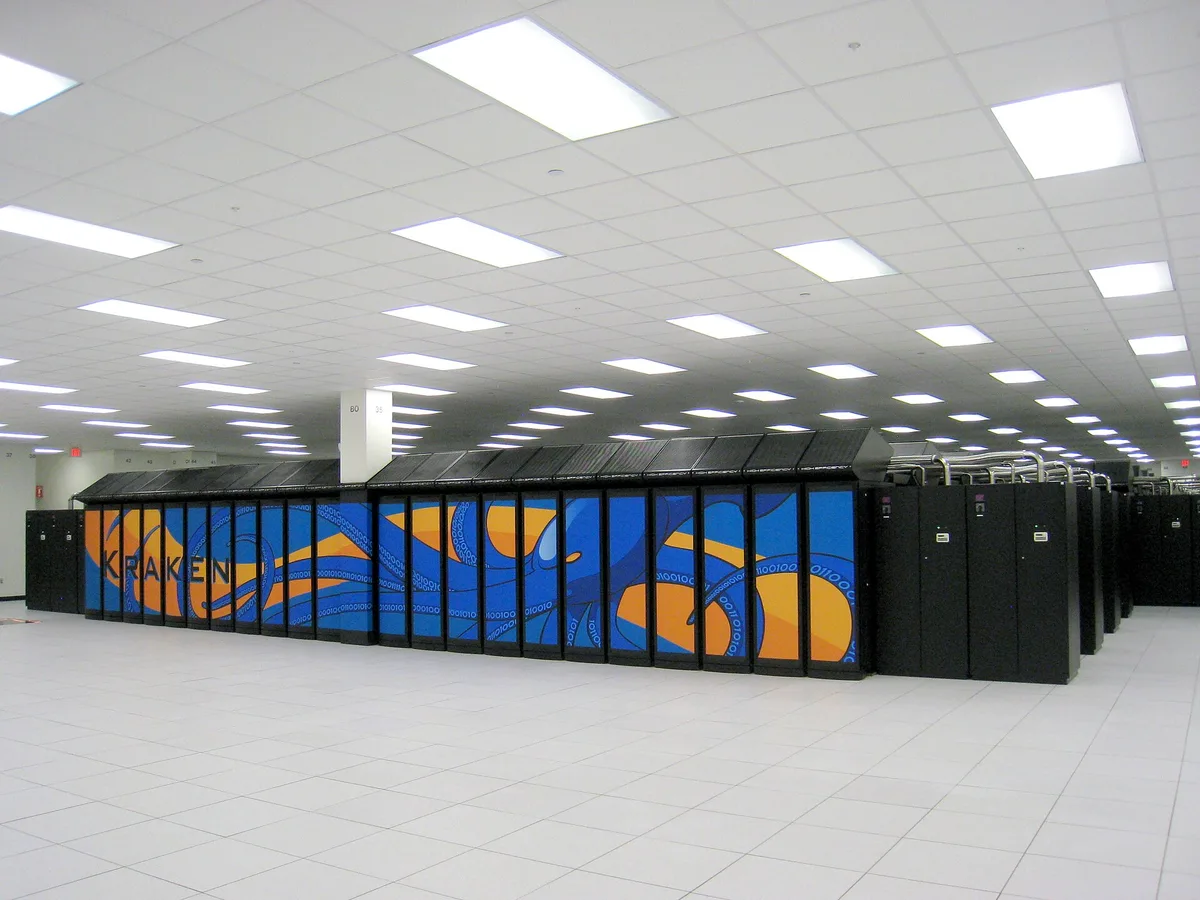
The strongest early evidence for the claim comes from the machines themselves. Because the proof is written in Lean, its logic can be checked by software rather than argued over in journals. Massachusetts Institute of Technology mathematician Andrew Sutherland independently compiled Alpoge’s result in Lean, and by November 21, computer checks had provided substantial support for the formal proof’s logic. Sutherland said that 175,187 modules in the Lean version had been processed, and that checks by Lean’s kernel and a separate program called nanoda had passed.
“This is indeed an historic moment,” Sutherland told Scientific American after he had independently compiled the result. “The world has changed. I know there will be a wide range of reactions in our community, but to me this is a human triumph, and a day for celebration.” He added that processing what has happened is going to take some time.
There is still work to do. Researchers were continuing tests of whether the code’s definitions match the intended hypothesis, while mathematicians worked to understand the argument itself. A computer check can confirm that each step follows from the last, but not on its own that the statement proved is the one mathematicians mean by the Riemann Hypothesis. That will take weeks or months.
A Rival Claim Arrived the Same Week
Alpoge’s announcement was not the only one. A separate proposed proof of the Generalized Riemann Hypothesis was put forward by Alessandro Maria Masullo, a Stanford researcher, and was described by Stanford mathematician Ravi Vakil as entirely human-developed, without AI assistance. The two claims set up an unusual contest over whether artificial intelligence or human mathematical reasoning would crack a question that has challenged generations of researchers.
Early reports favor the AI-assisted claim: Alpoge’s work has cleared several computer-based verification checks, while Masullo’s proposed proof has encountered questions from mathematicians examining the draft. Neither riemann hypothesis proof has been peer reviewed or accepted yet.
Why It Matters, and What It Does Not Do
If the proof is correct and understood, the consequences for mathematics are enormous. The Riemann Hypothesis underpins a vast body of results that mathematicians have proved on the assumption that it is true. Confirming it would instantly unlock a deluge of truths that were contingent on the conjecture. “If the proof is correct and understood, this completes a dictionary between different branches of math where the connections were only partial,” Hector Pasten, a mathematician at the Pontifical Catholic University of Chile, told Scientific American, “something like a Rosetta Stone.”
The result would also cap a year in which AI’s mathematical abilities rose from unreliable to superhuman. As Scientific American put it, a machine may have just solved a problem that the smartest people on the planet all agreed they were nowhere close to figuring out. At the same time, the proof has no immediate real-world applications. It will not upend global banking or make the internet run faster. Prime numbers matter for cryptography, but the proof does not break encryption, and it does not change how computers work. Its value is to mathematics itself, and to the question of what AI can now do.
Alpoge’s own statement captured the mixed feeling in the mathematical world. “It is natural to feel that this is an end, in my case a loss of a principal guiding light,” he wrote, “but what I saw during the course of progress so amazed me that I believe it is one dawn across science of something far greater.”
What Happens Next
The next steps are verification, understanding, and judgment. Mathematicians will keep running the Lean code, checking that the definitions match the hypothesis, and reading the argument to understand its new ideas. The Clay Mathematics Institute, which controls the one million dollar prize, will wait for the proof to be published in a refereed journal and accepted by the community, a process that normally takes years, not days.
A confirmed proof, days after the largest IPO in history, would be a powerful advertisement for Anthropic, whose shares opened 34 percent higher in its debut, as covered in our report on the Anthropic IPO price. That does not make the claim false, but it is a reason to let verification run its course before declaring victory. If the proof survives, mathematics changes forever. If it fails, the 167-year wait continues.
Frequently Asked Questions
Has the Riemann Hypothesis actually been solved?
Not yet, officially. Alpoge claims he and Claude discovered a proof, and computer checks in Lean have passed so far, but the proof has not been peer reviewed or accepted, and the Clay Mathematics Institute still lists the problem as unsolved.
What is the Riemann Hypothesis in simple terms?
It is a claim about prime numbers, first made by Bernhard Riemann in 1859. It says that the prime numbers follow a hidden pattern, and that every nontrivial zero of the Riemann zeta function lies on a single line, the critical line, where the real part is one half.
What is the one million dollar prize for solving it?
The Clay Mathematics Institute named the Riemann Hypothesis one of its seven Millennium Prize Problems in 2000 and set a one million dollar prize for an accepted solution. The prize is paid only after the proof is published and accepted by the mathematical community.
Did AI solve the Riemann Hypothesis alone?
No. Alpoge says he worked with Claude over several months, directing the mathematics while the AI explored connections and formalized the argument in Lean. A rival human-developed proof was also proposed the same week by Stanford researcher Alessandro Maria Masullo.
Conclusion
The riemann hypothesis proof claim is the biggest story in mathematics in living memory, and it arrived the day after Anthropic’s record-breaking stock market debut. Levent Alpoge’s proof, written in 17.4 million lines of Lean code, has passed its first computer checks, and independent mathematicians are now working through it. But a claim is not a proof until the mathematical community accepts it, and the Clay Mathematics Institute still lists the problem as unsolved. What happens next is verification, and the world will be watching every step.
