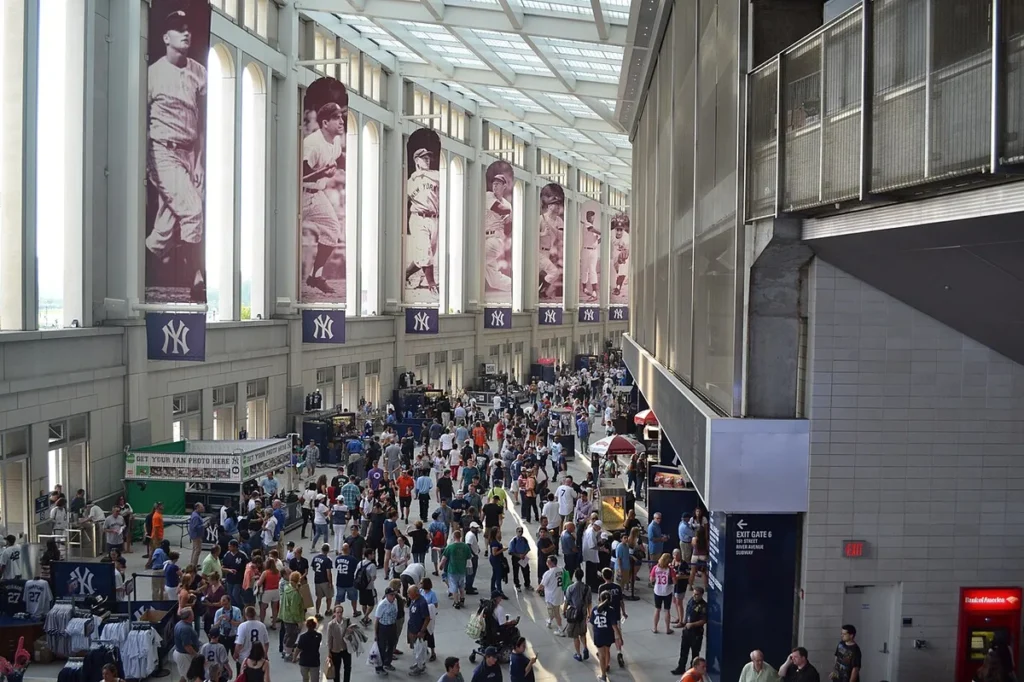
MLB Lockout Lawsuit: League Sues Players Union Before Expected Work Stoppage
Major League Baseball has sued its own players union in federal court, firing the first legal shot in a labour fight that threatens the 2027 season. The MLB lockout lawsuit, filed on Wednesday, November 25, 2026, asks a judge to declare that the lockout owners expect to impose next week is legal under antitrust law, before the union can challenge it. It is a pre-emptive strike, and it shows how far apart the two sides are: the owners want a salary cap for the first time in more than 30 years, the players have vowed never to accept one, and the current collective bargaining agreement expires at 11:59 p.m. ET on December 1. With a week to go, baseball is heading for its tenth work stoppage since 1972, and this time the fight has reached the courts before the lockout has even begun.
Table of Contents
What MLB Filed and Why
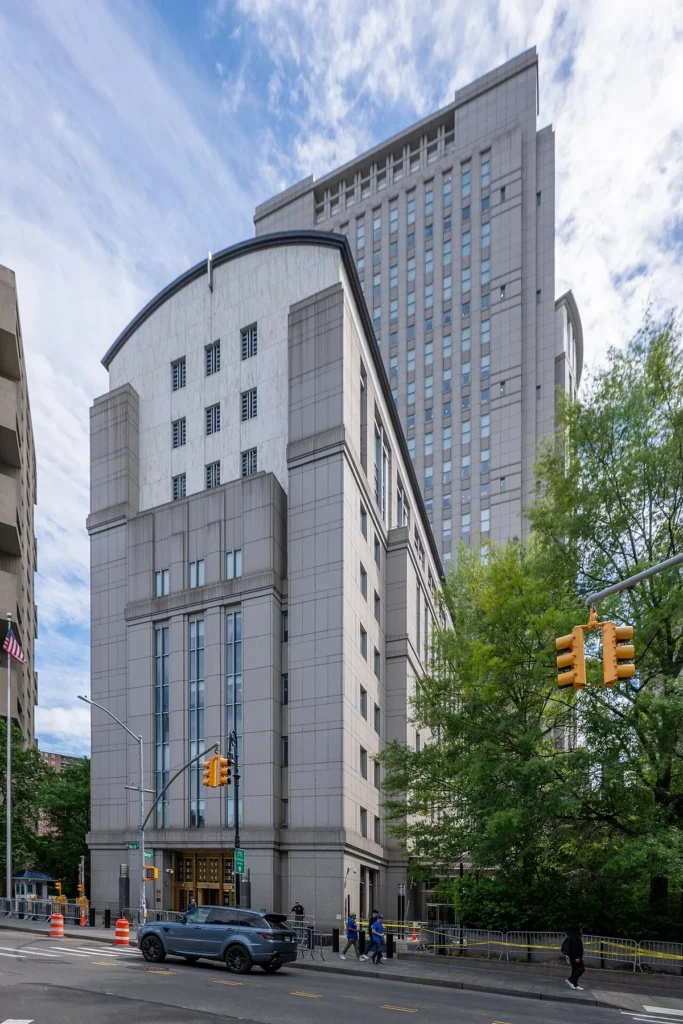
In a 38-page complaint filed in the U.S. District Court in Manhattan, as reported by NBC Sports, Major League Baseball and the corporate entities that own its 30 teams sued the Major League Baseball Players Association and the eight players on the union’s executive subcommittee. The league wants a declaratory judgment that its coming lockout does not violate antitrust laws and does not amount to an unreasonable restraint of trade. It also asks the court to rule that federal courts lack jurisdiction to enjoin a lockout, and for an order defining the players as a legal class, which if granted could block individual lawsuits.
The lawsuit is built around a fear. MLB says it has a “reasonable and imminent fear that the union will attempt to use the threat of antitrust liability to derail the collective bargaining process altogether in favour of antitrust litigation.” The league believes the union is planning to “disclaim” its status as the players’ bargaining representative, a legal manoeuvre that would free players to sue the league under antitrust law. If players won such a suit, MLB could face treble damages, three times the players’ proven losses. League spokesman Glen Caplin called the disclaimer strategy the union’s “nuclear option” and said the lawsuit was meant to “proactively disarm” it. “Today’s filing is a defensive measure simply intended to keep the parties at the bargaining table to work towards a new collective bargaining agreement and a full 2027 season,” Caplin said.
The union answered within hours. “The lawsuit filed today by MLB is completely frivolous,” the MLBPA said in a statement. “We will respond appropriately, but MLB’s decision to run to court in the middle of negotiations rather than bargain in good faith is incredibly disappointing.” Federal courts have already shaped big sports and media disputes this year: in a separate ruling this week, a federal judge blocked the FCC’s early review of ABC’s broadcast licenses, as Globaly Mag reported in its coverage of the judge blocking the FCC ABC license review.
The Salary Cap at the Center of the Fight
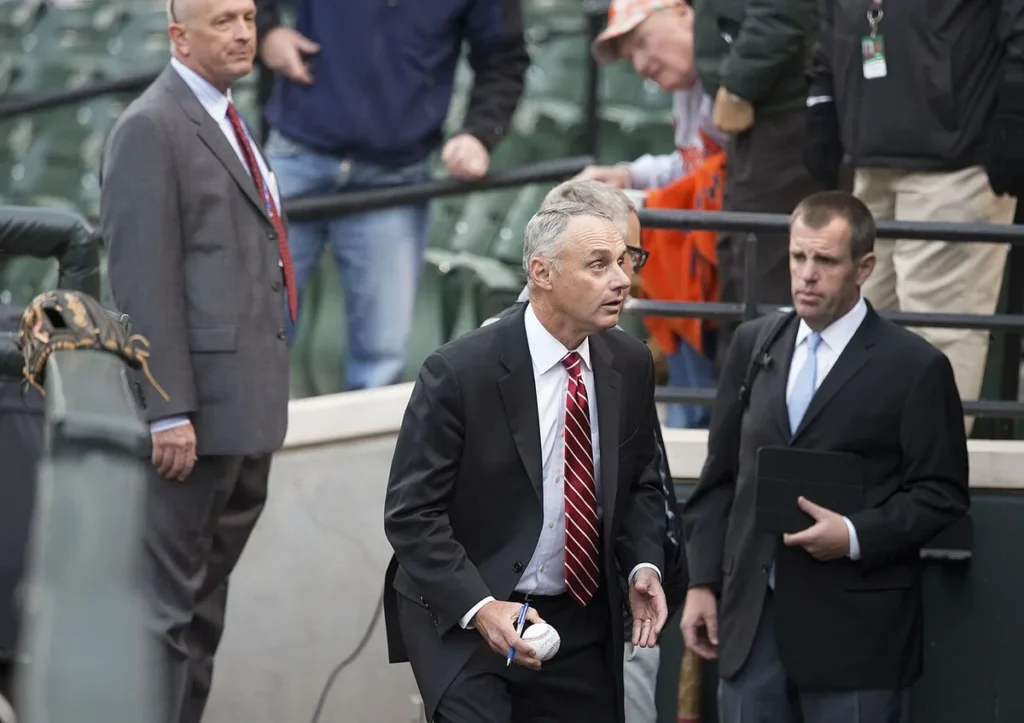
The central issue in the dispute is money, and specifically a salary cap. Owners have proposed a cap for the first time since 1994, when players fought off the idea with a seven-and-a-half-month strike that led to the first cancellation of the World Series in 90 years. The owners’ most recent proposal sets a salary cap of $258.2 million and a payroll floor of $180.2 million per team, starting in 2028. Commissioner Rob Manfred said last week, as reported by USA Today, that he cannot imagine owners approving an agreement without a cap, and players have vowed never to accept one.
The league argues the cap is about competitive balance. “The long-term health of professional baseball depends on competitive balance, on keeping smaller-market clubs viable, and on better pay for all players, not just a handful of superstars,” the lawsuit says. A cap would likely reduce spending gaps between large-market and small-market teams, and a floor would force low-spending clubs to invest more in their rosters. The union considers a salary cap a non-starter in negotiations and has refused to engage with the cap and floor structure, according to the suit. Union head Bruce Meyer has described the cap proposal as a “nuclear bomb”, a phrase Caplin echoed in reverse when he called the disclaimer threat the union’s “nuclear option”. Both sides, in other words, believe the other is threatening the sport itself.
The MLB lockout lawsuit also says the league intends to file an unfair labour practice charge with the National Labor Relations Board, alleging the union has refused to bargain in good faith. “Despite the many efforts by MLB to find common ground with the MLBPA, the union has categorically refused to engage with MLB’s salary cap and floor structure,” the suit states. “The union has not engaged in good-faith bargaining over the central economic issues in these negotiations, even as the expiration of the current CBA is imminent.” The union is expected to file its own unfair labour practice charge in response.
The Players Named in the Lawsuit
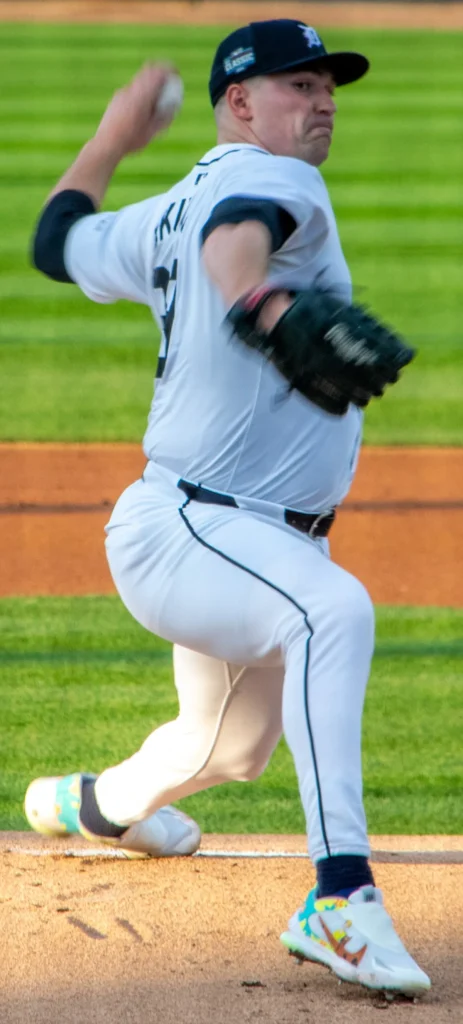
The complaint names the eight members of the union’s executive subcommittee as defendants: Chris Bassitt, Jake Cronenworth, Pete Fairbanks, Cedric Mullins II, Marcus Semien, Paul Skenes, Tarik Skubal and Brent Suter. Skubal’s name carries extra weight because the star pitcher agreed to a record nine-year, $450 million contract with the New York Mets just days before the suit was filed. Skenes, one of the game’s brightest young stars, is also named. The subcommittee is scheduled to meet in Phoenix on Sunday, as the deadline approaches.
Skubal’s new contract underlines the stakes of the cap fight. A $450 million deal for one pitcher is exactly the kind of spending the owners’ cap would restrain, and it is also exactly the kind of deal the players say proves the current system works for stars. The league’s argument is that the money flows too heavily to a handful of superstars while smaller-market clubs cannot keep up. The players’ argument is that a cap would suppress salaries across the board and hand owners a bigger share of the game’s revenue. Neither side has moved, and the lawsuit makes the gap public in court filings rather than in bargaining sessions.
The sport has seen its share of off-field drama in 2026, including the posthumous pardon of Pete Rose, baseball’s all-time hits leader, but a labour war that reaches the courts before a lockout even starts is new territory. The players’ outside counsel includes Jeffrey Kessler, a former law partner of Meyer, who took over as union head in February. Among the lawyers representing MLB are Paul D. Clement, who served as Solicitor General under President George W. Bush, and the firm Keker, Van Nest and Peters.
The Legal Chess Game: Disclaimer, Antitrust and the NLRB
The legal strategy behind the MLB lockout lawsuit turns on a Supreme Court decision from 1996. In Brown v. Pro Football Inc., the court ruled that unionised employees may not file antitrust suits and must rely on labour law, a doctrine known as the nonstatutory labour exemption. To get around that rule, union leaderships in other sports have filed disclaimers of interest, declaring that they no longer wish to represent the bargaining unit, so that players could then pursue antitrust claims as individuals. That playbook was used by players in the NFL in 1989, the NBA in 1987, 1995 and 2011, and the NHL in 2012.
MLB says it expects the baseball union to follow the same playbook under its new leadership. “The lawyers and officials leading the union have no real intention of abandoning their role leading the players’ negotiating efforts,” the suit says. “Instead, those lawyers and officials will use the threat of antitrust injunctions and treble damages to try to coerce MLB into caving to their bargaining demands. If they succeed in their gambit, they will then spontaneously resurrect the MLBPA and enter into a new CBA.” By suing first, the league hopes to have a judge rule in advance that the lockout is lawful, so that even if the union disclaims, the antitrust threat loses its force. The league is not seeking damages, only a declaratory judgment affirming that the lockout is permissible.
The National Labor Relations Board is the other front in this fight. MLB says it will ask the Board to rule that the union has refused to bargain in good faith, which would keep the dispute under labour law rather than antitrust law. The union, for its part, is expected to file its own charge accusing the league of bargaining in bad faith. Which forum decides the dispute, a federal court or the labour board, may matter as much as the substance of the arguments. A court ruling that the lockout is legal would take away the players’ strongest weapon. A labour board finding against either side would push both parties back to the table under legal pressure.
What a Lockout Would Mean for Baseball
“MLB expects to exercise its right to implement a lockout upon expiration of the CBA at 11:59 p.m. ET on Dec. 1, 2026, in support of its lawful bargaining position,” the lawsuit says. A lockout would halt all player activity, including free-agent signings, trades and use of team facilities. It would be the sport’s tenth work stoppage since 1972, though no regular-season or post-season games have been lost since the 1994 and 1995 players’ strike.
The calendar gives both sides some room, but not much. The off-season is normally the quietest period in baseball, and a lockout in December does not immediately cost games. The real deadlines come later: spring training in February, opening day in late March, and the regular season beyond that. If the dispute drags on, as the 1994 strike did for more than seven months, the 2027 season itself is at risk. That is the history both sides are trying to avoid repeating, and the history both sides are using as leverage. Owners believe players will not sacrifice a season over a cap. Players believe owners will not sacrifice a season to impose one. The lawsuit suggests neither side is willing to test that belief at the bargaining table alone.
Player movement has dominated sports headlines this year, from free-agent signings to the managerial move that took Mauricio Pochettino to Manchester United, but a lockout freezes all of it. Teams cannot sign free agents, cannot trade players, and cannot even let players use club facilities to train. For players, that means a winter without pay cheques from new deals and without access to team medical and training staff. For owners, it means a winter without the transactions that drive fan interest in the off-season. Both sides lose, which is why lockouts are usually a pressure tactic rather than a permanent state. The question is how much pressure each side can take before the spring.
What Happens Next in the MLB Lockout Lawsuit
The immediate dates are clear. The collective bargaining agreement expires at 11:59 p.m. ET on December 1, and owners are expected to impose the lockout at once. The union’s executive subcommittee meets in Phoenix on Sunday, and the court case in Manhattan will now run in parallel with the negotiations. The unfair labour practice charges at the National Labor Relations Board will add a third track.
What to watch next is straightforward. First, whether the judge in Manhattan moves quickly on the declaratory judgment, or lets the case sit while bargaining continues. A fast ruling for MLB would remove the union’s antitrust threat. A slow case leaves the threat alive. Second, whether the two sides keep talking once the lockout starts. Past lockouts, including the 2021-22 lockout that lasted 99 days, were settled at the table, not in court. Third, whether either side blinks on the cap itself. Manfred says owners will not approve a deal without one, and players say they will never accept one. One of those statements will have to bend before opening day.
Frequently Asked Questions
What is the MLB lockout lawsuit?
The MLB lockout lawsuit is a 38-page complaint filed by Major League Baseball and its 30 teams against the players union in federal court in Manhattan on November 25, 2026. It asks a judge to declare that the lockout expected on December 1 is legal under antitrust law and cannot be blocked by a court, even if the union gives up its status as the players’ bargaining representative.
When does the MLB lockout start?
The current collective bargaining agreement expires at 11:59 p.m. ET on December 1, 2026, and owners are expected to impose a lockout immediately. A lockout would freeze free-agent signings, trades and use of team facilities until a new agreement is reached.
Why is MLB suing the players union before the lockout?
MLB says it fears the union will disclaim its bargaining status so players can sue under antitrust law, which could expose the league to treble damages. By suing first, the league wants a judge to rule in advance that the lockout is lawful, removing that threat. The union calls the lawsuit completely frivolous.
What is the salary cap dispute in the MLB lockout?
Owners want baseball’s first salary cap since 1994, proposing a $258.2 million ceiling and a $180.2 million payroll floor per team starting in 2028. Commissioner Rob Manfred says owners will not approve a deal without a cap. Players have vowed never to accept one and call it a non-starter.
Will the 2027 MLB season be played?
That is unknown. Both sides say they want a full 2027 season, and the off-season lockout does not immediately cost games. But if the dispute is not settled before spring training in February, regular-season games could be at risk, as they were in the 1994 strike that cancelled the World Series.
Conclusion
The MLB lockout lawsuit turns a labour negotiation into a court case before the lockout has even started. Owners want a judge to bless the work stoppage and take away the players’ antitrust weapon, while players call the suit frivolous and say the league should be bargaining, not litigating. At the centre is the salary cap, the issue that cost baseball a World Series in 1994 and now threatens the 2027 season. The December 1 deadline starts the lockout, but the real test comes after: whether a judge, a labour board or a bargaining table produces the deal. Until one side bends, fans wait to learn whether there is a season to watch in the spring.
