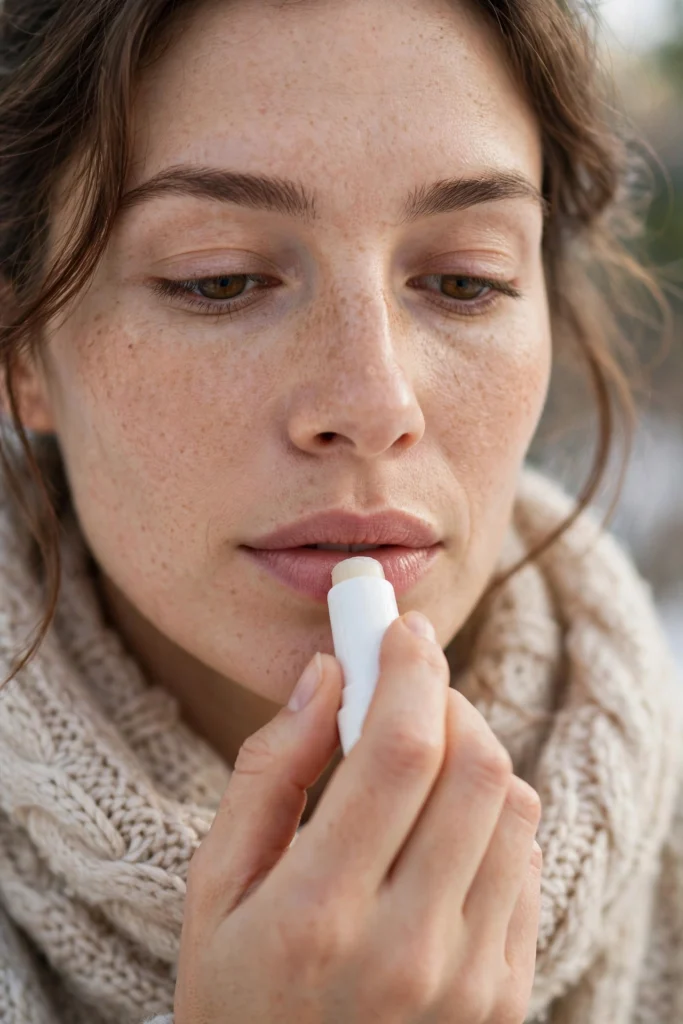
How to Fix Chapped Lips Fast: The 48 Hour Repair Routine
Lips are the driest skin on your body, and it is not your imagination. Lip skin has no oil glands and almost no protective barrier, so cold air, indoor heating, sun, and one bad habit, licking them, strip moisture faster than anywhere else. Most chapped lips heal fully within two to three weeks of proper care, and the worst of the tightness and flaking can ease inside 48 hours when you follow the right routine.
Learning how to fix chapped lips is mostly about ingredients. The wrong balm, the minty, tingly kind, can actively keep lips chapped, while a plain ointment that costs a few dollars outperforms luxury products. Here is the routine dermatologists repeat, the ingredients that heal, and the ones that sabotage you.
Table of Contents
Why Your Lips Are Chapped (and Staying That Way)
- Lip licking. Saliva evaporates and takes more moisture with it, and its enzymes irritate already damaged skin. It is the number one reason chapped lips do not heal.
- Cold, dry air and indoor heating. Winter air holds little moisture, and heated rooms are drier still.
- Sun exposure. Lips sunburn quietly. Chronic sun damage is a common cause of lips that never seem to recover.
- Irritating ingredients. Menthol, camphor, eucalyptus, phenol, fragrances, and strong flavors create a tingle that feels medicinal but increases irritation and dryness.
- Dehydration and mouth breathing. Both dry the lip surface continuously, especially overnight.
How to Fix Chapped Lips: The 48 Hour Repair Routine
Step 1: Stop the Damage
Put down the tingly balm. If a product burns, stings, or tingles on damaged lips, it is not working harder, it is irritating the skin. Set aside flavored, scented, and medicated feeling products until your lips are healed, and make a conscious effort to stop licking and picking. Peeling flakes tears the healthy skin underneath and restarts the clock.
Step 2: Seal With the Right Ingredients
Apply a plain, fragrance free ointment or balm built on ingredients dermatologists recommend: petrolatum (white petroleum jelly), ceramides, dimethicone, mineral oil, shea butter, or castor seed oil. Petrolatum is the heavyweight: it seals the surface so the skin underneath can repair itself. This is the same barrier logic that heals winter hands, so if your hands suffer too, our guide to the best hand creams for dry skin uses the same ingredient map.
Step 3: Reapply on a Schedule, Not on a Whim
Apply several times a day, after eating and drinking, and thickly before bed, when hours of undisturbed repair happen. A thick layer of plain petroleum jelly overnight is the single most effective cheap treatment there is. Most people apply once in the morning and wonder why nothing changes; frequency, not price, is the difference. That schedule is the heart of how to fix chapped lips quickly: seal, protect, and repeat.
Step 4: Protect During the Day
Outdoors, use a lip product with SPF 30 or higher, since sun keeps damaged lips from recovering. Indoors, a bedroom humidifier helps if your lips are worst in the morning. Drink water through the day, and breathe through your nose when you can.
Step 5: Gentle Exfoliation Only When Ready
Once lips stop cracking and feel comfortable, very gentle exfoliation with a soft, damp cloth removes remaining flakes. Skip scrubs, sugar or otherwise, while lips are raw: friction on damaged skin delays healing.
Ingredients That Heal vs Ingredients That Hurt
| Choose these | Avoid these on damaged lips |
|---|---|
| Petrolatum / white petroleum jelly | Menthol and camphor |
| Ceramides | Eucalyptus and phenol |
| Dimethicone | Fragrances and strong flavors |
| Shea butter | Salicylic acid |
| Castor seed oil and mineral oil | Lanolin (a common allergen for some) |
| SPF 30 or higher for daytime | Long wear matte lipsticks while healing |
The Winter Lip Kit: Keeping Them Healed
Healed lips stay healed with a small system, the same thinking behind a good budget friendly skincare routine for beginners: a plain ointment at the bedside, an SPF balm in the coat pocket, a backup in the car, and the discipline to apply before lips feel dry rather than after. Reapply after meals, protect before going out in wind or sun, and treat any return of cracks early for two days instead of letting it rebuild.
When Chapped Lips Need a Doctor
The American Academy of Dermatology notes that lips which do not heal within about two to three weeks of consistent care deserve a dermatologist visit. Go sooner if you see blistering, swelling, yellow crusts, bleeding that keeps returning, or persistent cracking at the corners of the mouth, which can signal an infection or a specific condition such as angular cheilitis that home care cannot fix.
Frequently Asked Questions
How long does it take to fix chapped lips?
With the right ointment applied several times a day and the irritants removed, most cases improve noticeably within two days and heal fully in two to three weeks. Lips that stay chapped beyond that need a dermatologist.
Is Vaseline good for chapped lips?
Yes. Plain petroleum jelly is one of the most recommended treatments because it seals moisture in better than wax based balms and contains nothing to irritate damaged skin. Apply it thickly, especially overnight.
Why does my lip balm make my lips drier?
It likely contains an irritant such as menthol, camphor, fragrance, or flavoring. These create a pleasant tingle while irritating the barrier, which triggers more licking and more dryness. Switch to a plain, fragrance free ointment and the cycle usually breaks within days.
Can I exfoliate chapped lips?
Only once they are no longer cracked or sore, and only gently with a soft damp cloth. Scrubbing raw lips tears healing skin and makes everything take longer.
Final Word
Knowing how to fix chapped lips is a two part skill: remove what is irritating them, then seal them with something plain and boring, often. Skip the tingle, grab the petroleum jelly, and give your lips 48 hours of consistent care before judging the result. Winter skin rarely needs expensive products; it needs the right ones, repeated.