US AI Chip Export Rule Closes the China Cloud Loophole
The United States moved on Monday, November 16, 2026, to close the biggest remaining gap in its AI chip export controls. The Commerce Department’s Bureau of Industry and Security issued an interim final rule that stops Chinese companies from renting America’s most advanced artificial intelligence chips through data centers in other countries. The ai chip export rule is the Trump administration’s first policy response to the scandal around former Nvidia chief executive Jensen Huang, and it rewrites the rules for who can buy, rent and ship the chips that power modern AI.
For four years, Washington has banned the direct sale of America’s best AI chips to China. But Chinese labs could still rent those same chips from cloud companies in third countries, using them remotely to train their most powerful AI models. The new ai chip export rule shuts that door. As the department put it, existing restrictions on access to sensitive American technology must not be circumvented through remote computing arrangements involving data centers in third countries.
Table of Contents
| Key fact | Detail |
|---|---|
| Rule issued | Monday, November 16, 2026 |
| Issuing agency | Commerce Department, Bureau of Industry and Security |
| Rule type | Interim final rule, RIN 0694-AK50 |
| Compute threshold | More than 12 million aggregate TPP |
| Rough equivalent | About 750 Nvidia H100 chips |
| Grace period | 90 days for existing operators to get a license |
| Countries added | Singapore, Malaysia, Indonesia, Thailand, Brazil |
What the AI Chip Export Rule Actually Does
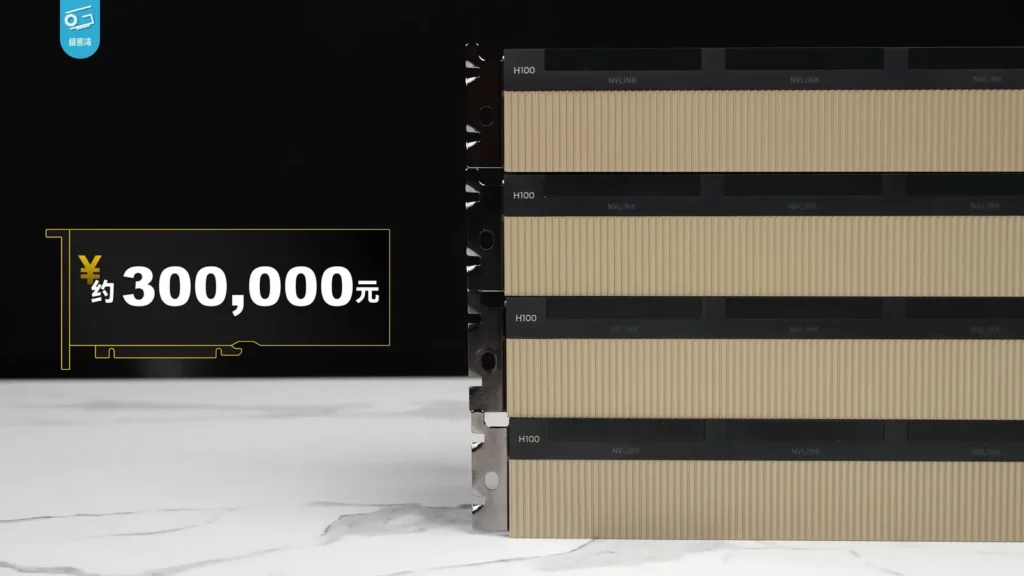
The rule has two main parts. First, it creates a new end use control on data centers anywhere in the world. Exporting advanced chips to a data center now requires a license if there is knowledge that the center will provide more than 12 million aggregate TPP of computing power to a company headquartered in China, Macau or another Country Group D:5 destination, or whose ultimate parent is based there. TPP, total processing performance, is the export control measure of chip power. By the rule’s formula, the threshold works out to roughly 750 Nvidia H100 chips, or about 330 of the newer Blackwell B200 chips.
The control covers direct access and indirect access through intermediaries or brokers, and it reaches companies in the D:5 group of embargoed countries, which includes China, Russia, Iran and North Korea, plus 18 others. Data centers already providing that level of computing power to covered customers have 90 days from the rule’s effective date to obtain a license. The only carve out is for computing power used solely for commercial recommender systems, the kind online shops and social networks use to rank products and posts. End users that are, or are owned by, US headquartered companies are exempt from the new license requirement.
Second, the ai chip export rule adds license requirements for shipments of advanced AI chips and servers, from Nvidia’s H100 upwards, to five countries the department says carry a higher than normal risk of diversion: Indonesia, Malaysia, Singapore, Thailand and Brazil. The rule also formally rescinds the regulations that implemented the Biden administration’s January 2025 AI Diffusion Rule, which sorted the world into three tiers for chip access and which the Trump administration said in May it would discard.
Why the Rule Came Now

The timing is tied directly to the Jensen Huang scandal. Four days ago, Huang resigned as chief executive of Nvidia following revelations about his relationship with an alleged Chinese spy. Questions had already been raised about a Singapore based technology company, Megaspeed, and its handling of Nvidia chips in Malaysia, ahead of Nvidia’s quarterly earnings this week. The Commerce Department’s rule was written at the direction of the Treasury Department and the National Security Council, and Bloomberg tied it directly to the increased scrutiny over semiconductor exports after the scandal.
Huang’s resignation has shaken the company at the center of the AI boom, and Nvidia’s shares have fallen sharply since. Our report on the Jensen Huang Nvidia return talk covers the leadership crisis, and our report on the testimony of Huang and Commerce Secretary Lutnick covers the congressional scrutiny that preceded it. The new rule is the first concrete policy to come out of that scrutiny, and it lands on the same day President Trump left for Asia, where the chip question will follow him to Shenzhen.
The ai chip export rule takes effect when it appears in the Federal Register, which has not happened yet, and comments are due 60 days after that. Because it is an interim final rule, it can take effect while comments are still being received, which means data center operators will need to move quickly to work out whether they fall inside the new controls.
What It Means for the Chip Industry
For the chip industry, the rule closes a loophole that had become central to how advanced computing power reaches China. Cloud providers in Singapore, Malaysia and other third countries have built large businesses renting Nvidia hardware to customers around the world, including Chinese firms that cannot buy the chips directly. Under the ai chip export rule, those providers must either get a license or stop serving covered customers, and the license applications will be reviewed case by case.
The five country license requirement adds another layer. Shipments of advanced chips to Singapore, Malaysia, Indonesia, Thailand and Brazil will now need approval, which could slow deliveries to some of the fastest growing data center markets in Asia.
For Nvidia, the rule adds to an already difficult week. The company reports quarterly results on Tuesday, its first since Huang’s resignation, and investors are watching for any sign that the scandal and the new controls will affect sales. The chipmaker is at the forefront of the AI boom, and its most advanced hardware is now subject to controls that reach far beyond American borders.
The Wider Technology Fight

The rule is the latest move in a technology fight that has run for years. The United States has steadily tightened controls on advanced semiconductors, on the equipment used to make them, and now on remote access to the computing power they provide. China has answered with its own export controls and with a push to build domestic chip capacity.
The ai chip export rule also shows how export controls are expanding from physical goods to services. The old system controlled what could be shipped in a box. The new system controls who can use the computing power inside the box, even from another continent. That is a much harder thing to police, and it will test whether the Commerce Department can enforce a rule that depends on knowing who a data center’s customers really are.
Frequently Asked Questions
What is the AI chip export rule?
It is an interim final rule from the Commerce Department’s Bureau of Industry and Security, issued November 16, 2026, that requires licenses for advanced AI chips sent to data centers that provide large amounts of computing power to Chinese and other restricted companies, and for chip shipments to five diversion risk countries.
What is the cloud loophole the rule closes?
China cannot buy America’s most advanced AI chips directly, but Chinese companies could rent them from cloud providers in third countries and use them remotely to train AI models. The new rule requires a license for that remote access above a threshold of 12 million aggregate TPP, about 750 Nvidia H100 chips.
Which countries are affected by the new license requirements?
Chip shipments to Singapore, Malaysia, Indonesia, Thailand and Brazil now need licenses. The remote access controls cover companies headquartered in China, Macau and other Country Group D:5 destinations, including Russia, Iran and North Korea.
When does the rule take effect?
It takes effect when it is published in the Federal Register, which has not happened yet. Comments are due 60 days later. Data centers already serving covered customers have 90 days from the effective date to get a license.
What happened to the Biden AI Diffusion Rule?
The new rule formally rescinds the regulations that implemented the January 2025 AI Diffusion Rule, which sorted countries into three tiers for chip access. The Trump administration had already said in May 2025 that it would not enforce it.
Conclusion
The Commerce Department’s new AI chip export rule closes the cloud loophole that let Chinese companies rent America’s most advanced chips from abroad. With a license threshold of 12 million aggregate TPP, new controls on five diversion risk countries, and the formal end of the Biden era AI Diffusion Rule, the measure extends US export controls from physical shipments to remote computing power itself. Issued four days after Jensen Huang’s resignation, it is the first policy answer to the Nvidia scandal, and it will shape how the world’s most powerful chips are bought, rented and used.