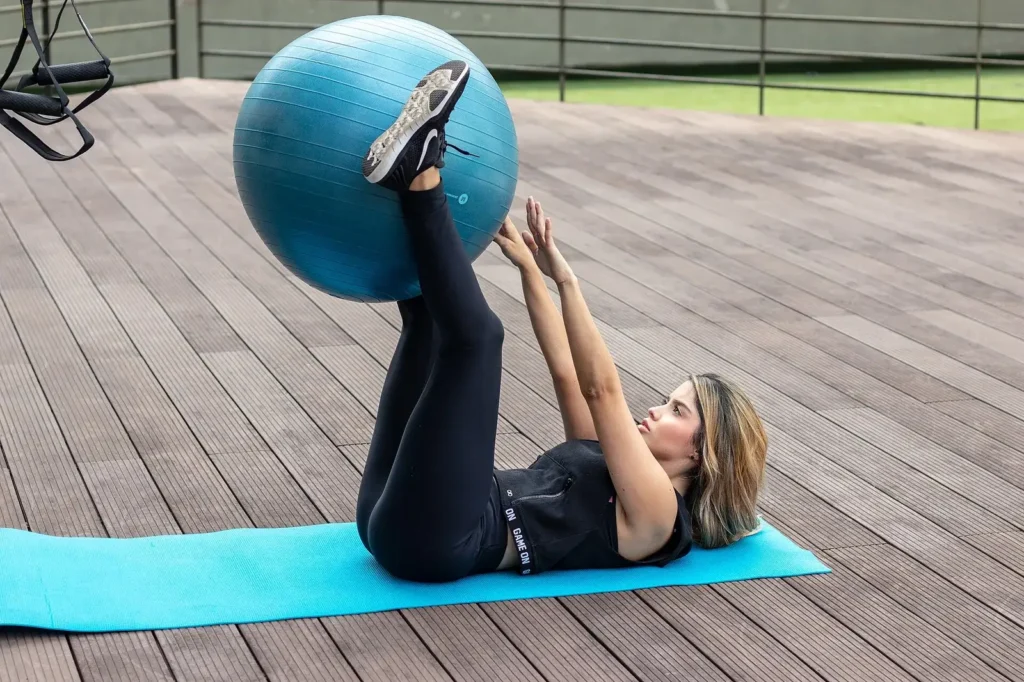
Best Lower Ab Exercises: 10 Moves for a Strong Core
The best lower ab exercises teach your core to control your pelvis while your legs move. There is no separate lower ab muscle: the rectus abdominis is one long muscle from ribs to pelvis, but exercises that curl your pelvis up toward your ribs make the lower portion work harder. You need no equipment and no gym membership: a clear patch of floor and a mat are enough to start today. This guide lists 10 of those exercises, from the easiest to the hardest, with correct form and a beginner routine you can do at home. It also covers the mistakes that waste your effort and the honest truth about spot reduction.
Table of Contents
What Lower Ab Exercises Actually Train
Lower ab training is really pelvic control training. When you lift your legs, your hip flexors pull on your pelvis, and your lower abs have to work to keep your pelvis tilted and your lower back pressed into the floor.
The key cue is simple: press your lower back into the floor and lift your hips by curling your pelvis, not by swinging your legs. If your lower back arches, your hip flexors have taken over. Slow down and shorten the range, and the abs take over again.
One honest note: no exercise burns fat from one specific area. Lower ab exercises make the muscle stronger, but making it visible depends on overall body fat, which comes down with nutrition and full-body training. A strong core still improves posture and protects your lower back.
The 10 Best Lower Ab Exercises
1. Reverse Crunch
Lie on your back, knees bent at 90 degrees, arms at your sides. Press your lower back into the floor, then curl your hips a few inches off the floor, bringing your knees toward your chest. Lower slowly. This is the best starting exercise because it teaches the pelvic curl. Do 3 sets of 10 to 15 reps.
2. Dead Bug
Lie on your back, arms pointing at the ceiling, knees bent at 90 degrees. Press your lower back into the floor. Slowly extend your right arm and left leg toward the floor, keeping your back flat, then return and switch sides. The dead bug trains trunk control while your limbs move. Do 3 sets of 8 reps per side.
3. Lying Leg Raise
Lie on your back, legs straight, hands under your hips for support. Raise your legs until they point at the ceiling, then lower them slowly, stopping before your lower back arches. Beginners should bend the knees slightly and shorten the range. Do 3 sets of 8 to 12 reps.
4. Heel Taps
Lie on your back, knees bent at 90 degrees, shins parallel to the floor. Press your lower back down, then lower one heel to tap the floor, keeping the knee bent, and return it. Alternate sides. Heel taps are a gentle first step before full leg raises. Do 3 sets of 10 reps per side.
5. Flutter Kicks
Lie on your back, legs extended a few inches off the floor, hands under your hips. Kick your legs up and down in small, controlled movements, keeping your lower back pressed down. Stop if your back starts to arch. Do 3 sets of 20 to 30 seconds.
6. Scissor Kicks
Lie on your back, legs extended. Lift both legs a few inches off the floor and cross them in a scissor motion, keeping the movement slow and controlled. Keep the range small and the back flat. Do 3 sets of 20 to 30 seconds.
7. Mountain Climbers
Start in a high plank, hands under your shoulders. Drive one knee toward your chest, then switch quickly, keeping your hips level and your core tight. Mountain climbers add a cardio element to core training. Do 3 sets of 20 to 30 seconds. If you want to build a full HIIT session around moves like this, our guide on what is HIIT training explains the format.
8. Forearm Plank
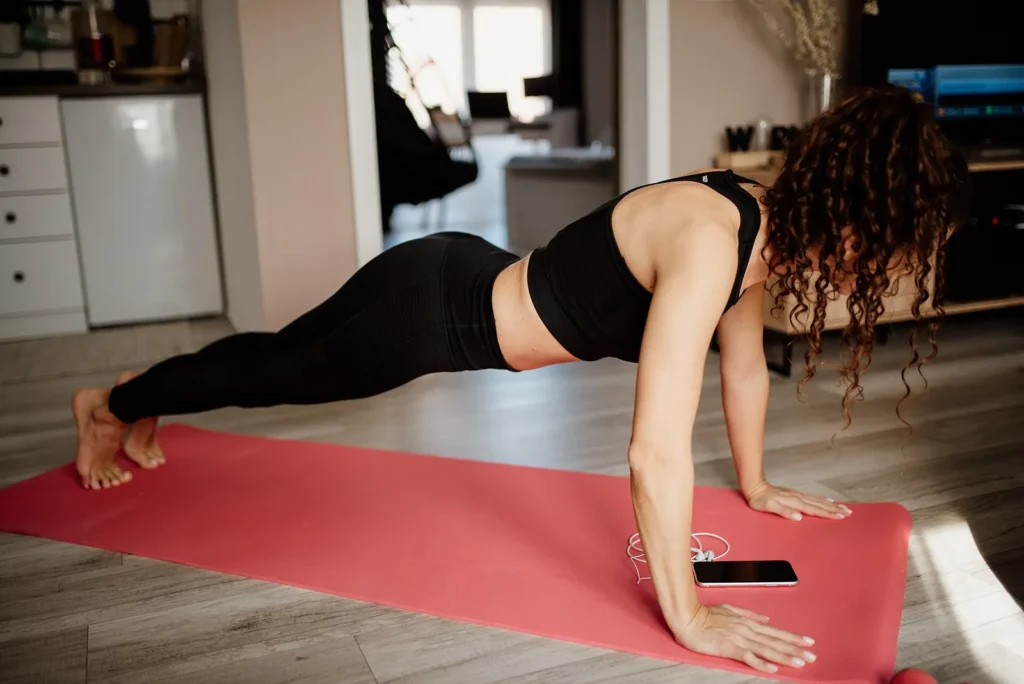
Rest on your forearms and toes, body in a straight line from head to heels. Squeeze your glutes, brace your core as if someone were about to poke your stomach, and breathe normally. The plank trains the deep transverse abdominis, the muscle that pulls everything in. Hold for 20 to 30 seconds, for 3 sets, and add 5 seconds each week.
9. Hollow Hold
Lie on your back, press your lower back into the floor, then lift your shoulders and legs a few inches off the floor, arms reaching overhead. Your body should form a shallow banana shape. Start with bent knees and a short hold of 10 to 15 seconds. Do 3 sets.
10. Hanging Knee Raise
Hang from a pull-up bar, arms straight, core braced. Raise your knees toward your chest by curling your pelvis, then lower slowly without swinging. This is the best next step once floor exercises feel easy. Do 3 sets of 8 to 12 reps. Without a bar, a captain’s chair at the gym gives the same movement with your forearms supported.
A Beginner Lower Ab Workout
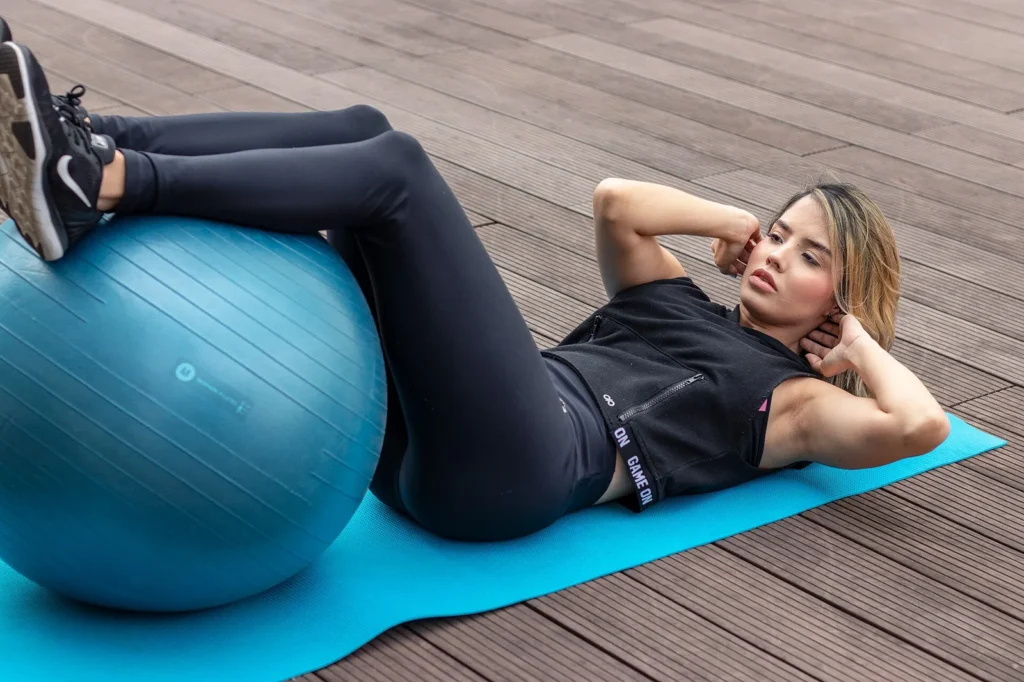
Put the exercises together in a simple 10-minute routine, two or three times a week.
| Exercise | Sets | Reps or time |
|---|---|---|
| Dead bug | 2 | 8 per side |
| Reverse crunch | 2 | 10 to 15 |
| Heel taps | 2 | 10 per side |
| Forearm plank | 2 | 20 seconds |
| Lying leg raise | 2 | 8 to 12 |
Rest 30 to 45 seconds between exercises. When the routine feels easy, add a third set, then add harder moves such as the hollow hold.
If you are new to exercise, start with just the dead bug and the reverse crunch, then add one exercise at a time. Our guide on how to start working out as a complete beginner covers the first four weeks in detail, and the yoga poses in our yogasana postures with names guide are a good complement for flexibility and balance.
Common Mistakes
The first mistake is letting your lower back arch. The moment your back lifts off the floor, your hip flexors take over. Shorten the range and slow down.
The second mistake is swinging. Fast, uncontrolled leg swings use momentum instead of muscle. Every rep should take 2 to 3 seconds up and 2 to 3 seconds down.
The third mistake is holding your breath. Breathe out as you lift and in as you lower. Holding your breath makes the exercise harder to control.
The fourth mistake is training abs every day. Your core muscles need recovery like any other muscle. Two or three sessions a week with a rest day between them is enough, and more is not better. The Centers for Disease Control and Prevention recommends at least 150 minutes of moderate activity a week for adults, and its guidelines at cdc.gov are a useful baseline. MedlinePlus also publishes a plain-language guide to exercise and physical fitness at medlineplus.gov.
The fifth mistake is expecting visible abs from ab exercises alone. Ab training builds the muscle, but body fat covers it. Nutrition and full-body training decide whether it shows.
Frequently Asked Questions
What is the best lower ab exercise for beginners?
The reverse crunch and the dead bug are the best starting points. Both teach the pelvic curl, both are gentle on the lower back, and both need no equipment. Start with 2 sets of each.
Can lower ab exercises burn belly fat?
No exercise burns fat from one specific area. Lower ab exercises strengthen the core, but losing belly fat needs an overall calorie deficit from nutrition and full-body activity, so combine ab training with a broader fitness plan.
How long does it take to see results from lower ab exercises?
Your abs will feel stronger within 2 to 4 weeks of consistent training, and your posture and core stability usually improve first. Visible changes take longer.
Should I do lower ab exercises every day?
No. Two or three sessions a week with rest days between them is enough. Your core muscles need recovery time, and daily ab training adds fatigue without adding results.
Conclusion
The best lower ab exercises are not the hardest ones, they are the ones you can do with control: a reverse crunch that curls the pelvis, a dead bug that keeps the back flat, a leg raise that stops before the back arches. Start with the first two exercises, add one move at a time, train two or three times a week, and give the work a few weeks to show. A steady routine built on good form will make your core stronger and every other exercise easier.