Judge Strikes Down Trump Student Visa Rule That Capped Foreign Student Stays
The student visa rule struck down by a federal judge on Monday would have capped how long foreign students, exchange visitors and journalists can stay in the United States. US District Judge F. Dennis Saylor IV, sitting in Boston, vacated the Department of Homeland Security’s final rule in its entirety on November 16, 2026, calling it “arbitrary, capricious, an abuse of discretion, and otherwise not in accordance with law.”
The ruling preserves the Duration of Status system that has governed student and exchange stays for decades, under which eligible students can remain in the US while they make progress toward a degree. It is a final decision on the merits, not a temporary pause, although the government may appeal. The decision lands on the same day the Institute of International Education released its Open Doors 2026 report, which showed new international student enrollment in the US falling sharply this year. This article explains what the rule would have done, why the judge threw it out, and what it means for the students and journalists it covered.
Table of Contents
What the Student Visa Rule Would Have Done
The student visa rule struck down on November 16, published in the Federal Register on July 17, 2026, was formally titled Establishing a Fixed Time Period of Admission and an Extension of Stay Procedure for Nonimmigrant Academic Students, Exchange Visitors, and Representatives of Foreign Information Media. It would have replaced the Duration of Status framework with fixed periods of stay, forcing hundreds of thousands of people to apply for extensions to remain in the country.
For students on F-1 visas, admission would have been limited to their programme end date or four years, whichever came first. Exchange visitors on J-1 visas, including researchers, professors and instructors, would have faced the same four-year cap. Foreign journalists on I visas would have been limited to stays of just 240 days, or around eight months, with 90 days for Chinese journalists. The rule also shortened the grace period after finishing studies or post-completion practical training from 60 days to 30, and imposed a 24-month aggregate limit on language programme stays. You can read the full text of the vacated rule in the Federal Register (https://www.federalregister.gov/documents/2026/07/17/2026-14439/establishing-a-fixed-time-period-of-admission-and-an-extension-of-stay-procedure-for-nonimmigrant).
The student visa rule struck down on November 16 was scheduled to take effect in September 2026, but Judge Saylor issued a preliminary injunction on September 14 that stopped it from taking effect. The Trump administration has already appealed that injunction to a higher court. Monday’s order goes further: it grants the plaintiffs’ motion for summary judgment, denies the government’s cross-motion, and vacates the rule under the Administrative Procedure Act, the federal law that allows courts to set aside unlawful agency actions.
Student Visa Rule Struck Down: Why the Judge Vacated It
Judge Saylor found that the Department of Homeland Security had failed to justify the restrictions or adequately assess their costs and benefits. The court held that the administration had not shown a rational connection between the restrictions and their stated objectives, which were to tackle fraud and protect national security, and had not demonstrated that the limits were necessary for those purposes. The judge also found that the restrictions exceeded the department’s statutory authority and that the agency failed to consider less burdensome tools available to the government.
The ruling focused mainly on the impact on international students. Saylor wrote that the policy would prohibit foreign students from engaging in extended periods of study, such as those required for Ph.D. programmes, and would prevent them from obtaining joint degrees or changing their academic concentration. A four-year cap would have cut short exactly the kind of long, flexible study that doctoral and joint-degree students need, and the extension procedure the rule created would have added cost and uncertainty to every student’s stay.
The case, Presidents’ Alliance v. DHS, No. 1:26-cv-13799, was brought by a coalition of unions representing universities, teachers and journalists. NAFSA, the association of international educators, confirmed that the November 16 judgment is a final decision on the merits, going beyond the September preliminary injunction. The government may appeal the ruling separately, and the appeal of the earlier injunction is already pending, so the legal fight is not necessarily over. For now, though, the student visa rule struck down on November 16 is vacated and Duration of Status remains the law.
What the Ruling Means for Students and Journalists
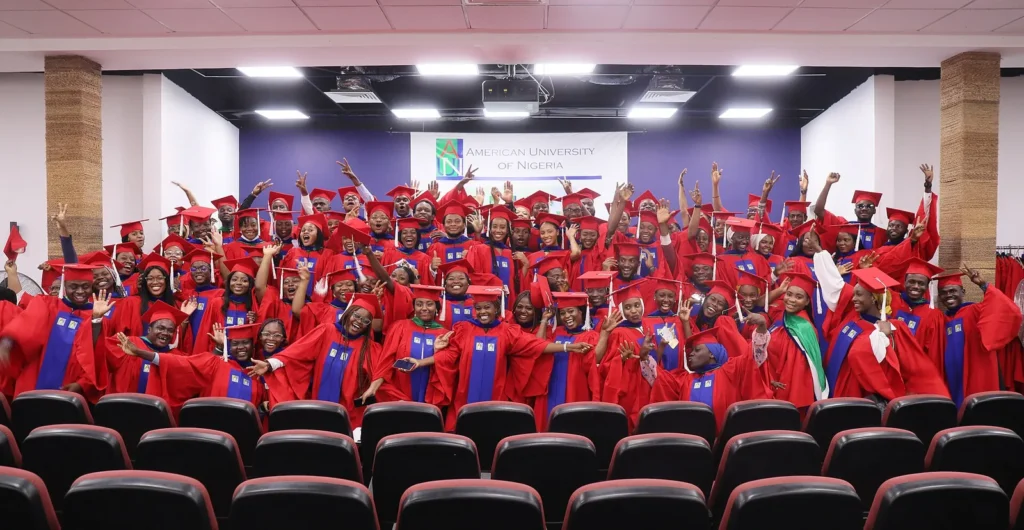
For the more than one million international students in the United States, the student visa rule struck down on November 16 removes a major source of uncertainty. Students on F-1 visas can once again plan multi-year programmes, including Ph.D. study, without facing a fixed four-year deadline and a separate extension application. Exchange visitors on J-1 visas, including the researchers and professors who staff American universities, keep the same flexibility. Foreign journalists keep the longer stays they have had for decades instead of the 240-day limit the rule would have imposed.
The timing matters because international enrollment is already under pressure. The Open Doors 2026 report, released the same day as the ruling, showed new international student enrollment falling this year, and our report on international student enrollment in the US (https://globalymag.com/international-student-enrollment/) covers the scale of that decline. India remains the largest source of international students, with 339,435 students enrolled in 2025-26 despite a 6 percent decline. A fixed four-year cap would have added another reason for prospective students to look elsewhere, and universities had warned that the rule would damage American higher education’s ability to attract talent.
The ruling also matters for the journalists the rule covered. Foreign correspondents on I visas would have had to leave after 240 days and apply for extensions of similar length, a cycle that would have disrupted long-term reporting from the United States. Chinese journalists would have faced an even shorter 90-day limit. With the rule vacated, the existing system stands, and news organisations can keep correspondents in place without repeated extension applications. For students considering study in the US, our guide to GED classes online (https://globalymag.com/ged-classes-online/) covers one route into American education, and our report on Trump and the Supreme Court judges (https://globalymag.com/trump-supreme-court-judges/) explains how the courts are shaping the administration’s wider agenda.
Frequently Asked Questions
What student visa rule was struck down?
The student visa rule struck down on November 16 was a Department of Homeland Security final rule, published July 17, 2026, that would have replaced the Duration of Status system with fixed periods of stay: four years for F-1 students and J-1 exchange visitors, and 240 days for foreign journalists on I visas. Judge F. Dennis Saylor vacated it in full on November 16, 2026.
Who brought the lawsuit against the rule?
The case, Presidents’ Alliance v. DHS, was brought by a coalition of unions representing universities, teachers and journalists. They argued the rule was arbitrary and exceeded the department’s authority. The court agreed, granting their motion for summary judgment.
What is Duration of Status?
Duration of Status, known as D/S, is the framework that has governed student and exchange stays for decades. Under it, eligible international students can remain in the US while they make progress toward their authorised academic programme, rather than being admitted for a fixed number of years. The ruling preserves this system.
Can the government appeal the ruling?
Yes. The government may appeal the November 16 judgment, and it has already appealed the September 14 preliminary injunction that temporarily blocked the rule. Until an appeal succeeds, the student visa rule struck down stays vacated and Duration of Status remains in effect.
How does the ruling affect current international students?
Current F-1 students, J-1 exchange visitors and I visa journalists are unaffected by the vacated rule. They keep the existing Duration of Status framework, so students can continue multi-year programmes, including Ph.D. study, without a four-year deadline or a new extension procedure.
Conclusion
The student visa rule struck down by Judge Saylor would have replaced decades of flexible Duration of Status with fixed four-year caps for students and 240-day limits for journalists, and the court found the department failed to justify those limits or assess their costs. The ruling preserves the existing system for more than a million international students and for foreign correspondents, and it arrives as enrollment is already falling. The government may appeal, so the legal fight is not over, but for now the fixed limits are gone and the old rules stand.