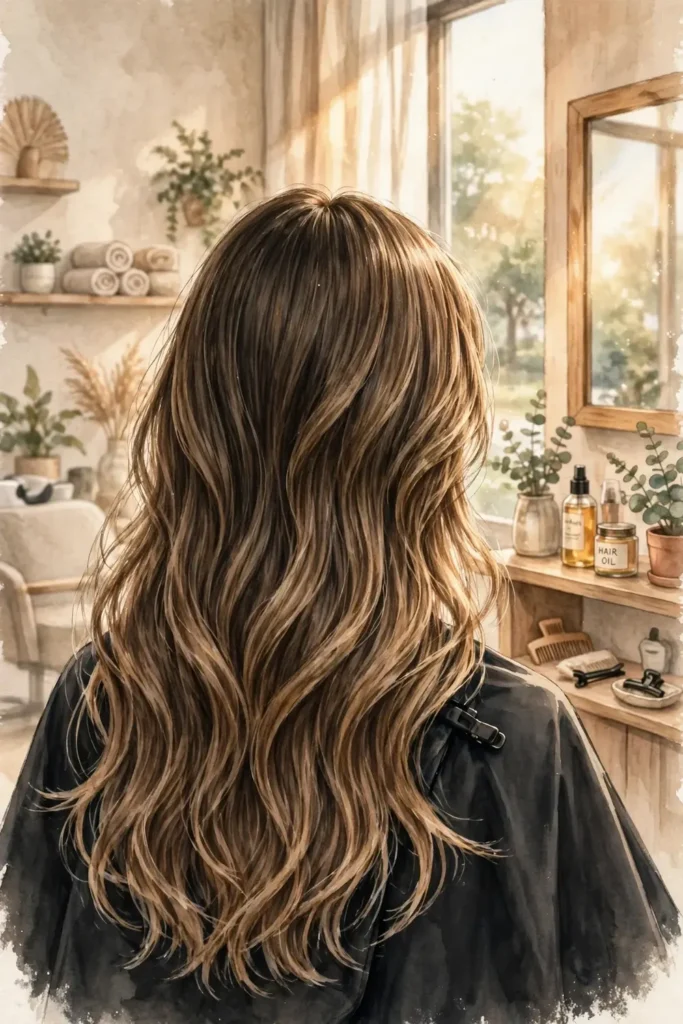
Stunning Hairdo Long With Layers Ideas to Try Today
Long hair looks beautiful on its own, but one length from roots to ends can feel heavy and flat. That is why so many people are choosing a hairdo long with layers right now. Layers cut at different lengths add movement, shape and lightness while keeping the length you love. This guide covers what long layers are, the best styles, how to pick layers for your face shape and hair type, and what to say at the salon.
Table of Contents
Hairdo Long With Layers: What It Is
A hairdo long with layers is a long layered haircut in which the hair is cut at graduated lengths instead of one straight line. The longest pieces stay at the bottom, while shorter pieces are blended through the mid lengths and around the face. The layers usually start at the chin, shoulders or collarbone, or lower.
This is very different from one length hair, which can look thick at the ends and flat at the top. It is also different from heavy layering, where short pieces can make the ends look thin. Long layers sit in the middle: they remove weight and add shape, but the overall length stays long.
The Best Long Layered Styles
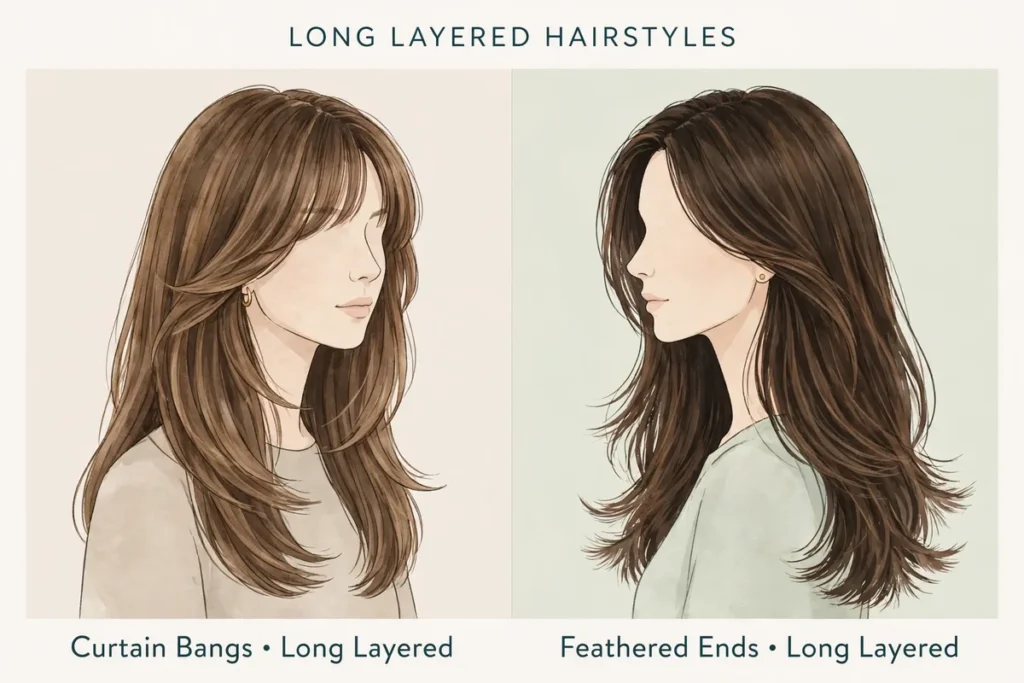
There is no single version of layered hairstyles for long hair. The right one depends on your hair texture, your face shape and how much styling you want to do each day.
Face framing layers are shorter pieces around the face that start near the cheekbones or jaw. They soften the face and grow out gracefully, and they work well on almost every face shape.
The butterfly cut has short, bouncy layers on top and long layers underneath. When the hair is worn down, the top layers flip out like wings, which gives the cut its name. It adds volume at the crown.
A U-cut keeps the back of the hair in a soft U shape, with the sides slightly shorter than the middle. It adds layers without a dramatic change, and it looks great on thick hair because it removes bulk while keeping a full outline.
Feathered layers are light, wispy ends that blend into each other. They give a soft, airy finish and work well on fine hair, because they add movement without making the ends look thin.
A long shag has choppier layers and more texture through the lengths. It is a relaxed, lived in style that suits wavy hair and anyone who likes a low effort look. A wolf cut is a bolder cousin of the shag, with shorter layers on top.
Waterfall layers fall in long, cascading pieces that blend smoothly from top to bottom, a good choice for a polished finish. Beachy layers are long and loose, designed to work with natural waves. Soft layers for fine hair start below the collarbone, so the ends keep their fullness, while rounded layers for curly hair follow the curl pattern to keep the shape balanced.
Which Layers Suit Your Face Shape and Hair Type
The best layers for you depend on your face shape and your hair texture. Use this guide as a starting point, then talk it through with your stylist.
For a round face, layers that start below the chin help lengthen the face, while very short layers around the cheeks can make it look wider. For an oval face, most layer lengths work well, since the face is already balanced.
For a square face, soft layers around the jaw soften strong angles. For a heart shaped face, layers that start at the chin or below add width where the face narrows.
For straight hair, long layers add the movement that straight hair often lacks. A U-cut or waterfall layers give shape without making the ends look thin, but keep the layers long and blended, because short choppy pieces can stick out on very straight hair.
For wavy hair, layers bring out the natural wave, and beachy layers and a long shag work beautifully.
For curly hair, rounded layers keep the curls balanced and stop the hair from looking heavy at the bottom. Cut them while the hair is dry or in its natural curl pattern, so the stylist can see how each curl falls.
For fine hair, layers should start low, below the collarbone, and stay long, so the ends look full. Too many short layers can make fine hair look thinner. For thick hair, layers remove weight and make styling much easier.
What to Ask Your Stylist
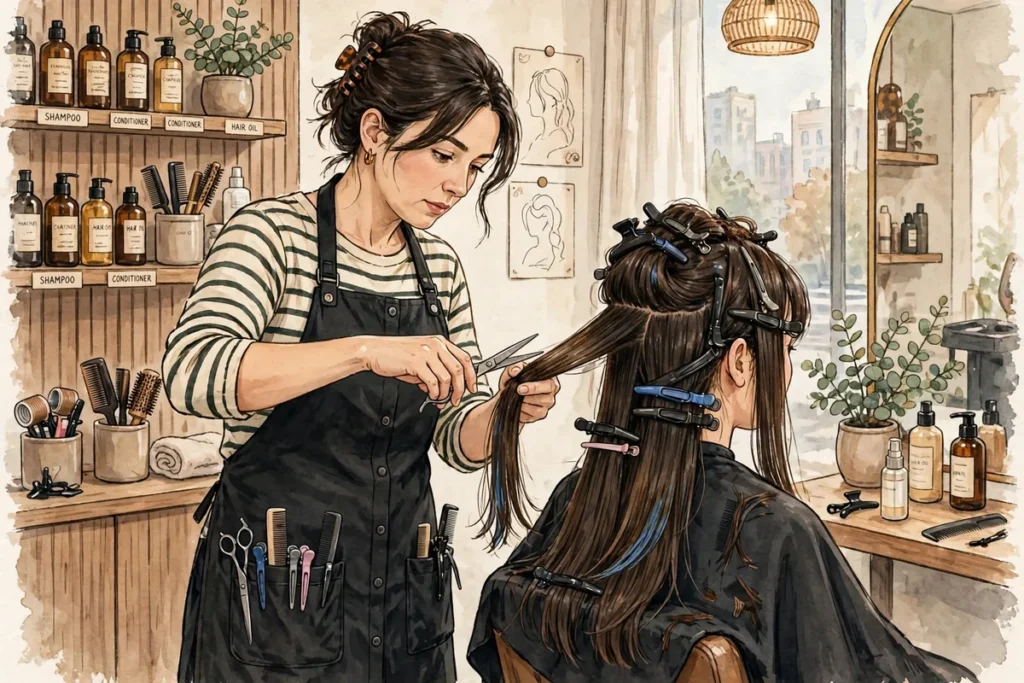
A good cut starts with a clear conversation. Bring two or three photos of the exact style you want, including a front view and a back view. Photos remove guesswork and help your stylist see the length and layer placement you have in mind.
Use clear wording. Try saying: “I want to keep my length, but I would like long layers starting at my collarbone, with face framing pieces from my cheekbones. Please keep the layers blended and soft, not choppy.” Then add how you normally style your hair, because a cut that needs a daily blow dry will not suit someone who air dries.
Ask where the layers will start before the first cut, and speak up if your stylist suggests layers above your chin when you wanted them lower. Ask how the layers will look when your hair is worn up, because very short layers can fall out of a ponytail.
How to Style and Maintain Long Layers
Long layers are easy to live with once you have a simple routine. Wash with a shampoo and conditioner suited to your hair type, use a leave in conditioner on the mid lengths and ends, and always use a heat protectant before a dryer, straightener or curling iron.
To style, blow dry with a round brush, turning the ends under or out. For soft waves, wrap large sections around a curling iron, leave the last inch straight, and brush through gently with your fingers.
Trim the ends every eight to twelve weeks to stop split ends ruining the shape of the layers. Use a wide tooth comb on wet hair, because a fine brush can snap fragile ends. Sleep on a silk or satin pillowcase to reduce friction and tangles, tie your hair loosely, and keep hot tools on a medium setting. A light hair oil on the ends adds shine.
If you want more ideas for a complete beauty routine, read our guide to the best budget friendly skincare routine for beginners.
Mistakes to Avoid
The most common mistake is asking for layers that are too short. Short layers on long hair can make the top look disconnected from the lengths, and they take months to grow out. Start longer than you think you want, because your stylist can always take more off, but cannot put it back.
Thinning the ends too much is another common error. Over thinned ends look wispy and weak, and they undo the fullness that makes long hair look healthy.
Skipping trims is a quiet mistake that shows up slowly. Split ends make layers look ragged and frizzy, and no product can repair them. Regular trims keep the shape crisp.
Finally, do not forget the rest of your look. A classic wardrobe makes the haircut shine, so take a look at our tips on how to build a capsule wardrobe on a budget. For dry hands, our roundup of the best hand creams for dry skin is a useful companion read.
For a deeper look at how long layers are cut and styled, see this complete guide to long layers haircuts.
FAQ
What is a hairdo long with layers?
It is long hair with layers cut at graduated lengths that add movement and shape while keeping the overall length. The layers usually start at the chin, shoulders or collarbone.
Do long layers suit fine hair?
Yes, if the layers start low, below the collarbone, and stay long and blended. Avoid short, choppy layers on fine hair, because they can reduce fullness.
How do I ask my stylist for long layers?
Bring photos, state where you want the layers to start, and say you want to keep your length and the ends full. Mention how you normally style your hair so the cut fits your routine.
How often should I trim long layered hair?
Every eight to twelve weeks is a good rhythm. Regular trims stop split ends and keep the layer shape crisp.
Will layers make my hair look thinner?
Long, blended layers should not make your hair look thinner. Problems come from layers cut too short or ends thinned too much, so tell your stylist you want to keep fullness at the ends.