
What Is HIIT Training? Benefits, Workouts and Safety Tips
HIIT, short for high intensity interval training, alternates short bursts of very hard exercise with short periods of rest or easy movement. A full session usually lasts 10 to 30 minutes. Instead of one steady pace for an hour, you push hard for 20 to 40 seconds, recover for 30 to 90 seconds, and repeat. That simple pattern is why HIIT is so popular with busy people who want real results in less time.
Table of Contents
What Is HIIT Training?
HIIT means working in intervals: a hard effort phase followed by a recovery phase, repeated several times. During the hard phase, your heart rate should climb to about 80 to 95 percent of its maximum, an effort of 8 or 9 out of 10, where you can only say a few words. During recovery, you slow down or rest until your breathing settles.
The idea is not new: Olympic athletes used interval training in the 1950s, and the Tabata protocol from 1990s Japan (20 seconds of work, 10 seconds of rest, eight rounds) showed clear fitness gains in six weeks.
What makes HIIT different is the recovery built into the plan: rest lets you repeat hard efforts you could never hold for 30 minutes straight. Almost any exercise works: running, cycling, rowing, swimming, squats, push ups, and jumping jacks. You need no gym or equipment, and many beginners start at home with just a timer and floor space.
How HIIT Works: Work, Rest, Repeat
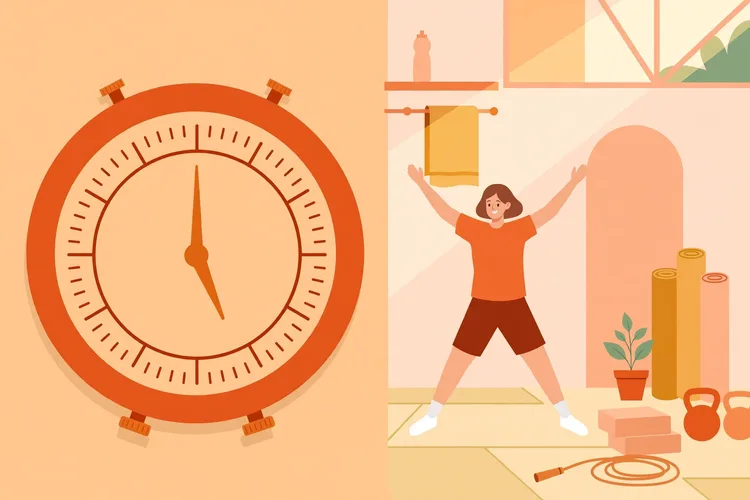
Every HIIT workout has three parts: warm up, work intervals, cool down. The warm up lasts 3 to 5 minutes of easy movement, such as marching in place or light jogging. Skipping it is a common beginner error.
The main part of the session is a set of rounds. Each round has a work period and a rest period, and the ratio between them sets how hard the workout feels. Beginners usually start with a 1 to 2 ratio: 20 seconds of work followed by 40 seconds of rest. As fitness improves, the ratio moves toward 1 to 1, such as 30 seconds of work and 30 seconds of rest.
| Work to rest ratio | Work period | Rest period | Best for |
|---|---|---|---|
| 1 to 2 | 20 seconds | 40 seconds | Complete beginners |
| 1 to 1 | 30 seconds | 30 seconds | Regular exercisers |
| 2 to 1 | 40 seconds | 20 seconds | Experienced athletes |
Cool down for 3 to 5 minutes with easy walking and gentle stretching.
Why does it work? Hard efforts push your heart, lungs, and muscles to adapt, improving how your body uses oxygen (VO2 max). Research has found HIIT can raise VO2 max more than steady exercise in the same time, in sessions about 40 percent shorter. After the workout, your body also keeps burning extra calories while it recovers, a short lived effect called the afterburn, or EPOC.
The Main Benefits of HIIT Training
The biggest benefit of HIIT is time. A 20 minute session can deliver similar fitness gains to a much longer steady workout, which makes it a strong choice for busy people. The American College of Sports Medicine has listed HIIT among the top fitness trends every year since 2014, largely because it fits real schedules.
HIIT also builds heart fitness and strength in one session: running intervals improve endurance, while squats and push ups build muscle. Regular HIIT can lower blood pressure, improve blood sugar control, and reduce body fat, and it can lift mood and energy too.
Keep expectations honest, though. HIIT is not magic, and it is not better than every other form of exercise. Harvard’s Nutrition Source notes that HIIT can help decrease body fat and improve health outcomes, but it is not necessarily better than other exercise formats. The best workout is the one you enjoy enough to repeat. See how to meal prep for the week on a budget for a practical way to plan simple meals ahead of time.
A Simple Beginner HIIT Workout
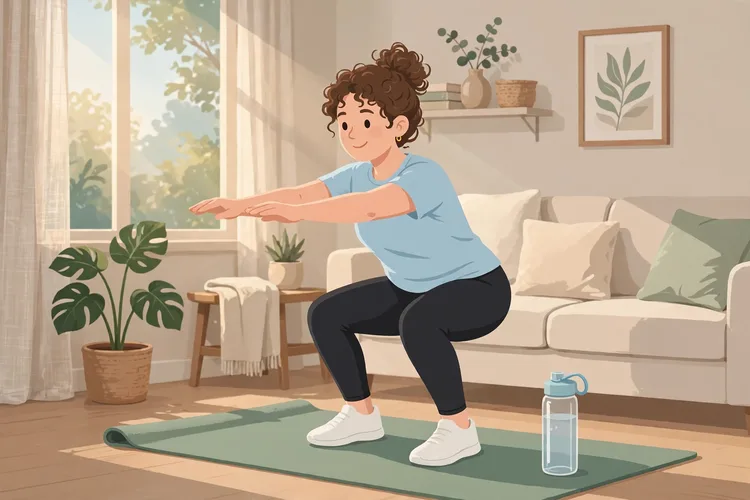
This 20 minute session needs no equipment and works in a living room. Do it two or three times per week, with a rest day between sessions.
Warm up for 3 minutes: march in place for one minute, do 10 slow squats, circle your arms for 30 seconds, and finish with 30 seconds of easy jogging in place.
Then do four rounds of the circuit below. Work for 20 seconds, rest for 40 seconds, and move to the next exercise. Rest for one full minute after each round.
- Jumping jacks: land softly on the balls of your feet.
- Bodyweight squats: push your hips back like sitting into a chair.
- Modified push ups: do these from your knees.
- Mountain climbers: drive knees to your chest at a steady pace.
- High knee march: lift knees to hip height.
After the fourth round, cool down for 3 minutes with slow walking and gentle stretches. If you are brand new to exercise, start with just two rounds, and build up over a few weeks.
Our guide on how to start working out as a complete beginner covers the first month in more detail. Once the circuit feels easy, progress to running intervals with our 8 week beginner plan for your first 5K.
Who Should Be Careful With HIIT
HIIT is demanding, and it is not right for everyone on day one. If you have a heart condition, high blood pressure, diabetes, asthma, joint problems, or any condition that affects exercise, talk to your doctor before starting. The same advice applies if you are pregnant, returning from an injury, or have been inactive for a long time.
Beginners should be honest about their starting point. If climbing stairs leaves you very out of breath, start with walking and easy bodyweight exercise, then add short intervals after a few weeks. Stop if you feel chest pain, severe dizziness, faintness, or sharp joint pain. Normal HIIT discomfort is heavy breathing, burning muscles, and tired legs.
Common HIIT Mistakes to Avoid
The most common mistake is going too hard, too soon. Many beginners treat every interval like a sprint, then feel sore for days and quit. Start with a 1 to 2 work to rest ratio, keep the effort at about 8 out of 10, and add difficulty slowly.
The second mistake is skipping the warm up and cool down. Cold muscles raise the risk of strains, and stopping suddenly can leave you dizzy.
The third mistake is doing HIIT every day. Hard intervals need recovery, and your body improves during rest, not during the workout itself. Two or three sessions per week is enough for most people.
The fourth mistake is poor form when tired. As intervals pile up, squats get shallow and push ups sag. Slow down and keep good form rather than rushing through sloppy reps.
The fifth mistake is treating HIIT as a replacement for everything else. Strength training, walking, stretching, and sleep all matter too. For a fuller picture of the science behind intervals, including safety guidance, see the Harvard Nutrition Source guide to high intensity interval training.
Frequently Asked Questions
What is HIIT training in simple words?
It is a workout that alternates short bursts of hard exercise with short rest periods: work hard for 20 to 40 seconds, rest for 30 to 90 seconds, and repeat for 10 to 30 minutes.
How long should a HIIT workout be?
10 to 30 minutes, including warm up and cool down. Beginners do well with 15 to 20 minutes. If you can do HIIT for an hour, you are not working hard enough during the intervals.
Is HIIT good for beginners?
Yes, HIIT can work for beginners when the work periods are short, the rest periods are long, and the exercises are simple bodyweight moves. Start with a 1 to 2 work to rest ratio and two sessions per week, then build up slowly. Anyone with a health condition should check with a doctor first.
How many times a week should you do HIIT?
Most people should do HIIT two or three times per week, with at least one rest day between sessions. Your body adapts during recovery, so rest days are part of the program, not a break from it.
Can HIIT help you lose weight?
HIIT can support weight loss by burning calories in less time and improving fitness. It works best with a sensible eating plan and regular movement.