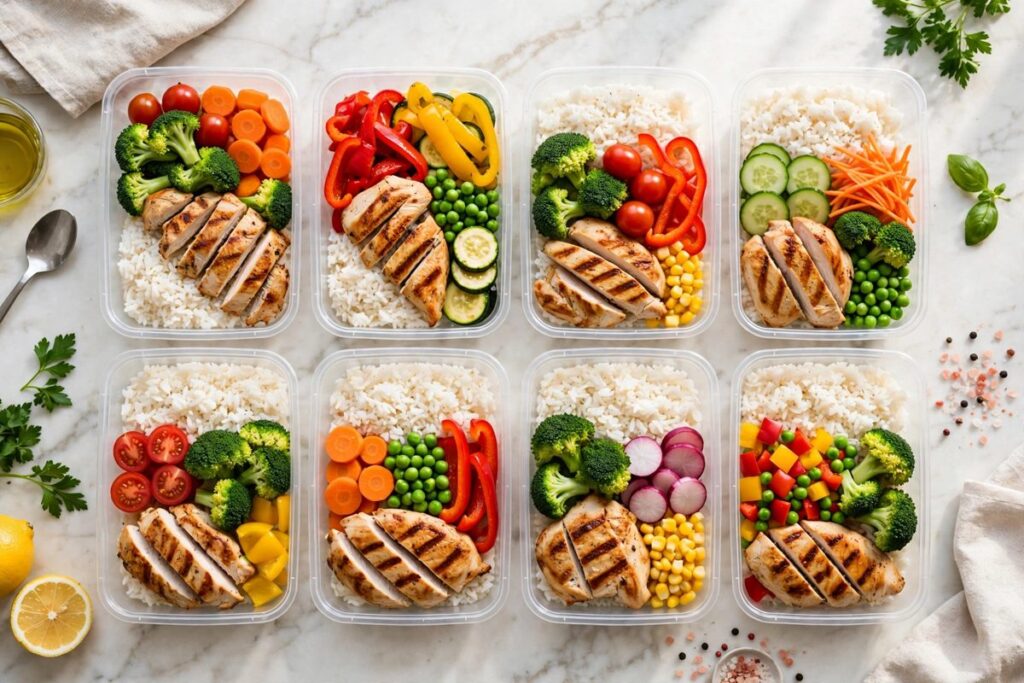
How to Meal Prep for the Week Without Blowing Your Budget
It’s Wednesday, 6:40 p.m. You’re tired, the fridge holds a sad cucumber and half a jar of salsa, and your thumb is already hovering over the delivery app. Again. If that scene sounds familiar, learning how to meal prep for the week on a budget is probably the one habit that fixes it. Not with a color-coded influencer fridge. Just a loose plan, a smart grocery run, and a couple of hours in the kitchen.
Table of Contents
Here’s the honest pitch: meal prep isn’t about eating the same chicken-and-broccoli box five days in a row. It’s about making the easy choice also the cheap one. When dinner is already in the fridge, you don’t need discipline at 6:40 p.m. The decision was made for you, by you, back when you had energy.
How to meal prep for the week on a budget: the basic idea
The system itself is simple. You pick a handful of ingredients that work in more than one meal, cook them in a single session, then mix and match through the week. Ground turkey becomes tacos on Tuesday and pasta sauce on Thursday. A big pot of rice shows up in burrito bowls, fried rice, and soup. Same food, different outfits.
That overlap is where the savings live. Buying ten ingredients that each appear in three meals is far cheaper than buying thirty ingredients for ten separate recipes. It also means less food rotting, forgotten, in the crisper drawer.
Plan for twenty minutes before you shop
The most expensive meal prep mistake happens before you ever reach the store: wandering the aisles and “getting inspired.” Inspiration is pricey. Instead, sit down for twenty minutes first.
First, check what you already have. Pantry, fridge, freezer. That half-bag of lentils and the frozen peas are free ingredients waiting for a job. Second, pick three or four main dishes for the week. Not seven. Three or four, with leftovers built into the plan. Third, leave one night as a flex night. Plans change, someone invites you out, or you just can’t face another bowl of chili.
Then write the grocery list from the plan, only from the plan, and check the store’s weekly ad for whichever protein is on sale. If chicken thighs are the cheapest cut this week, that’s the week’s protein.
The grocery list that keeps you honest
Every budget prepper’s cart ends up looking similar, because the same cheap, filling staples do the heavy lifting. Grains and bases like rice, oats, pasta, tortillas, and potatoes. Proteins such as eggs, chicken thighs, ground turkey, beans, lentils, and canned tuna. Vegetables, whatever is in season, plus frozen peas, corn, and spinach, which never wilt out of spite. And a small flavor squad: garlic, onions, soy sauce, hot sauce, a couple of spice blends, salsa, and peanut butter.
A few habits matter more than any single item. Buy store brands for staples, because the rice inside the bag doesn’t know what the bag looks like. Compare the unit price on the shelf tag rather than the sticker price, since the “family size” box is occasionally the worse deal. And be suspicious of any recipe that demands a pricey specialty ingredient you’ll use one teaspoon of. That’s not a grocery item. That’s a subscription.
The Sunday session: about two hours, no heroics
You don’t need an afternoon. Ninety minutes to two hours covers most people, and most of it runs on autopilot while a podcast plays.
Start with whatever takes longest and needs the oven: a tray of chicken thighs and chopped sweet potatoes can share the same heat. While that roasts, get rice or another grain going on the stove. Then cook your second protein, a big skillet of taco-seasoned ground turkey, say, and chop the raw vegetables for snacks and lunches last so they stay crisp.
Sauces are the difference between “meal prep” and “leftovers I’m dreading.” Whisk up two simple ones, maybe a yogurt-based ranch-style sauce and a soy-ginger mix, and the same chicken suddenly tastes like three different dinners across the week.
As food finishes, portion it into containers and let it cool a little before the lids go on. Label anything that looks like anything else, because future-you will not remember which container is soup and which is chili. Future-you never remembers.
Keep it safe: storage rules that matter
Cooked leftovers keep about three to four days in the fridge; that’s the standing USDA guidance, so plan the week around it. Eat the most perishable meals, like cooked fish, early in the week. Portions meant for Thursday and Friday are better frozen on Sunday if they’re built from things that freeze well, like soups, chili, and cooked grains.
A few basics: refrigerate food within two hours of cooking, use shallow containers so things cool evenly, and reheat leftovers until they’re steaming hot throughout. When in doubt, throw it out. Saving two dollars of rice is not worth a miserable Tuesday.
A sample week: meal prep on a budget in real numbers
Here’s what one ordinary week can look like for one person. Overnight oats with banana for breakfasts. Chicken burrito bowls for three lunches, turkey chili for two more. Pasta with turkey sauce and frozen peas for two dinners, sweet potato and black bean tacos for two dinners, and one flex night.
For example, a shop like that, built on store brands and one sale protein, might come to roughly $60 to $80 in many US cities, give or take, and well under what the old routine of delivery orders and expired groceries cost. Prices vary by city, obviously. The gap doesn’t.
Mistakes that quietly wreck the plan
Going too big, too fast is the classic one. Five brand-new recipes in week one is a recipe for burnout and a trash can full of quinoa. Start with meals you already know you like.
Prepping food you don’t enjoy is the other silent killer. If you hate reheated salmon on day one, day four will not improve it. Prep food you’d happily order at a restaurant. And don’t skip the freezer; a frozen portion of chili has rescued more weeknight budgets than any app.
Got a budget prep trick that saves your week? Share your own kitchen tips with our readers here at Globaly Mag.
FAQs
How long does meal prep take each week?
For most people, about ninety minutes to two hours in the kitchen, plus twenty minutes of planning. It shrinks fast, too; your third Sunday is much quicker than your first.
How long does prepped food stay good in the fridge?
Cooked leftovers are generally good for three to four days in the fridge. Eat delicate items like cooked fish first, and freeze the portions meant for the end of the week.
Is meal prep actually cheaper than cooking every night?
Usually, yes, mostly because of what it prevents. Fewer emergency takeout orders, fewer impulse buys, and far less wasted food add up faster than any bargain ingredient.
What if I get bored eating the same food all week?
Change the sauce, the base, or the format, not the menu. The same chicken becomes a bowl, a wrap, and a salad. Two sauces and a few toppings make a small rotation feel much bigger than it is.