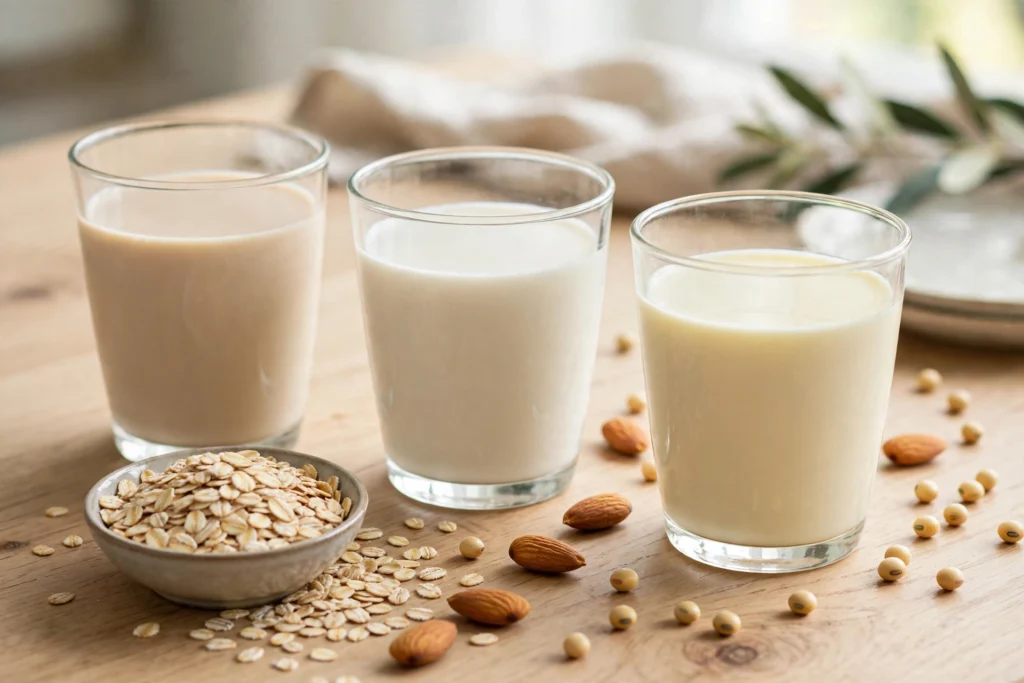
Best Non Dairy Milk: 6 Types Compared for Every Use
The best non dairy milk depends on what you pour it into. For coffee, oat milk wins. For protein, soy milk wins. For low calories, almond milk wins. No single carton is best at everything. This guide compares the six main types on taste, nutrition and kitchen performance, using typical per-cup figures from the USDA.
Table of Contents
The Quick Answer: Best Non Dairy Milk for Every Use
| Use | Best pick | Why |
|---|---|---|
| Coffee and lattes | Oat milk, barista edition | Creamiest foam, mild flavour, rarely splits |
| Cereal and smoothies | Almond or oat milk | Light, neutral, disappears into the bowl |
| Cooking and sauces | Soy or cashew milk | Stable under heat, neutral or creamy |
| Baking | Soy or oat milk | Protein and body help browning |
| Drinking plain | Oat or pea milk | Fullest flavour and mouthfeel |
| Low calorie | Almond or cashew milk | About 25 to 40 calories per cup |
| High protein | Soy or pea milk | Around 7 to 9 grams of protein per cup |
The 6 Best Non Dairy Milk Types, Compared
All figures are per cup (240 ml) of the unsweetened version. Brands vary, so check the label. Whole dairy milk has about 150 calories and 8 grams of protein per cup, so soy and pea are the only plant options close on protein.
| Milk | Calories | Protein | Taste | Best for |
|---|---|---|---|---|
| Oat milk | 110 to 140 | 2 to 4 g | Mild, sweet, creamy | Coffee, drinking plain, baking |
| Soy milk | 80 to 95 | 7 to 9 g | Neutral, slight beany note | Protein, cooking, baking |
| Almond milk | 30 to 40 | About 1 g | Light, nutty, thin | Cereal, smoothies, low calorie |
| Coconut milk (carton) | 45 to 60 | 0 g | Rich, tropical | Curries, desserts, smoothies |
| Cashew milk | About 25 | About 1 g | Very mild, smooth | Sauces, low calorie cooking |
| Pea milk | 70 to 100 | 7 to 8 g | Neutral, creamy | Protein, drinking plain |
Oat Milk: The Crowd Favourite
Oat milk is the closest thing to a default best non dairy milk. Made from oats and water, it tastes mildly sweet and has the creamiest texture of the plant milks. In coffee it is the clear winner: barista editions steam into smooth, stable foam much like dairy milk. The trade offs are calories and carbs, roughly 110 to 140 calories and 15 to 17 grams of carbohydrates per cup, with only 2 to 4 grams of protein. It is also the most forgiving in baking. If you buy one carton only, make it oat.
Soy Milk: The Protein Pick
Soy milk is the nutrition heavyweight of the group. With 7 to 9 grams of protein per cup, it is the only plant milk that matches dairy milk on protein, and it is a complete protein, providing all nine essential amino acids. It is also the most reliable in the kitchen, holding up in hot drinks, sauces and baked goods without splitting. The only real objection is flavour: some people notice a beany note, though modern brands are much milder than a decade ago. If you replace dairy for nutrition, or cook and bake often, soy is the smartest dairy free milk replacement in the aisle.
Almond Milk: The Lightweight
Almond milk is the lightest option and one of the most widely stocked. Unsweetened, it has only 30 to 40 calories per cup and a mild nutty flavour, and it works well over cereal or in smoothies. It is usually fortified with calcium and vitamin D. Its weakness is protein, about 1 gram per cup, which is almost none. It splits more easily than oat or soy in very hot, acidic coffee, so for hot drinks buy a barista edition.
Coconut Milk: The Rich One
There are two very different coconut milks, and mixing them up is the most common mistake here. The carton beverage sold in the dairy aisle is thin and light, with roughly 45 to 60 calories and no protein per cup. The canned version is a cooking ingredient with more than 400 calories per cup, meant for curries and desserts, not for cereal. The carton version tastes rich and tropical, lovely in smoothies and baking, but it adds almost no protein. Buy it for flavour, not for nutrition.
Cashew Milk: The Quiet All-Rounder
Cashew milk is the mildest of the six. It has almost no flavour of its own, a smooth, slightly creamy texture, and only about 25 calories per cup unsweetened, the lowest of all. That makes it excellent for sauces and soups, where you want body without a competing taste. Like almond it is very low in protein, about 1 gram per cup, so it is a poor choice if milk is a protein source for you. Think of it as a cooking tool rather than a drink.
Pea Milk: The New Challenger
Pea milk is the newest of the six and the one most guides still skip. Made from yellow pea protein, it tastes neutral and creamy, and it is built to match soy at around 7 to 8 grams of protein per cup. It is also a good pick for households with nut or soy allergies. Availability is the catch: not every store stocks it yet. If your store carries it and protein matters, it deserves a try.
How to Read the Label Before You Buy
Most bad experiences come from buying the wrong carton, not the wrong type. First, “original” often means sweetened, and a sweetened carton can add 7 grams of sugar or more per cup, so unsweetened is the better default. Second, check fortification: plant milks are not naturally rich in calcium, vitamin D or B12, so most brands add them back. Look for calcium around 25 to 30 percent of the daily value per cup. Third, barista blends contain added oils or gums that help them foam, fine for coffee but extra fat for everyday drinking. Finally, shelf stable cartons can sit in the pantry until opened; once opened, refrigerate any carton and use it within 7 to 10 days.
How to Switch From Dairy Milk
Switch in stages. Start with cereal and smoothies, where any of the six works. Then move to coffee, where a barista edition oat milk makes the change painless. Finally, try cooking and baking with soy or oat, which swap one for one with dairy milk in most recipes. Buy one small carton at a time until you find your favourite. If anyone in the house has a nut or soy allergy, read the allergen line. For young children, ask your paediatrician first.
Frequently Asked Questions
What is the healthiest non dairy milk?
It depends on your goal. Fortified unsweetened soy milk is the closest nutritional match to dairy milk, with similar protein and fortified calcium. Unsweetened oat milk is the best all rounder for taste and everyday use. In practice the healthiest choice is an unsweetened, fortified carton, because added sugar is the biggest difference between cartons.
Which non dairy milk tastes most like regular milk?
Oat milk, by a clear margin. It is mild, creamy and slightly sweet, and in coffee or cereal most people notice the change least. Soy milk is closest on nutrition but has a faint beany note. Almond milk tastes the thinnest.
Can I use non dairy milk in baking?
Yes, in almost every recipe, one for one. Soy and oat milk are the most reliable because their protein and body support structure and browning. Almond milk can thin batters, so it suits muffins better. For a dairy free milk replacement in a recipe that needs richness, use oat or cashew milk rather than almond.
Why does my non dairy milk curdle in coffee?
Heat and acidity. Hot, acidic coffee can split thin plant milks, especially almond. A barista edition is formulated not to split, so it is the simplest fix. Otherwise, let the coffee cool slightly and add the milk slowly.
Final Word
The best non dairy milk is the one that fits your kitchen: oat for coffee and everyday drinking, soy or pea for protein, almond or cashew for light calories, coconut for flavour in cooking. Buy the unsweetened, fortified version, and give each type one honest try before you settle.
Plan the week around it: these easy lunch ideas for work pair well with a stocked fridge, and a little meal prep for the week on a budget stretches every carton further.