Yogasana Postures With Names: 20 Poses Explained
Yogasana postures with names are easier to learn than they look, because every pose carries two names: an English name that describes what the body does, and a Sanskrit name from the classical tradition. Asana literally means seat or pose, and it is the physical side of yoga. Tradition speaks of 84 classical asanas, though modern practice uses several hundred named variations. Nobody needs all of them. This guide covers 20 essential yogasana postures with names in both languages, grouped by type, with what each one does and how a beginner should approach it.
Table of Contents
Yogasana Postures With Names: How the Names Work
Sanskrit pose names follow a consistent logic. Most end in asana, meaning pose, and the first part describes an animal, a shape or a figure. Vrksasana is vrksa, tree, plus asana. Bhujangasana is bhujanga, cobra, plus asana.
English names are less systematic. Some are direct translations, such as Tree Pose for Vrksasana. Others are approximations, such as Downward-Facing Dog for Adho Mukha Svanasana. A few have no obvious English equivalent and are simply kept in Sanskrit, such as Savasana and Tadasana.
Standing Yogasana Postures
Standing poses build the foundation of a practice: balance, leg strength and the alignment every other pose depends on.
| English name | Sanskrit name | What it does |
|---|---|---|
| Mountain Pose | Tadasana | Standing alignment and posture |
| Standing Forward Fold | Uttanasana | Hamstrings, calves; calms the mind |
| Chair Pose | Utkatasana | Thighs, glutes, ankles |
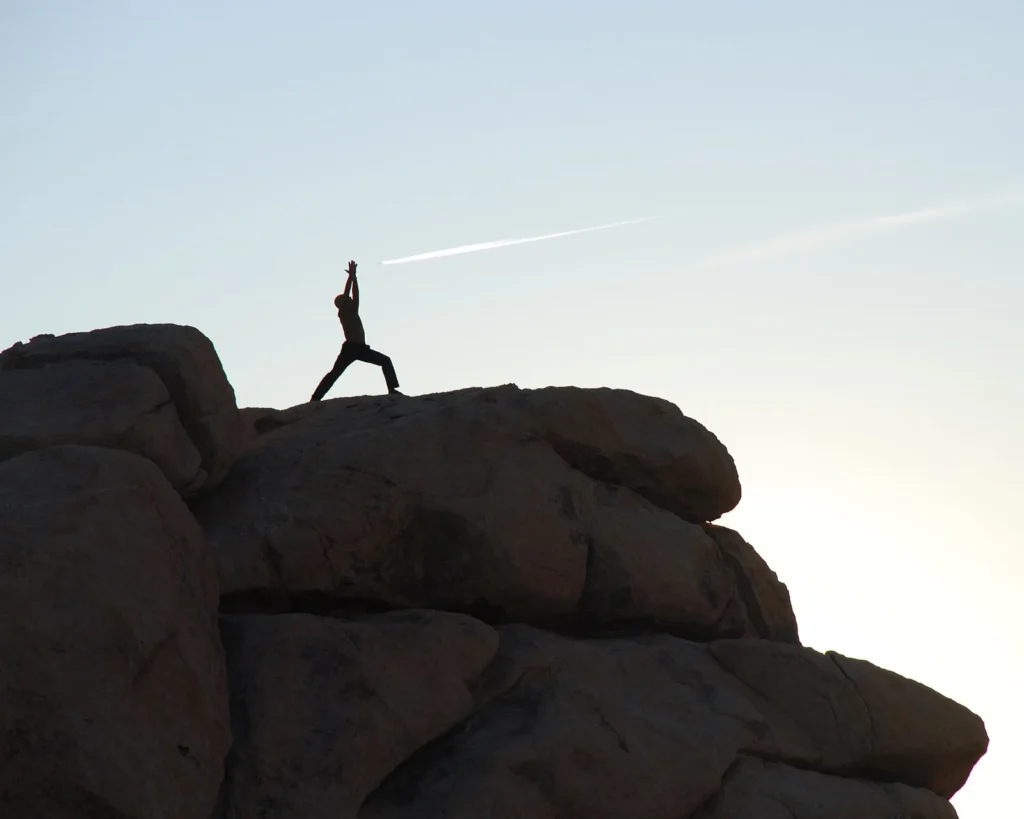
| Warrior I | Virabhadrasana I | Leg strength, hip flexibility |
| Warrior II | Virabhadrasana II | Hips, chest; builds stamina |
| Triangle Pose | Trikonasana | Sides, legs, spine |
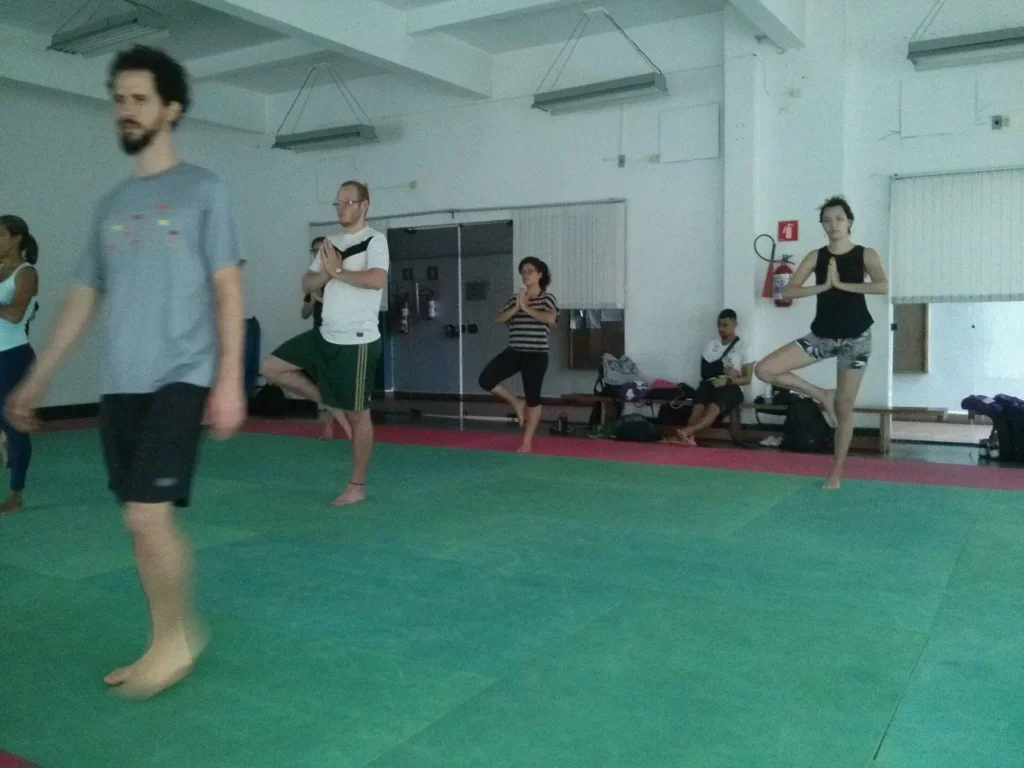
| Tree Pose | Vrksasana | Balance and focus |
Mountain Pose looks like simply standing still, but it is the foundation of every standing pose. Feet rooted, knees soft, spine long, shoulders relaxed. Warrior I and II are the strength builders of the group, and Triangle Pose teaches you to lengthen the spine sideways. Tree Pose is the balance test: one foot on the inner thigh or calf, never on the knee, eyes fixed on one steady point.
If you are new to exercise in general, standing yoga pairs well with a broader routine. Our guide on how to start working out as a complete beginner explains how to build a weekly plan around a few simple sessions.
Seated and Supine Yogasana Postures
Seated poses work on flexibility and hip mobility, and supine poses, done lying on your back, are where most practices end.
| English name | Sanskrit name | What it does |
|---|---|---|
| Easy Pose | Sukhasana | Seated breathing and meditation |
| Lotus Pose | Padmasana | Meditation posture; deep hip opener |
| Seated Forward Bend | Paschimottanasana | Whole back body stretch |
| Hero Pose | Virasana | Thighs, ankles; aids digestion |
| Bound Angle Pose | Baddha Konasana | Hips and inner thighs |
| Bridge Pose | Setu Bandha Sarvangasana | Glutes, back; opens chest |
| Corpse Pose | Savasana | Deep rest; ends practice |
Easy Pose is where most beginners should start seated work: cross-legged, spine tall, hands resting on the knees. Lotus Pose looks simple and is not, because it demands a lot of hip flexibility, so do not force it.
Corpse Pose deserves a note because beginners often skip it. You lie flat on your back, arms at your sides, palms up, and do nothing for 5 to 10 minutes. It is the pose that lets your nervous system absorb the practice.
Backbends, Twists and Inversions
Backbends open the front of the body, twists keep the spine mobile, and inversions reverse the usual relationship with gravity. Learn these in a class first, before practicing alone.
| English name | Sanskrit name | What it does |
|---|---|---|
| Cobra Pose | Bhujangasana | Gentle backbend; spine strength |
| Upward-Facing Dog | Urdhva Mukha Svanasana | Backbend; chest and shoulders |
| Camel Pose | Ustrasana | Deep backbend; front body |
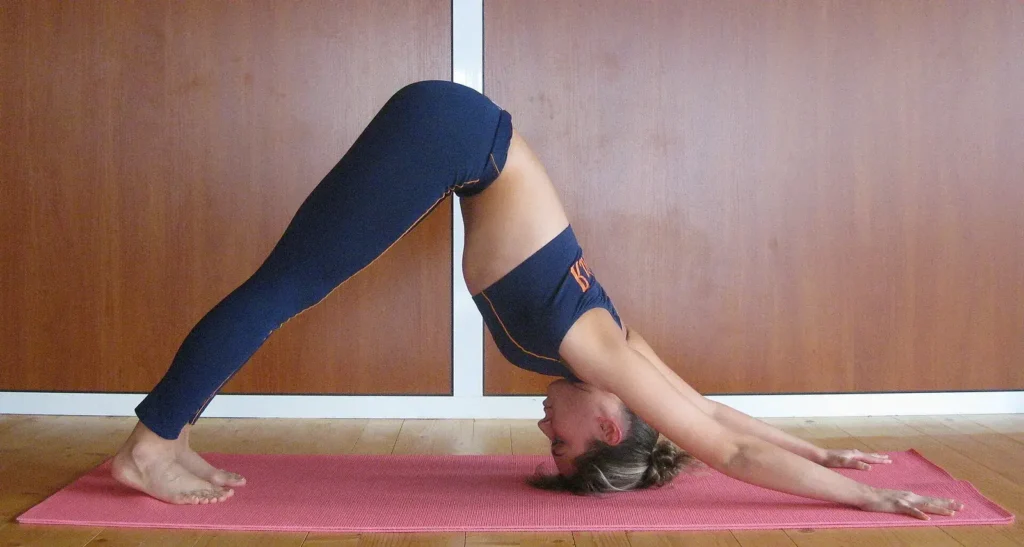
| Downward-Facing Dog | Adho Mukha Svanasana | Hamstrings, shoulders; arm strength |
| Plow Pose | Halasana | Inverted spine and shoulder stretch |
| Shoulder Stand | Sarvangasana | Classic inversion; calms nerves |
| Child’s Pose | Balasana | Resting pose; gentle back stretch |
Cobra Pose is the entry backbend: lying face down, hands under the shoulders, lifting the chest with the back muscles rather than pushing with the arms. Downward-Facing Dog is the pose you will meet in almost every class. Keep the knees bent if your hamstrings are tight, and press the floor away with your hands instead of sinking into the shoulders.
Child’s Pose is the resting pose of the group. Any time a class feels too much, fold into Child’s Pose, breathe, and rejoin when you are ready. No teacher will mind, and pushing through pain is how injuries happen.
A Beginner Sequence Using These Poses
You do not need a long routine to start. This 15-minute sequence uses six of the poses above, in an order that warms the body up and brings it back down.
- Mountain Pose, 1 minute, to find your alignment and breathing.
- Standing Forward Fold, 1 minute, to wake up the hamstrings.
- Downward-Facing Dog, 1 minute, to stretch the whole back body.
- Triangle Pose, 1 minute each side, to open the sides and spine.
- Tree Pose, 30 seconds each side, for balance and focus.
- Child’s Pose, then Corpse Pose, 5 minutes together, to rest and finish.
Repeat the sequence three times a week, adding one new pose every week or two. For a different kind of training to pair with yoga, see what HIIT training is. If you want a running goal alongside yoga, our 8-week beginner 5K plan gives you a structured way to build endurance.
How to Practice Safely
Yoga is low impact, but it is not risk-free. Never force a pose into its full shape. Flexibility comes from regular practice, not from pushing, and pain is always a signal to back off. Breathe steadily through every pose.
Use props without embarrassment. Blocks bring the floor closer in standing folds, a strap helps in seated forward bends, and a folded blanket under the hips makes seated poses more comfortable. Experienced teachers use them too.
If you have a medical condition, an injury, high blood pressure or you are pregnant, talk to your doctor before starting a new exercise routine. The National Center for Complementary and Integrative Health publishes a plain-language summary of what research says about yoga, including who should take extra care.
Frequently Asked Questions
How many yogasanas are there?
Tradition speaks of 84 classical asanas. The classical manuals actually describe far fewer in detail. Modern practice uses several hundred named variations. For a beginner, 10 to 15 poses cover everything that matters.
What does the word asana mean?
Asana literally means seat or pose. In classical yoga it referred to a seated posture for meditation, and in modern practice it describes any physical yoga posture.
Which yoga pose should a beginner learn first?
Mountain Pose, Child’s Pose, Downward-Facing Dog and Corpse Pose. Together they teach alignment, rest, stretching and recovery. Add Warrior II and Tree Pose once those four feel comfortable.
How long should I hold a yoga pose?
For beginners, 30 seconds to 1 minute per pose is enough. Hold restorative poses such as Child’s Pose and Corpse Pose longer, 3 to 10 minutes. As you improve, you can hold standing poses for 1 to 2 minutes, but never at the cost of your breathing.
Is yoga enough exercise on its own?
Yoga builds flexibility, balance and some strength, but it does not replace cardiovascular exercise. Pair it with walking, running, cycling or another activity that raises your heart rate, plus some resistance training for muscle and bone health.
Conclusion
Yogasana postures with names are a map, not a test. The 20 poses in this guide cover every category a beginner needs: standing poses for strength and balance, seated poses for flexibility, backbends for opening the front body, and rest poses for recovery. Learn the names in English and Sanskrit together, because the Sanskrit name tells you what the pose is, and the English name tells you what it does. Start with the six-pose sequence, practice three times a week, and add new poses slowly. The goal is not to collect poses. It is to build a practice you will still be doing in a year.