SpaceX Starship Catch: First Ever Tower Catch at Starbase
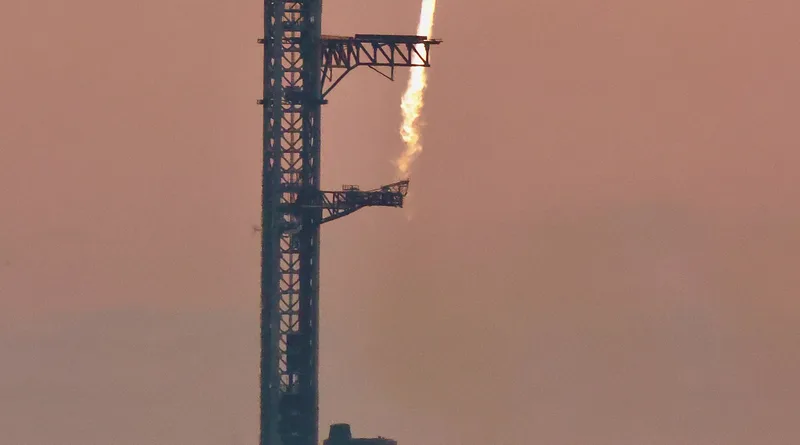
SpaceX made spaceflight history on Saturday, November 14, 2026, when its Starship upper stage returned from orbit and was caught in mid-air by the Mechazilla tower’s mechanical arms at Starbase, Texas, the first time any spacecraft returning from orbit has ever been caught by a launch tower.
Crowds on the Gulf beach near Starbase cheered as the ship settled into the tower arms, ending a flight of more than 22 hours. The spacex starship catch proved that the upper stage of the largest rocket ever flown can come home in one piece, a step SpaceX needs before Starship can fly again quickly and cheaply. It came a day after the Super Heavy booster was lost in a fireball over the Gulf of Mexico.
Table of Contents
How the SpaceX Starship Catch Happened
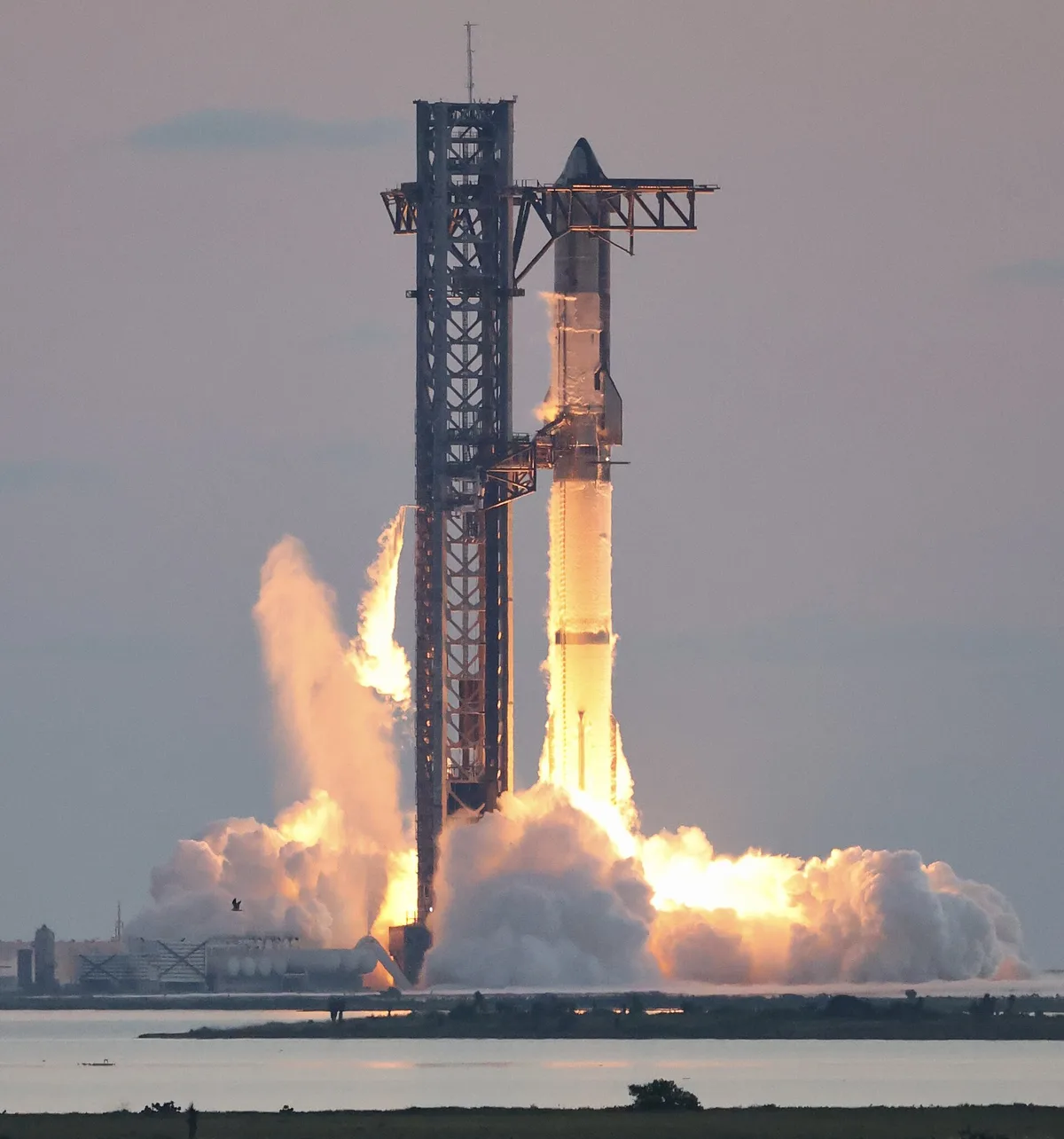
Ship 42, the Starship upper stage, lifted off on Friday, November 13, at 5:47 p.m. EST (4:47 p.m. CST) on Flight 15, the 15th Starship test flight since 2023. We covered the launch in our report on the SpaceX Starship Flight 15 launch.
After separating from its booster, Ship 42 flew into orbit, deployed 26 Starlink V3 internet satellites, and spent about 22.5 hours circling the Earth, completing 14 laps at 265 km (165 miles). Flight 15 was only the second Starship flight ever to reach orbit, after Flight 14 in September 2026, and the fourth launch of the Starship V3 design. The full stack stands 124 metres (407 ft) tall, with 33 Raptor engines on the Super Heavy booster.
The return began with a fiery re-entry. The ship swung out over the Gulf of Mexico, flipped and lit three Raptor engines for its landing flip, then slowed to a hover beside the tower. The giant arms, nicknamed the chopsticks, closed around it at about 4:30 p.m. ET on Saturday (1:30 p.m. PT), above Launch Pad 2 at Starbase.
SpaceX reported that everything on the spacecraft, including its vital heat shield, appeared to work well. SpaceX spokesman Dan Huot summed up the mood, saying: “We caught a Starship and now, everything changes.”
Why Catching the Ship Is Harder Than Catching the Booster
SpaceX had already caught Super Heavy boosters with the tower three times. Catching the ship is much harder, and that is why Saturday’s success meant so much.
The booster separates early and comes back from a much lower altitude at a lower speed. The ship falls from orbit, so it returns far faster and from far higher up, after surviving the extreme heat of re-entry. It must slow down, flip upright, hover beside a tower more than 400 feet tall, and hold still while the arms close around it.
The margin for error is tiny. A ship arriving slightly off course, or a fraction of a second late in lighting its engines, could miss the arms or strike the tower. SpaceX had to prove its guidance, heat shield and landing engines could all work together after a full day in space. On Saturday, they did.
The Booster That Got Away
The plan was a double catch: the booster back at the tower shortly after launch, and the ship a day later. The booster part failed within minutes of liftoff.
After launch, the Super Heavy booster was cleared for a return to the launch site. Instead, it diverted toward the Gulf of Mexico, the flight termination system was triggered, and it exploded in a fireball over the water. USA Today reported that the booster came down softly over the water before the termination system was triggered.
Musk said on X that the initial reason for the diversion was that the booster was running low on fuel, but flight telemetry would need review before a definite conclusion. SpaceX commentator Kate Tice said the booster’s engines stopped firing too soon, and its guidance system sensed it was not in the right position, automatically starting the detour and the self-destruction. Engineers are still investigating.
Steering the booster over the water was a safety precaution: if a booster is not lining up for a tower catch, SpaceX sends it to the Gulf rather than risking the launch site. That choice saved the tower and the pad, so the ship’s catch a day later could still go ahead.
What Elon Musk and NASA Said
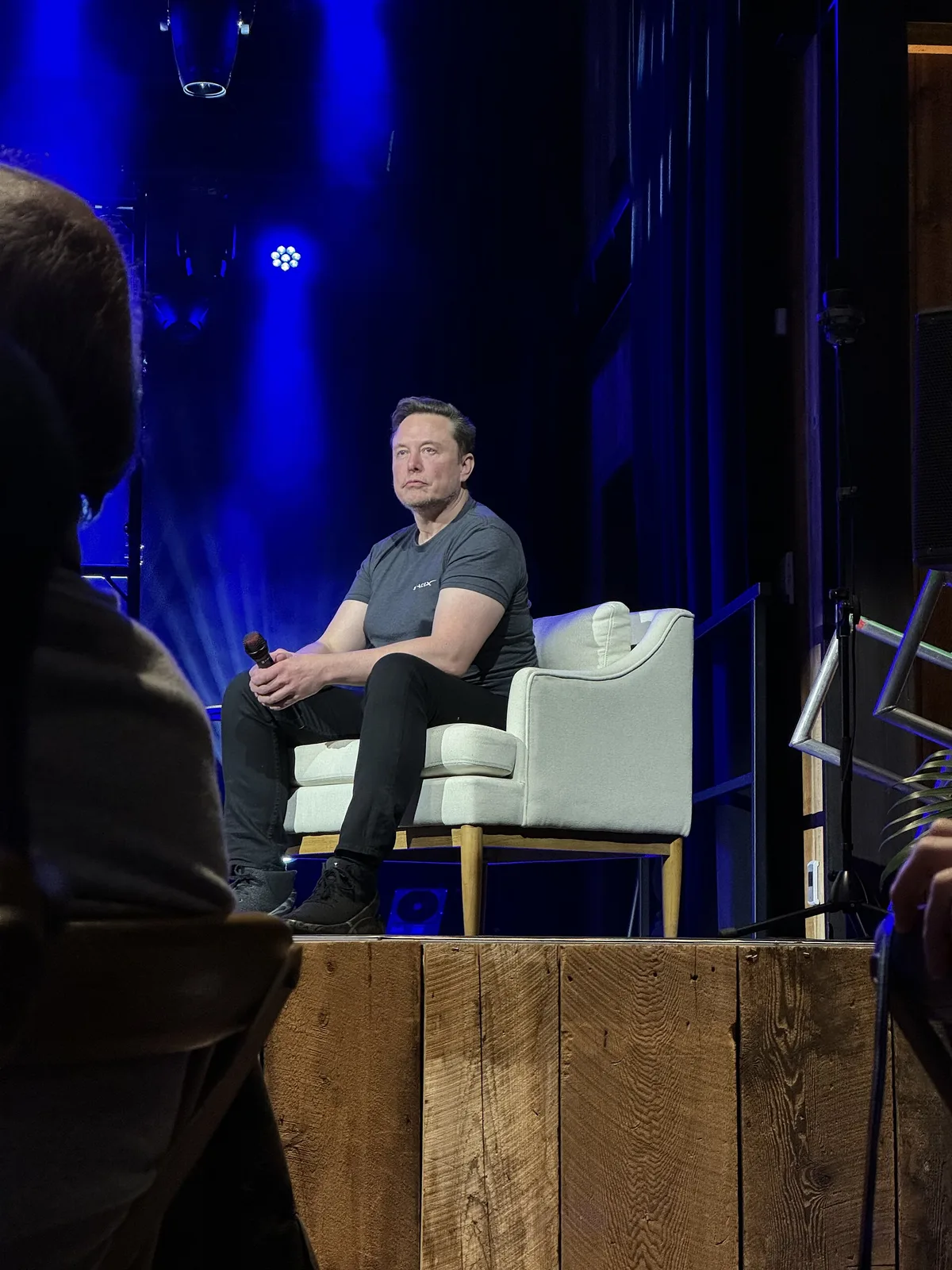
Reaction was immediate. Musk posted on X: “Congratulations to an incredible team at SpaceX!!!” SpaceX Vice President of Launch Kiko Dontchev added: “We did it!!!!!!”
NASA, which is paying billions of dollars for Starship to land Artemis astronauts on the Moon later this decade, welcomed the achievement. NASA Administrator Jared Isaacman wrote on X: “It was almost magic.”
Musk was not worried about the lost booster. He wrote on X that the early ships and boosters are already outdated by improved designs in production or on the test stand, so the loss does not change the timeline for fully reusable Starship flights.
Musk leads several major technology companies. Readers following his other ventures can read our report on the Tesla Cybercab, while investors watching the wider technology sector are also following the Anthropic IPO.
What the Catch Means for Starship and Artemis
SpaceX is aiming for what it calls the holy grail of rocketry: fully recovering and reusing a heavy-lifting Starship rocket. Catching both stages would let the company inspect, refuel and refly the vehicle quickly, drastically cutting launch costs and turnaround times.
That full goal has not been achieved yet, because Flight 15 failed to capture the booster. But the ship catch is arguably the harder half of the problem, and a ship that can return from orbit to the tower arms can, in principle, fly again.
The achievement also matters beyond SpaceX. Starship is key to the company’s Starlink and AI satellite ambitions, and to its business in private and government launch services.
For NASA, the stakes are direct. NASA expects Starship to serve as a lunar lander on its Artemis missions, carrying astronauts down to the Moon.
What Happens Next
SpaceX now aims to launch Starship from Florida soon. The company is finalising Pad 39A at Kennedy Space Center and building two pads at Launch Complex 37 at Cape Canaveral Space Force Station. Pad 39A is expected to be ready later this month, with Starship launches from Florida expected in the near future.
SpaceX has already paused Falcon 9 Starlink launches out of Florida ahead of the first Space Coast Starship launch. Engineers will keep investigating the booster failure, but the programme is not waiting. With the ship catch proven, the next flights will aim for the double catch Flight 15 missed.
Frequently Asked Questions
When did SpaceX catch Starship for the first time?
SpaceX caught the Starship upper stage, Ship 42, on Saturday, November 14, 2026, at about 4:30 p.m. ET, after about 22.5 hours in orbit. The ship had launched the day before and returned to the Mechazilla arms at Starbase, Texas.
What are the Mechazilla chopsticks?
The chopsticks are the two giant mechanical arms on the Mechazilla launch tower at Starbase. They close around a returning stage as it hovers beside the tower, catching it in mid-air. SpaceX had used them for three Super Heavy booster catches before, but Flight 15 was the first ship catch from orbit.
Did SpaceX catch the booster on Flight 15 as well?
No. The Super Heavy booster diverted toward the Gulf of Mexico, the flight termination system was triggered, and it exploded in a fireball over the water. SpaceX said the booster was running low on fuel and its guidance system sensed it was not in the right position. Engineers are still investigating.
How long was Ship 42 in orbit?
Ship 42 completed 14 laps at 265 km (165 miles) over about 22.5 hours and deployed 26 Starlink V3 satellites. It was only the second Starship flight ever to reach orbit, after Flight 14 in September 2026.
What does the catch mean for NASA’s Artemis Moon missions?
NASA is paying billions for Starship to serve as a lunar lander on its Artemis missions. A reusable ship that can return from orbit is essential to that plan.
The spacex starship catch was the moment Starship stopped being only a rocket that could reach orbit and became a spacecraft that could come home. The booster loss shows there is still work to do, but a ship that spent a day in space settling into the tower arms is the clearest sign yet that full reusability is within reach.