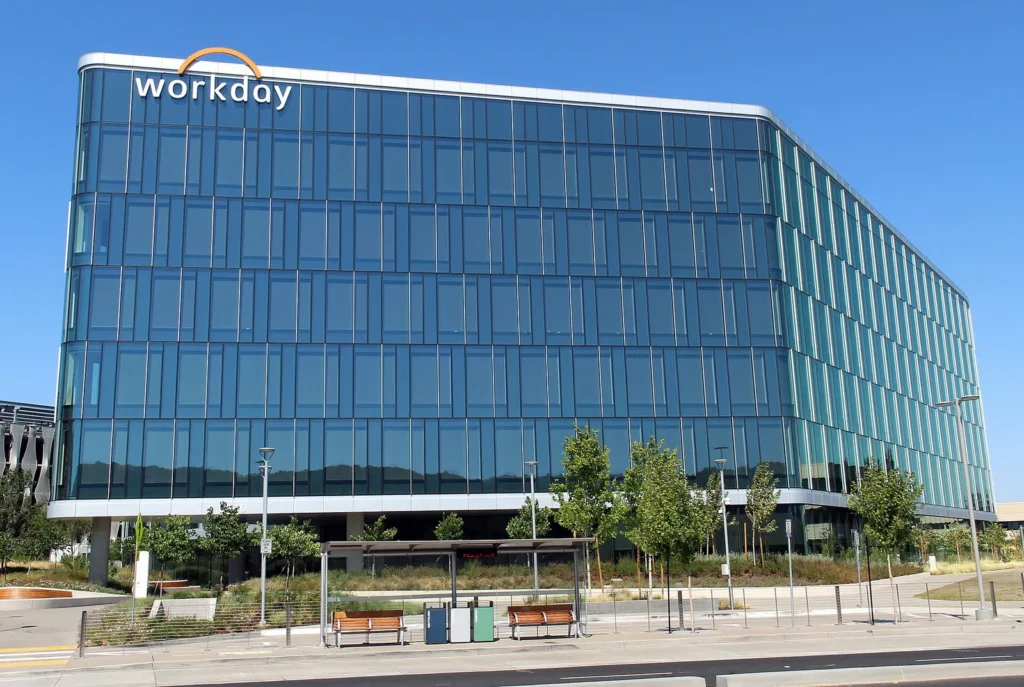
Workday Outage Locks Out Payroll and HR for Thousands
The workday outage that hit on Friday 13 November 2026 locked thousands of employees out of the systems they use to get paid, record their hours and manage their benefits. Workday, the cloud HR platform used by more than 11,500 organisations worldwide, went down on Friday afternoon. This article explains the workday outage today: what happened, what caused it, who was affected and when service came back.
Table of Contents
What happened during the workday outage
The first signs of trouble appeared on Friday afternoon. Downdetector logged nearly 3,000 outage reports shortly after 5 p.m. on Friday, which was 22:00 GMT, as staff across the United States found they could not reach the service. Emerson College said Workday went offline at about 22:15 GMT, and the platform stayed down through Friday night and into Saturday.
The workday payroll outage hit at the level of everyday tasks. Staff could not clock in for shifts, check their pay, request time off or finish benefits open enrollment. Universities were among the organisations affected, with Washington University and the University of Chicago both reporting problems, and the disruption landed during open enrollment season, when many employees were working against a deadline to choose next year’s benefits.
What staff could not do while Workday was down

For most employees, the outage was not an abstract technology story. It was a login screen that would not load. Timekeeping failed first: staff who needed to record hours could not clock in, and anyone checking a payslip or requesting time off found the same blank result. The problem was sharpest for employees in the middle of benefits open enrollment, a once-a-year window where a missed deadline can mean waiting months to change a health plan.
Emerson College extended its open enrollment deadline to 17:00 GMT on Monday 16 November after Workday went offline at about 22:15 GMT on Friday, giving staff the weekend to wait for the system to return.
How a backup test brought the system down

The workday outage began with a routine safety check that went wrong. Workday said the disruption began after a problem was discovered while testing its backup systems, telling the San Francisco Chronicle that the trouble started during that test. The test was a disaster recovery test: while validating the weekly maintenance window for disaster recovery tenants, tenanted services in the disaster recovery site unexpectedly connected to production databases, leaving data in an inconsistent state.
Backup systems exist to protect data, so when a test connects the wrong systems together, engineers cannot simply switch everything back on. They have to check what changed and restore the service in a careful order, which is why the outage lasted hours rather than minutes.
Workday also confirmed that the disruption was not a cybersecurity incident. That matters, because a confirmed breach brings very different problems, as our coverage of the Uber data breach showed. Here the cause was an internal failure during a test, not an outside attack. UC Today has published the full account of the outage, with the timeline and the statements from the organisations involved.
Who was affected, and who was not
One figure needs careful handling. Workday is used by more than 11,500 organisations worldwide, and that number has appeared in many reports about the workday outage. It is the size of Workday’s customer base, not the number hit. Workday has only said that “some of our customers” were affected, and it has not named them or said how many were hit.
Workday is based in Pleasanton, California. Its clients include large retailers, corporate giants and government agencies. Fox Business lists Netflix, Salesforce, PNC Bank, Chipotle, Southwest Airlines, GE and Nasdaq among its clientele, along with the cities of Philadelphia, Dallas, Seattle, Charlotte and Denver. Those names describe who uses Workday, not which organisations lost access on Friday. No company should be treated as affected until Workday or the company itself confirms it, and reports naming large retailers as potentially affected are not the same as confirmed.
The organisations confirmed as affected so far include universities: Washington University and the University of Chicago reported problems, alongside Emerson College. More may have been affected, but Workday has not published a full list.
When service came back
By Saturday morning, the workday outage was over for most customers. A Workday spokesperson told ABC10 that service “was restored by 11 a.m. EST Saturday”, 14 November, although some customers came back later than others. Washington University said at 17:24 GMT on Saturday that the outage was resolved, and the University of Chicago marked it resolved at 19:35 GMT.
The staggered return is normal after this kind of failure. Restoring a payroll system is not a single switch: different customers come back at different times as their data is checked. For employees, the practical question was simpler: could they log in again, and were their pay and time records as they left them? Anyone who finds a record that looks wrong should raise it with their employer.
The second big software outage in a week
The Workday failure was the second major business software outage in days, after Microsoft’s global Microsoft 365 outage earlier in the week. Globaly Mag covered that outage as it happened, and the two incidents together show how much everyday work now depends on a small number of cloud platforms.
That dependence is the real story behind the headlines. A cloud HR platform holds the records that decide when people are paid, how many hours they worked and which benefits they chose. When it is available, nobody thinks about it. When it goes down, thousands of people discover at once how many small tasks run through a single login. The workday outage is a reminder that even the tools built to keep data safe can fail.
What to do if you are still locked out
Most customers were back online by Saturday, but a small number came back later, and some employees may still have found problems on Monday morning. If you still cannot log in, contact your employer’s Workday administrator first. They can confirm whether your organisation is fully restored and tell you whether any deadline, such as open enrollment, has moved.
Keep a note of any hours you worked while the system was down, and keep copies of any time off requests you tried to submit. If your employer extended a deadline, use the new date rather than the old one. Do not click on links in unexpected emails offering to restore your account, and do not share your Workday password with anyone who contacts you about the outage. While you wait, it is also a good moment to check your own device, and our guide on how to speed up an old laptop for free covers the basics.
Frequently asked questions
Was the outage a cyberattack?
No. Workday said the disruption was not a cybersecurity incident. The cause was a problem found while testing its backup and disaster recovery systems, when services in the disaster recovery site unexpectedly connected to production databases.
When was Workday restored?
A Workday spokesperson told ABC10 that service was restored by 11 a.m. EST on Saturday 14 November, although some customers came back later. Washington University said it was resolved at 17:24 GMT, and the University of Chicago at 19:35 GMT.
Was my employer affected by the outage?
Workday has only said that “some of our customers” were affected, and it has not named them or said how many were hit. If you are unsure, ask your employer’s Workday administrator, who can confirm whether your organisation was affected.
What should I do if I still cannot log in?
Contact your employer’s Workday administrator. They can check whether your organisation’s service is fully restored and help with access. Keep a note of any hours worked and any requests you tried to submit while the system was down.
The workday outage lasted less than a day, but it exposed how much routine work runs through a single platform. A backup test meant to protect the system ended up taking it down, and thousands of employees spent a Friday evening unable to check their pay or finish their benefits choices. Service returned on Saturday. The lesson for employers is worth keeping: know what your team does when the system they rely on is not there.