SS United States Sunk Off Florida to Become the World’s Largest Artificial Reef
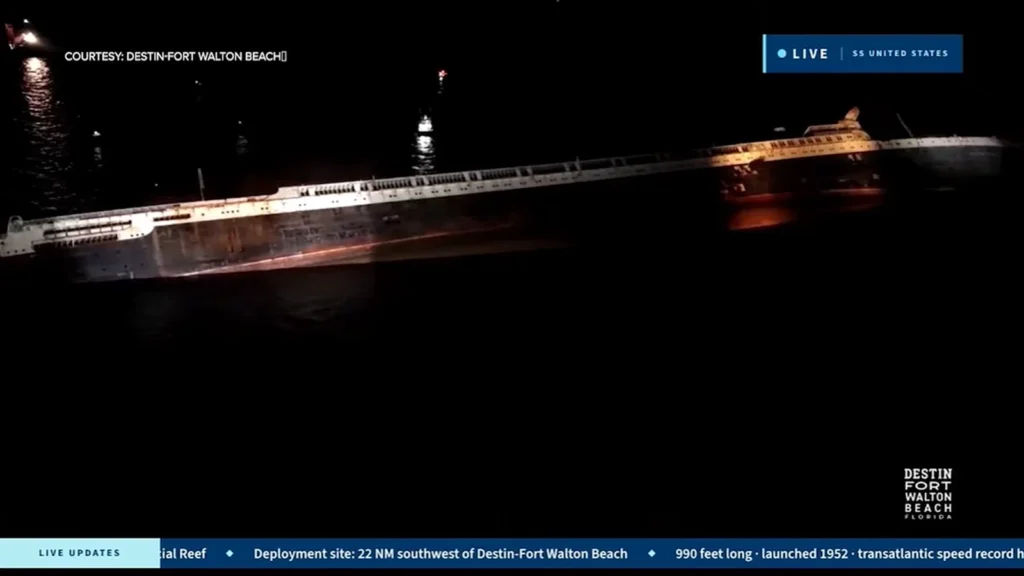
The SS United States is gone. The fastest ocean liner ever built, a ship that once carried four presidents and the Mona Lisa across the Atlantic, was deliberately sunk off the Florida coast on Wednesday, November 11, to become the world’s largest artificial reef. The SS United States disappeared beneath the waves at 10 p.m. Eastern time, and now rests 180 feet below the surface of the Gulf of Mexico in an upright position.
The sinking ended a 75-year story that began with a speed record and ended with a slow, planned descent. For the Florida county that now owns the wreck, it is the start of a new chapter: a dive site and marine habitat that is expected to draw visitors for decades.
Table of Contents
The Fastest Ocean Liner Ever Built
The SS United States was launched in 1951, and it was built for speed. On its maiden voyage it crossed the Atlantic Ocean in less than four days, a record that still stands for a passenger liner, and it was longer than the RMS Titanic at nearly 1,000 feet from bow to stern.
In its working life, the ship carried four presidents, the Mona Lisa on its way to an exhibition in the United States, and a slate of 20th century movie stars. It was a symbol of American postwar confidence, a floating piece of national pride that could outrun anything else on the ocean.
But air travel changed everything. By the late 1960s, flying across the Atlantic had become faster and cheaper than sailing, and the SS United States was retired. It spent decades rusting at dock, first in Philadelphia and later in Mobile, Alabama, while preservationists fought to save it and the scrap heap loomed.
The Final Voyage to the Bottom
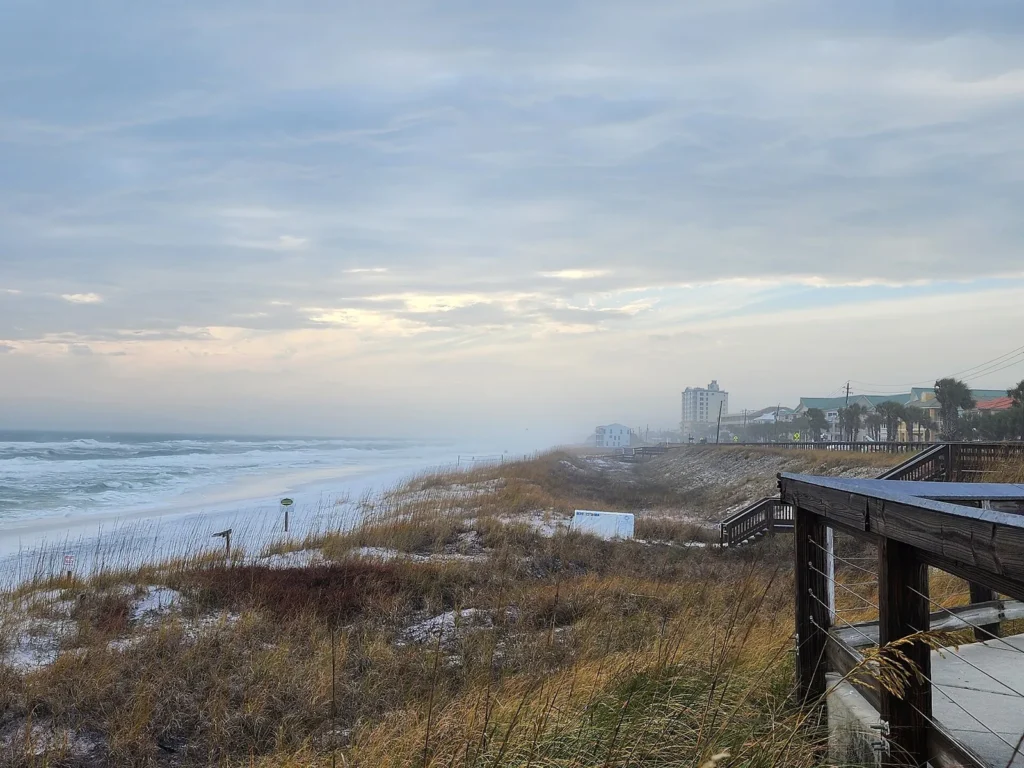
Okaloosa County, Florida, bought the ship and settled on a plan to give it a second life: sink it on purpose and turn it into the world’s largest artificial reef, just over 20 nautical miles off the beaches of Destin.
Crews removed plugs in the ship’s hull, allowing it to fill with water without the use of explosives. After hours of delays, the final moments went quickly. The ship tilted onto its side and dipped below the waves, and after about five hours of slow descent, it was gone.
Coleen Marine, a marine engineering company that specializes in creating artificial reefs, led the project. The work had to be checked and rechecked by naval architects, the U.S. Coast Guard and other agencies, because the ship had to be towed from Philadelphia all the way down to Mobile, Alabama, where the full remediation was done, before it could be moved to its final resting place.
The ship now rests on the bottom of the Gulf of Mexico in an upright position, its smokestacks already removed before the sinking. The Florida panhandle county has sunk hundreds of artificial reefs over the years, many of them ships or boats, and the SS United States is now the centerpiece of that collection.
The World’s Largest Artificial Reef
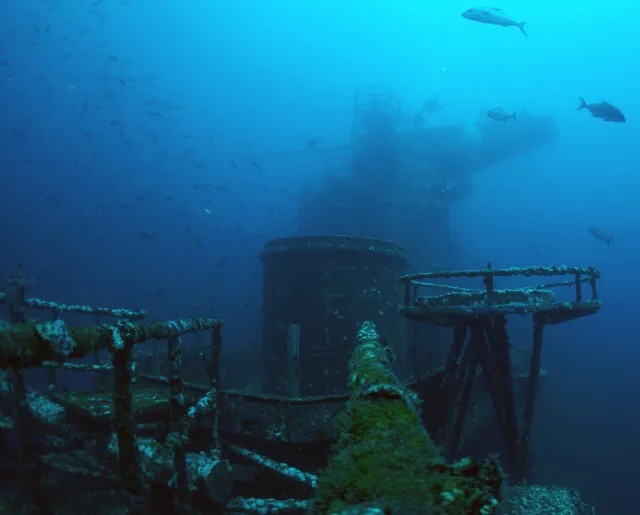
The SS United States joins the USS Oriskany, an 888-foot post-war aircraft carrier sunk by the U.S. Navy off Pensacola in 2006, and together they make the area home to the first and second largest artificial reefs in the world.
Artificial reefs work by giving marine life a hard surface to grow on. Within months, the hull is expected to attract coral, sponges and small fish, and within a few years it should support a full reef ecosystem. For divers, it will be one of the largest shipwrecks in the world that can be visited on a recreational dive, and for the local economy, it is expected to bring a steady stream of dive tourism to Destin and the surrounding coast.
Not everyone was happy with the plan. A nonprofit conservation group filed a lawsuit last week to try to stop the sinking, citing concerns about the environmental impact and possible harm to marine organisms and the food web, including effects that could reach human consumption. The lawsuit did not stop the project, and the sinking went ahead as planned.
What the Ship Leaves Behind
The SS United States was more than a ship. It was the last of the great American ocean liners, a vessel that represented a time when crossing the ocean by sea was the fastest way to travel, and when the United States built ships to be the best in the world.
Its sinking was watched by crowds and cameras, and by the people who had spent years trying to save it. For them, the reef is a compromise: the ship is gone as a floating museum, but it is not scrapped, and it will spend the next century as a living part of the ocean it once raced across.
For divers and marine life, the work is just beginning. The reef will take time to grow, but the ship that once crossed the Atlantic in under four days now has a permanent home at the bottom of the Gulf, 180 feet down and 20 nautical miles from the Florida shore.
If Florida is on your travel list, our guide to the Best places to travel solo covers safe and unforgettable destinations. For more of this week’s big US news, read Jensen Huang resigns and our report on the Fed rate hike December outlook.
Source: NPR report on the sinking
FAQs
When was the SS United States sunk?
The ship was deliberately sunk on Wednesday, November 11, 2026. It disappeared beneath the waves at 10 p.m. Eastern time after about five hours of slow descent.
Where is the SS United States now?
It rests upright on the bottom of the Gulf of Mexico, about 180 feet below the surface and just over 20 nautical miles off the coast of Destin, Florida, in Okaloosa County.
Why was the SS United States sunk?
Okaloosa County bought the retired liner to turn it into the world’s largest artificial reef. The wreck will become a marine habitat and a dive site.
How big was the SS United States?
The ship was nearly 1,000 feet long, longer than the RMS Titanic, and it was the fastest passenger liner ever built, crossing the Atlantic in less than four days.
What was the SS United States famous for?
Launched in 1951, it carried four presidents, the Mona Lisa and many movie stars. It held the transatlantic speed record for a passenger liner and was retired in the late 1960s when air travel took over.