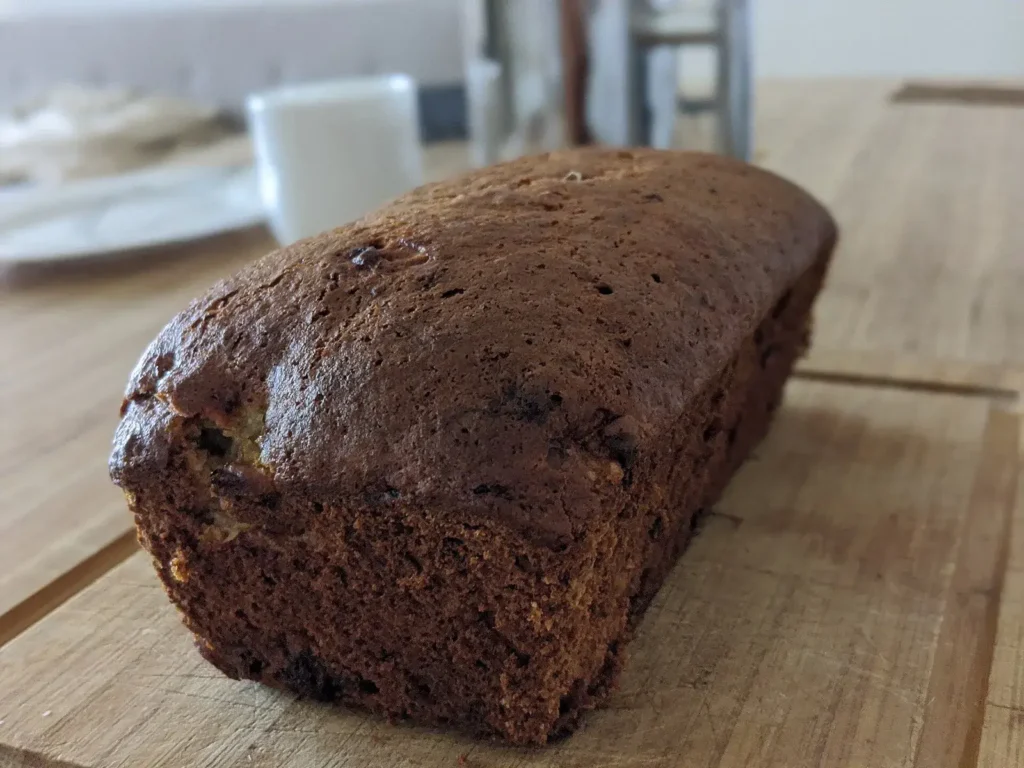
Gluten Free Banana Bread Recipe: Moist and Easy
This gluten free banana bread recipe makes a moist, tender loaf that tastes just as good as the wheat version, and it does it in one bowl with 10 minutes of prep. The secret is very ripe bananas, oil instead of butter, and a good 1-to-1 gluten-free flour, mixed gently and baked low and slow. The result is a banana-forward loaf with a soft crumb that actually improves on day two, which is rare for gluten-free baking. Whether you bake gluten-free every week or this is your first loaf, this recipe is the right place to start.
Table of Contents
Why This Gluten Free Banana Bread Recipe Works
Banana bread is the most forgiving thing you can convert to gluten-free, because mashed banana does three jobs gluten normally handles: moisture, binding and structure. That is why this recipe needs no xanthan gum. Between the banana, the eggs and the oil, the loaf holds together on its own, and adding gum usually makes it gummy instead of better.
The baking temperature matters too. This loaf bakes at 325 degrees Fahrenheit instead of the usual 350, which gives the dense center time to set before the crust overbakes.
Gluten Free Banana Bread Recipe: Ingredients and Steps
You need one large bowl, a whisk, a spatula and a 9 by 5 inch loaf pan lined with parchment.
Ingredients:
- 3 to 4 very ripe bananas, mashed, about 1 and 1/2 cups
- 1 and 3/4 cups gluten-free all-purpose flour blend with xanthan gum, or a blend without it plus 1/2 teaspoon xanthan gum
- 3/4 cup granulated sugar, or 1/2 cup sugar plus 2 tablespoons honey
- 1/3 cup neutral oil
- 2 large eggs, at room temperature
- 1/4 cup plain yogurt or sour cream
- 1 teaspoon vanilla extract
- 1 teaspoon baking soda
- 1/2 teaspoon salt
- 1/2 teaspoon ground cinnamon
- 1/2 cup chopped walnuts, optional
Steps:
- Heat the oven to 325 degrees Fahrenheit. Grease a 9 by 5 inch loaf pan and line it with a parchment sling, leaving the ends hanging over the sides so you can lift the loaf out later.
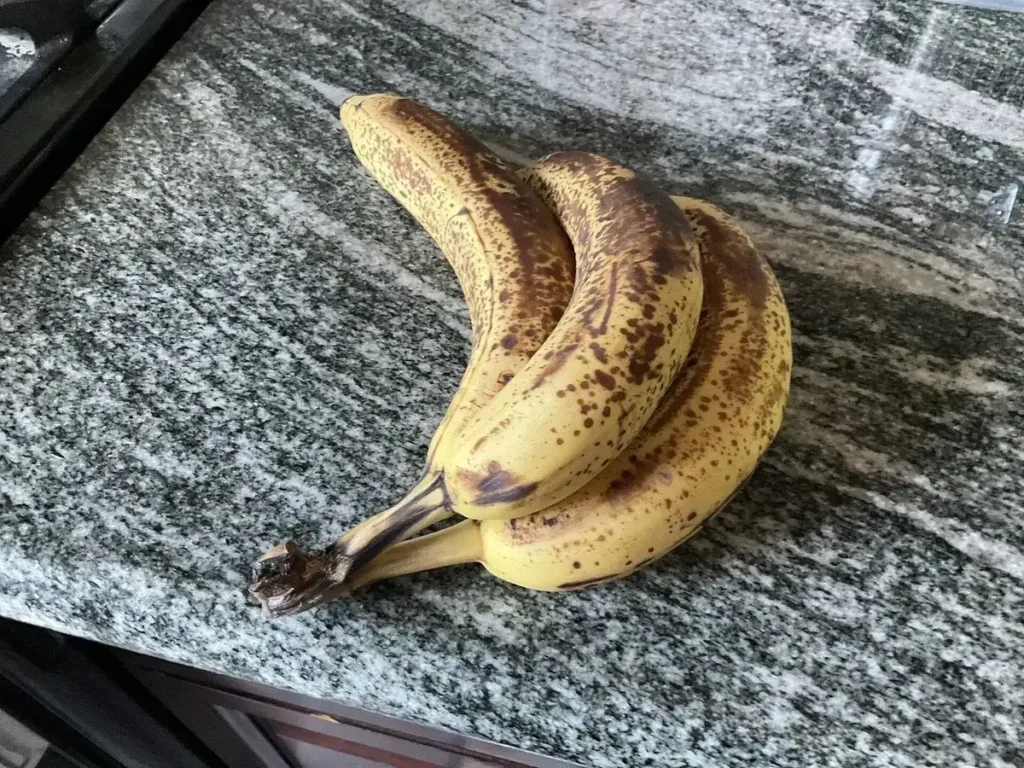
- In a large bowl, whisk the mashed bananas, sugar, oil, eggs, yogurt and vanilla until smooth. The riper the bananas, the sweeter and more banana-forward the loaf will be. Look for skins that are mostly brown or black.
- In a separate bowl, whisk the flour, baking soda, salt and cinnamon. If your flour blend has no xanthan gum, whisk in 1/2 teaspoon now.
- Add the dry ingredients to the wet ingredients and fold with a spatula until just combined. A few small streaks of flour are fine. Do not overmix, because overmixing is what makes gluten-free bread dense.
- Fold in the walnuts if you are using them. Pour the batter into the pan and smooth the top.
- Bake for 60 to 70 minutes. Tent the loaf loosely with foil at the 40-minute mark if the top is browning fast. It is done when a toothpick comes out of the center with a few moist crumbs, or when the internal temperature reads 205 to 208 degrees.
- Cool in the pan for 20 minutes, then lift the loaf out and cool it completely on a rack before slicing. Slicing while warm gives a gummy texture.
The loaf keeps at room temperature for 3 to 4 days, wrapped tightly, and it tastes better on day two.
Choosing the Right Gluten-Free Flour
A good 1-to-1 gluten-free flour blend is the simplest choice, because it is designed to replace wheat flour cup for cup. Blends such as Bob’s Red Mill 1-to-1 and King Arthur Gluten-Free Measure for Measure both work well here, and most already contain xanthan gum. If your blend does not, add 1/2 teaspoon of xanthan gum to the dry ingredients.
Some bakers prefer a homemade blend, usually almond flour for moisture, oat flour for lightness and a little sweet rice flour for chew. That version is softer, but it costs more and needs more measuring. For a first attempt, a store-bought 1-to-1 blend is the reliable choice.
Not every food labelled gluten-free is safe for people with celiac disease, and cross-contact matters. The Celiac Disease Foundation explains which foods are naturally gluten-free and what to check on labels. If you bake for someone with celiac disease, use certified gluten-free flour and clean bowls, pans and utensils.
Tips for a Moist Loaf Every Time
The bananas decide the result more than anything else. Underripe bananas lack both the sugar and the soft pectin structure that keep the crumb moist, so wait until the skins are mostly blackened. If your bananas are not ready, bake them unpeeled at 300 degrees for 15 to 20 minutes until black, then let them cool before mashing. Frozen overripe bananas work even better, because freezing breaks down the cell walls and releases more flavor.
Measure the mashed banana: about 1 and 1/2 cups, or 3 to 4 large bananas. More than that and the loaf turns dense and will not set in the center.
Do not overmix the batter. Stir only until the flour disappears, then stop. Overmixing develops the starches in gluten-free flour and turns the crumb gummy, which is the most common reason a loaf disappoints.
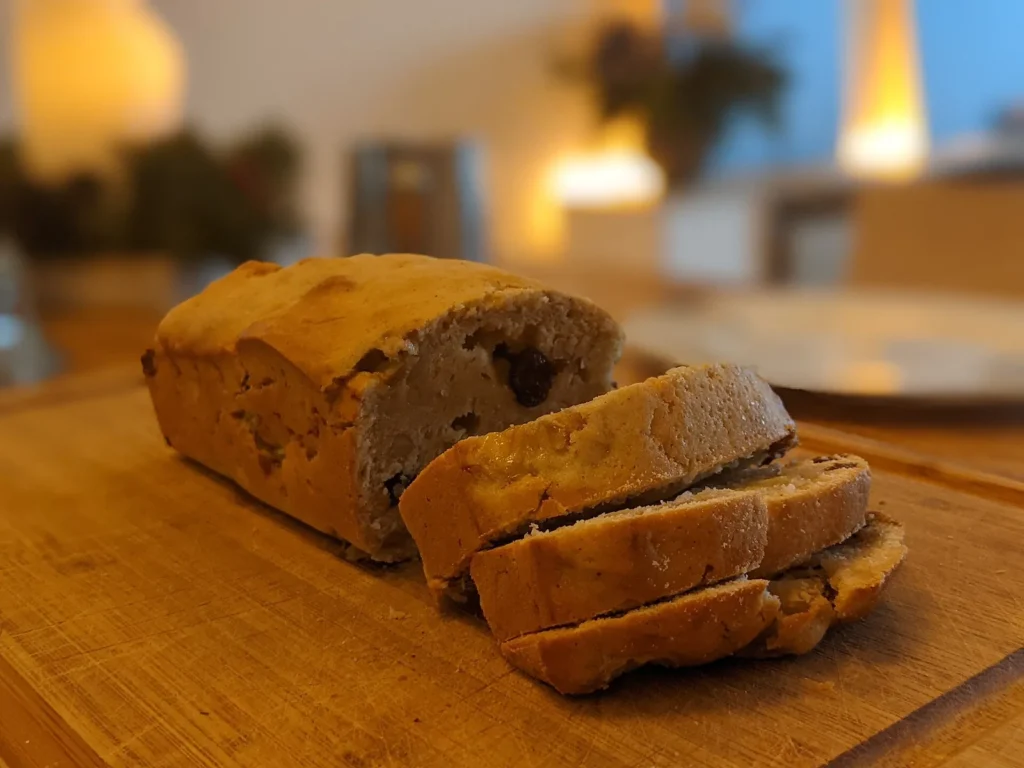
Let the loaf rest before slicing. Gluten-free crumb needs time to set, and cutting a warm loaf tears it. Twenty minutes in the pan and a full cool on a rack is the minimum. The wait is worth it: the crumb firms up, the banana flavor deepens, and the slices hold together cleanly.
Variations and Storage
This loaf takes variations well. Fold in 1/2 cup of chocolate chips for a dessert version, or swap the walnuts for pecans. For a dairy-free loaf, use coconut oil and a dairy-free yogurt. For a vegan version, replace each egg with a flax egg (1 tablespoon ground flaxseed mixed with 3 tablespoons water, left 5 minutes) and use plant-based yogurt.
For more breakfast baking ideas, try our sweet potato recipes for 25 easy ideas, or the 25 breakfast ideas for busy mornings when you want something faster on weekdays.
Store the loaf wrapped tightly at room temperature for up to 4 days. For longer storage, slice it first, wrap the slices individually, and freeze them for up to 3 months. Thaw a slice at room temperature for 20 minutes, or warm it for 15 seconds in the microwave. For weekly planning, see how to meal prep for the week on a budget.
Frequently Asked Questions
Can I use regular wheat flour in this recipe?
Yes. Replace the gluten-free blend with the same amount of all-purpose wheat flour and leave out the xanthan gum. Bake at the same temperature and time, and check for doneness with a toothpick.
Do I need xanthan gum for gluten-free banana bread?
Usually not. The banana, eggs and oil bind this loaf well enough on their own. If your flour blend already contains xanthan gum, that is fine. If it does not, adding 1/2 teaspoon helps the crumb hold together, but more than that can make the loaf gummy.
How ripe should the bananas be?
Very ripe, with skins that are mostly brown or black. The riper the banana, the sweeter it is and the more moisture and binding it gives the loaf. Yellow bananas with a few spots will work, but the bread will be less sweet and less moist.
How long does gluten-free banana bread keep?
Wrapped tightly at room temperature, it keeps for 3 to 4 days and tastes best on day two. Sliced and frozen, it keeps for up to 3 months. Keep it away from the fridge, which dries out gluten-free baked goods faster than room temperature storage.
Can I make this recipe in muffin tins?
Yes. Divide the batter among 12 lined muffin cups and bake at 325 degrees for 22 to 28 minutes, until a toothpick comes out clean. Muffins are a good option for packed lunches, and they freeze just as well as the loaf.
Conclusion
A great gluten free banana bread recipe does not need a long ingredient list or a special technique. Very ripe bananas, a reliable 1-to-1 flour blend, oil instead of butter, gentle mixing and a slow bake at 325 degrees are enough to make a loaf that stays moist for days and tastes like real banana bread. Bake it once with the recipe as written, then make it your own with nuts, chocolate or a dairy-free swap. The bananas on your counter that look too far gone are exactly the ones this loaf was made for.